How do I enquire about hard water marks on London windows?
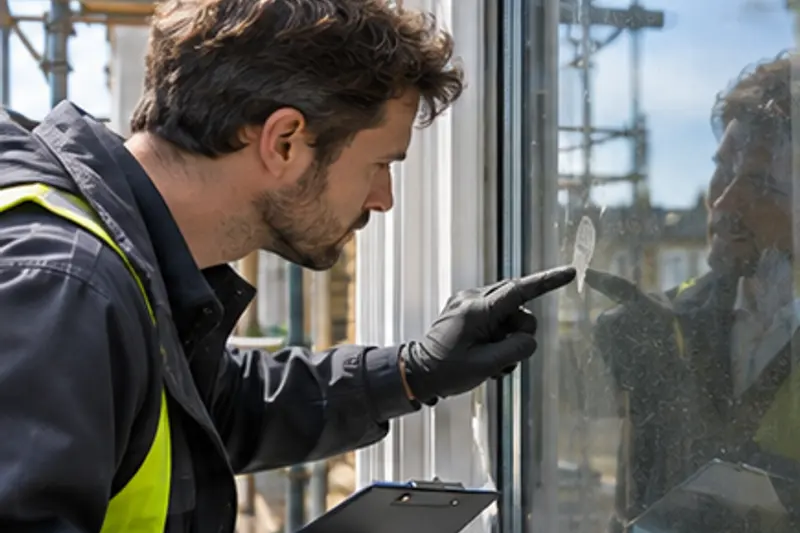
Share photographs of the dry pane, its surroundings and the likely source of water. Mention coatings, previous treatments and access.
Can an etched pane be made completely clear?
Etching alters the surface. Removing a deposit may improve clarity, but the altered area may still be visible.
Establish where the marks sit
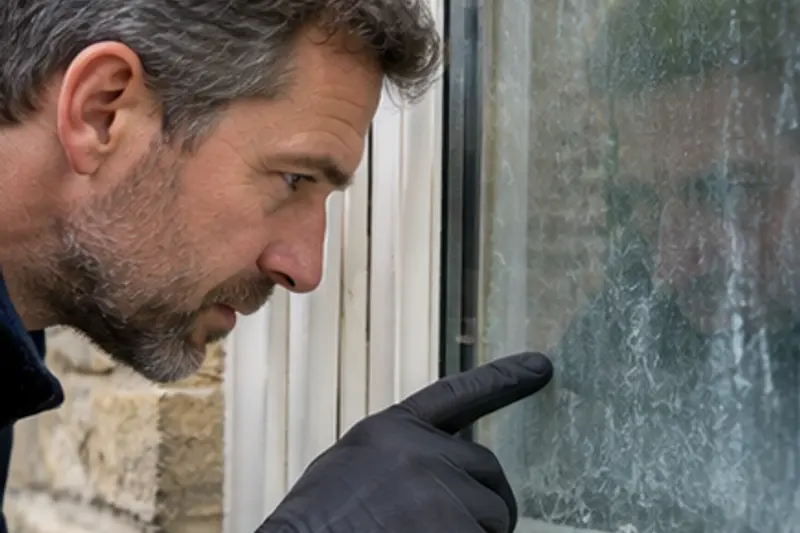
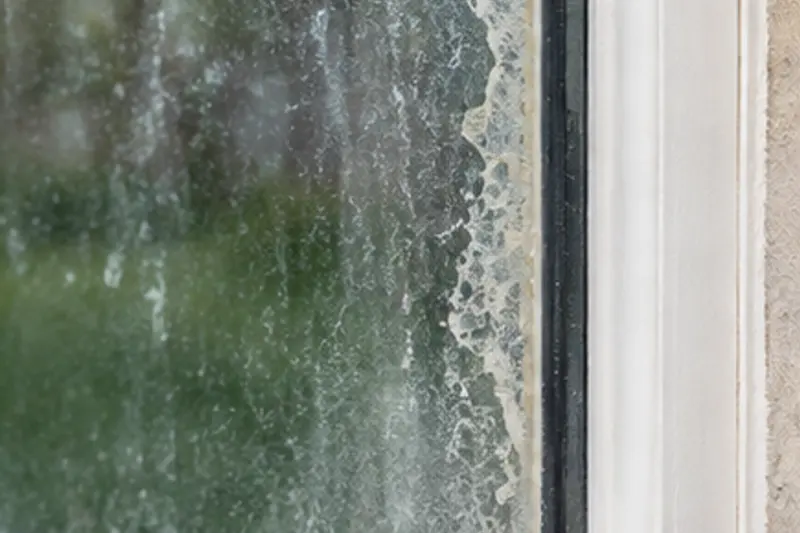
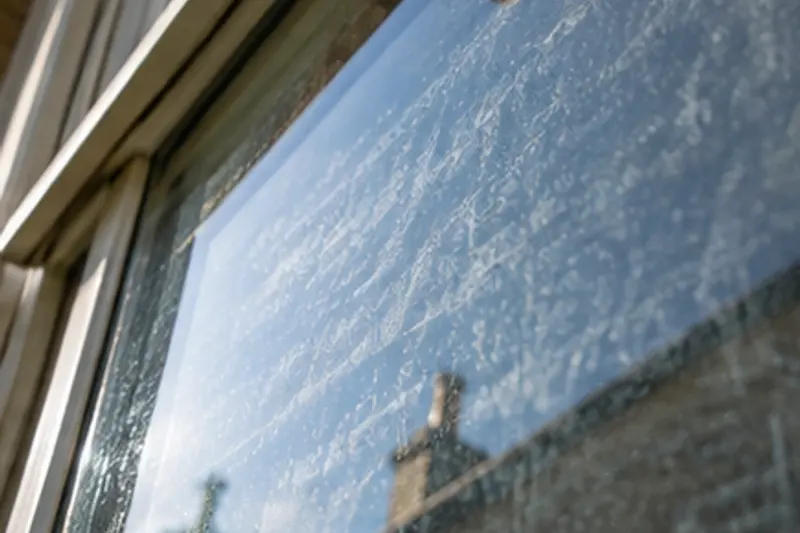
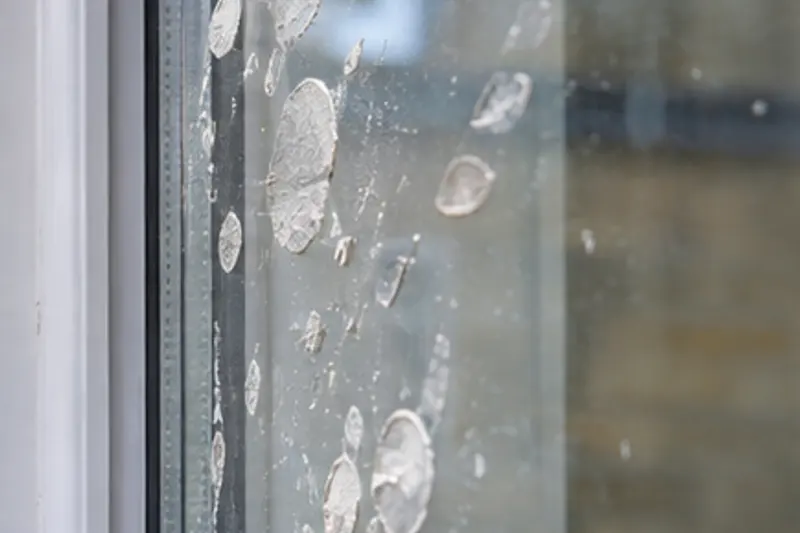
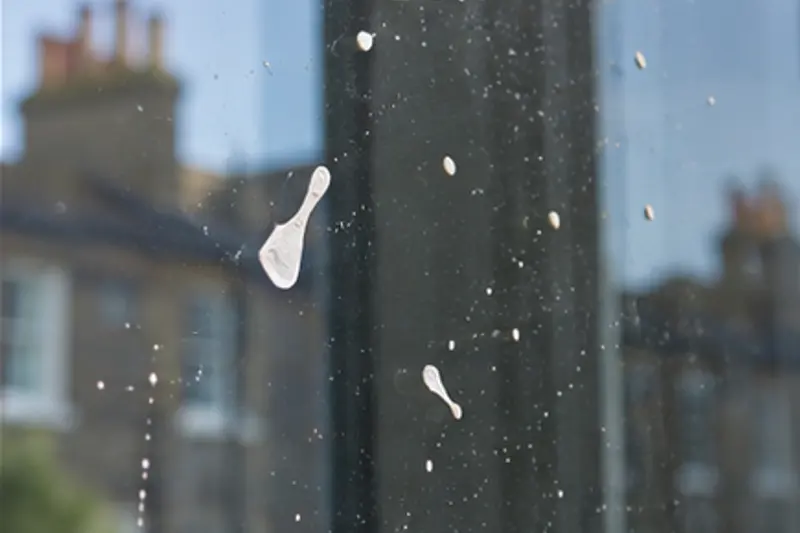
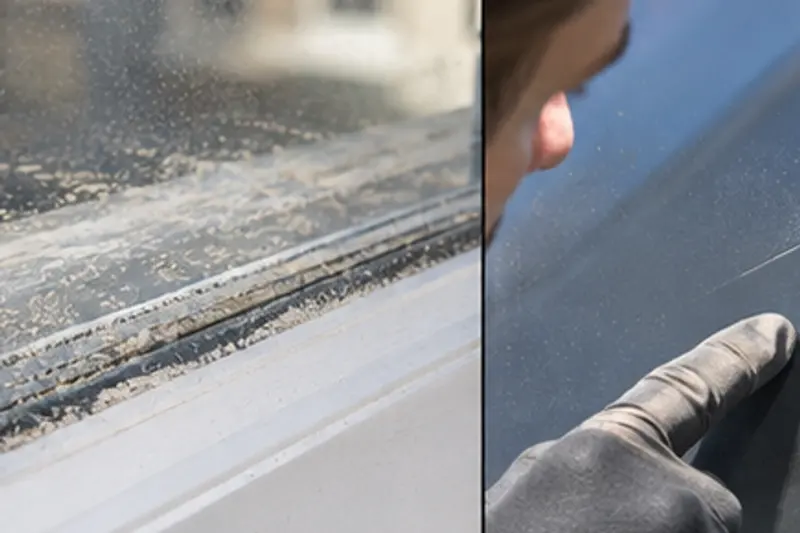
Circular spots can be left by drying droplets, but a cloudy area can have a different cause. An assessment should identify the face that carries the mark, whether neighbouring panes show the same pattern and whether it is near a sprinkler, drain or repeated run-off. A second view in different light may help distinguish a surface mark from one within a sealed unit.
Explore the work
Mineral deposit inspector
Droplet rings
Look at position and whether a sprinkler or runoff is nearby.
Dense clouding
Check whether the accessible surface is affected.
Local splash marks
Identify which face and which panes have the same pattern.
Evaporation visualiser
Wet glass
Water can hide faint existing marks.
Drying edge
Dissolved material may concentrate as a droplet evaporates.
Repeated exposure
Rainwater runoff or regular splashing can leave layered marks.
Stain or etching
Surface deposit
Confirm glass and coatings before discussing treatment.
Etching
A permanent change in the surface may remain after cleaning.
Between the panes
A sealed unit fault cannot be reached by washing either exposed face.
What to send with your enquiry
Share photographs of the dry pane, its surroundings and the likely source of water. Mention coatings, previous treatments and access.
Glass condition assessment
Clear uncoated glass
Confirm condition before proposing a test.
Coated or filmed pane
Verify finish requirements first.
Uncertain mark
Review in good light before quoting specialist work.
Separate deposits from damage
A surface deposit sits on the glass, while some marks reflect a lasting change to the surface or coating. A strong description or close-up picture alone is insufficient to guarantee removal. Before proposing any treatment, identify the glazing and finish, check manufacturer instructions and decide whether a controlled assessment is appropriate.
Track the water that reaches the pane
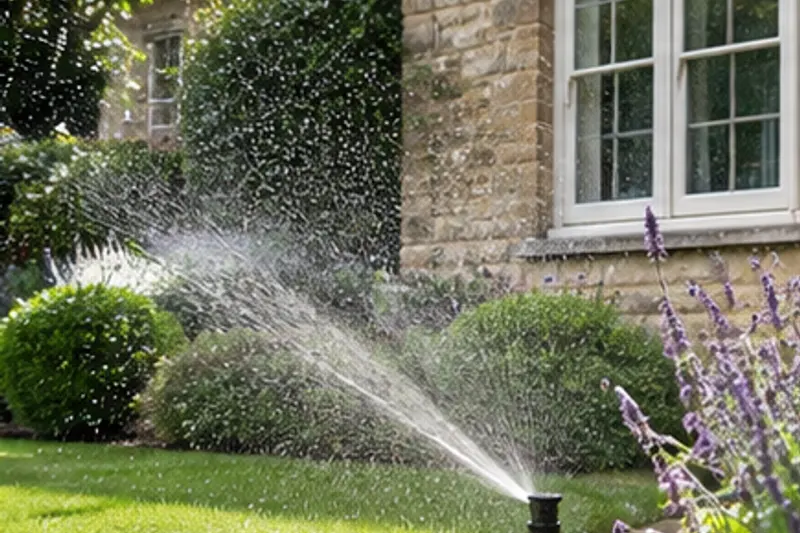
Mineral marks can form where droplets dry repeatedly, such as beside a sprinkler, below a dripping sill or under an eave. Note whether marks recur in a particular season and whether the same pattern appears on neighbouring panes. Photographs taken in side light show the distribution better than a single picture from straight ahead. Include the frame and anything directly above or to one side. Confirm which face is affected if you can tell from an accessible position. Removing a deposit may improve appearance, but recurring water can bring it back. The assessment should cover the likely source as well as which glass needs attention.
Separate surface deposits from other marks
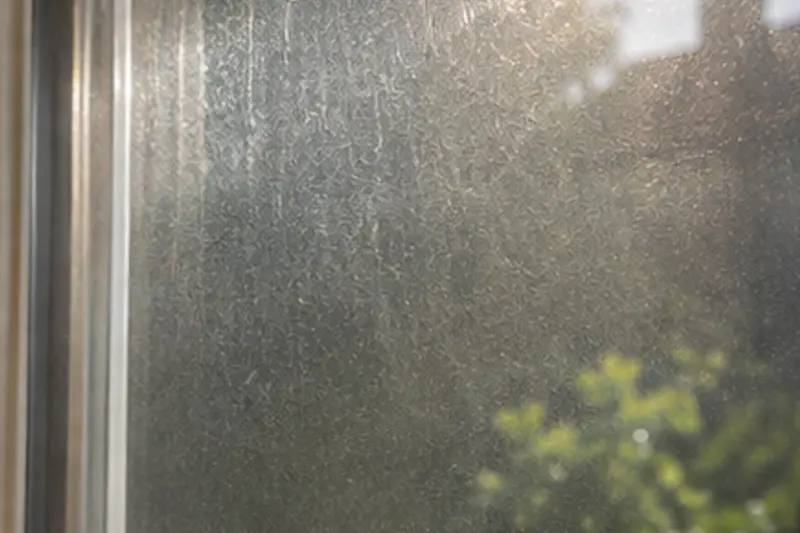
Mineral spots often appear as pale rings or grey patches. Long-standing deposits can leave a haze; superficial marks can also resemble coating damage, abrasion or dirt behind a failed seal. A pane that changes appearance when it is wet does not necessarily have a removable deposit. Record where the marks are easier to see and how they feel only if this can be done without touching a vulnerable surface. Do not base a treatment decision on a single photograph. The first useful check is to clean a suitable reachable part by an ordinary approved method and see what remains once it is dry.
Identify the glass finish and surrounding materials
A pane can be coated, tinted or filmed. The affected face may tolerate different treatment from adjacent glass, even if the two parts belong to the same window. Frames, seals and stone sills also matter because any liquid introduced can contact them. Ask the manufacturer or installer about permitted products and methods, especially for recently fitted or self-cleaning glass. Share any work already attempted, including household products or previous polishing. Strong products and abrasive tools can change the finish. If there is uncertainty about the pane or evidence of permanent damage, discuss an appropriate specialist inspection before agreeing work.
Look at a small test before accepting treatment
Where the glass and access allow, the contractor may suggest a small discreet test. Agree how it will be handled and where the result will be inspected in dry conditions. A successful patch can help establish whether the same treatment is appropriate for a broader area, but marks elsewhere on the pane may have a different history or depth. Record the appearance before and after the test. If the surface has changed, compare it in the light and from the angles normally seen in the room. Understand whether the cost covers assessment, treatment of an agreed area or a separate restoration visit.
Choose a controlled working plan
The person doing the work should confirm which faces and materials are included and what happens around edges and joins. Where a suitable treatment has been agreed, keep it to the tested area or surface and control contact with the frame and nearby finishes. The method should take account of how the glass can be reached, especially above an extension or on a large fixed pane. If visibility is poor or the surface reacts unexpectedly, a pause and another assessment are preferable to working across more glass. Always agree in advance whether a return visit will be needed to judge the result after drying.
Understand what etching means for the result
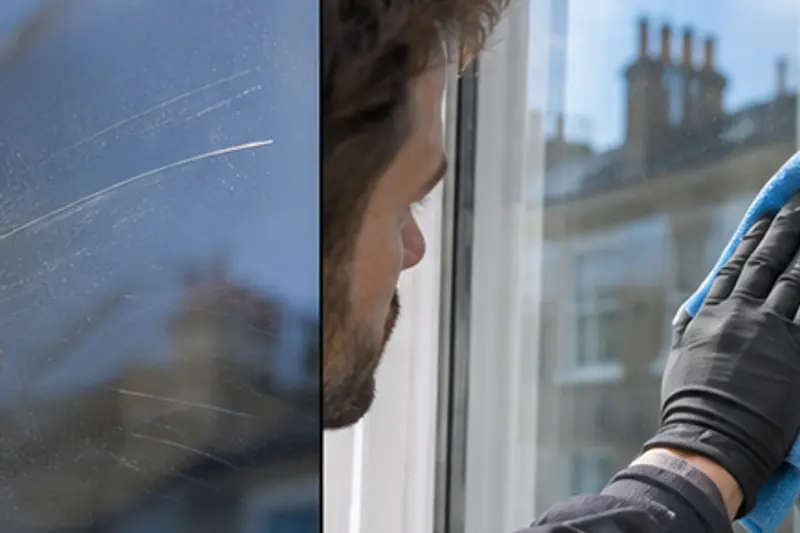
An etched surface has been altered. Releasing material deposited on top of it can make the pane look clearer, while an outline or texture may remain. A scratched pane or a haze between two panes is a different problem again. Look across the test area under consistent lighting and compare it with another part of the same pane. A clear test does not guarantee every mark will go. Discuss whether leaving a faint area alone is preferable to a separate repair or replacement assessment. At handover, ask for a description of which marks were removed and any areas where the glass itself appears to have changed.
Reduce the chances of the pattern returning
If a sprinkler is wetting the lower pane repeatedly, adjust its direction or consult the person responsible for watering. A dripping sill, joint or downpipe might need attention from a suitable repair contractor. Periodic washing can remove loose material when access and the surface allow, while the treatment of existing hard deposits is a separate decision. Mention whether the pane dries unevenly after rain or receives frequent spray from another source. Photos taken after watering and once the pane is dry can show how the pattern forms. A sensible next visit addresses the cause or monitors the recurrence instead of assuming repeated treatments are needed.
A patio door beside a planted border
Consider a glazed door whose bottom half is covered in pale rings while its top stays clear. Include a photograph of the planting, hose or sprinkler and the affected edge. If the rings remain after a plain approved wash, the contractor can review the finish and working position before proposing a test. The customer should mention whether the door receives full sun and whether the marks have been present for months or years. If only one of several adjacent panes is affected, show where the water hits it. A useful quote can then focus on a defined area and explain the options if a faint outline remains.
Compare dry glass under the same conditions
Choose a normal daylight view with a similar angle before and after the wash or agreed test. A wet surface can temporarily hide the shape of the deposit and reflections can make a pane look more even than it is. If a mark only appears while the sun is low, say which direction the pane faces. Report when the sprinkler or drip last reached the glass. These observations help establish whether the same pattern is returning and what change should be judged after the surface dries.
Mineral deposit inspector
What we assess
What it means for the visit
Droplet rings
Look at position and whether a sprinkler or runoff is nearby.
Dense clouding
Check whether the accessible surface is affected.
Local splash marks
Identify which face and which panes have the same pattern.
Stain or etching
Condition or arrangement
What we consider
Surface deposit
Confirm glass and coatings before discussing treatment.
Etching
A permanent change in the surface may remain after cleaning.
Between the panes
A sealed unit fault cannot be reached by washing either exposed face.
Surfaces and access
Illustrations of the work and the surfaces we assess.
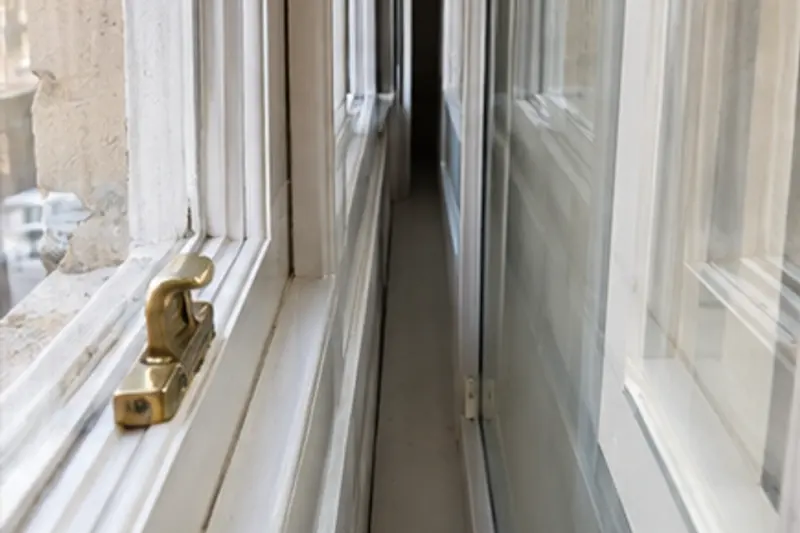
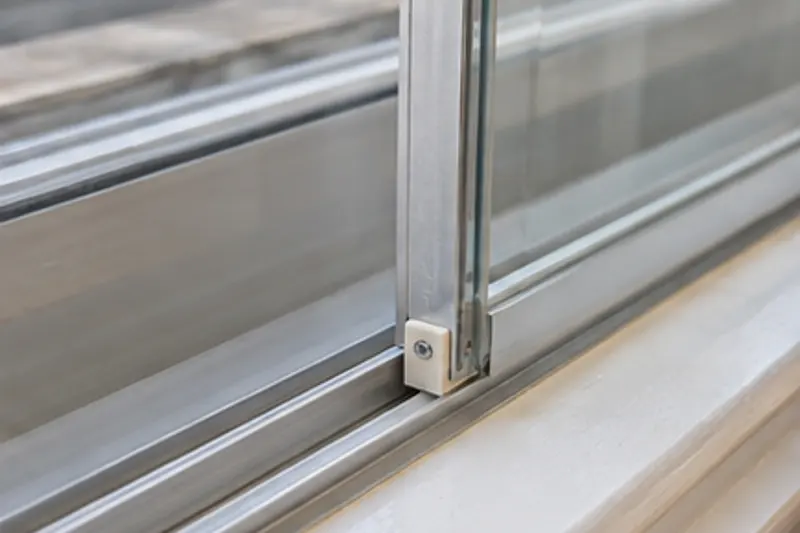
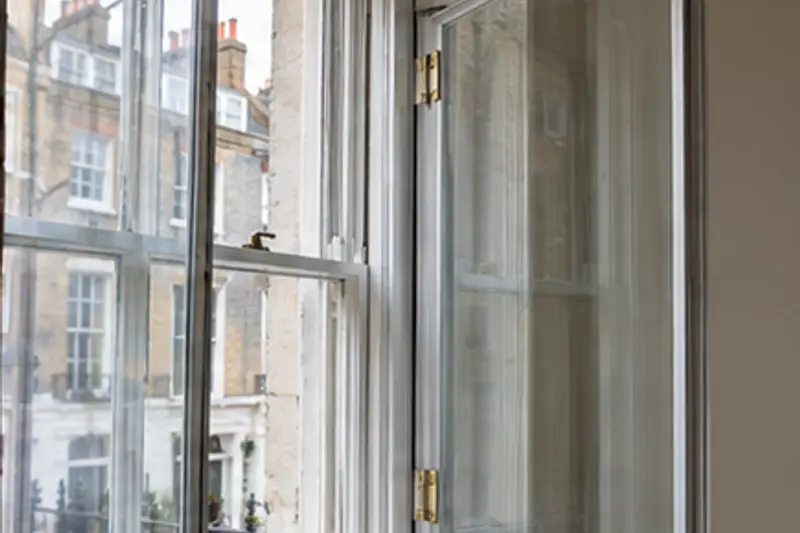
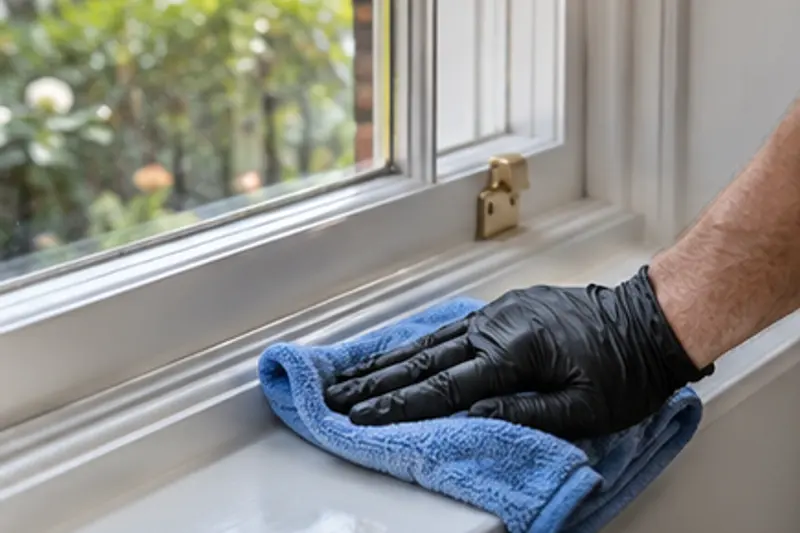
Oblique inspection of scratchesSurface wipe using soft toolsHistoric London interior, professional inspecting accessible inner face of secondary glazing fitted inside sashSliding trackHinged secondary panelFixed panel
Google Business Profile
Customer reviews on Google
Read what customers say about Shiny across London. Reviews and ratings are from Shiny’s London-wide Google profile.
This was the best window craning service I’ve ever experienced. Extremely professional, took pride in their work and left the place sparkling. Highly recommend.
Windows were cleaned to a good standard. The cleaner turned up and did the job whilst I was not in the property so appreciated that. The process was easy to book from start to finish.
I needed the external windows cleaned at the start of a new tenancy. It was easy to book and a call from the window cleaner before she started helped identify all the windows in a 1 & 2nd floor flat. The tenants are very pleased with the result. The only downside is trying to get a VAT invoice from the company (Top Window Cleaners or Fantastic Services Group). Why can’t you send the invoice as soon as you take payment??
Edmond was excellent. Even removed some high cob webs from the conservatory for me. He is friendly chap and I am amazed at the state of my windows now. Will be rebooking at regular intervals.
Felipe was excellent, he carried out the work very satisfactorily so I would recommend him BUT not the organisation of the job which was sooo painful, required a lot of energy and time from my part, many mistakes were made during the booking process, I had a lot of your customer services agents “harassing me by phoning multiple times in one single days over many days until the job was finally completed. And I really didn’t like being threatened to pay extra constantly for rebooking the service !! Can someone please phone me urgently to sort this out because I’m now ready to cancel my membership