What should I send for a London secondary glazing enquiry?
Send inside photos showing how each model opens, what is in front of it and which face appears marked. Include any installer instructions.
Can you clean between the inner and outer windows?
Only if the faces can be reached safely through the normal opening arrangements. Otherwise seek the installer’s advice.
Identify the secondary assembly
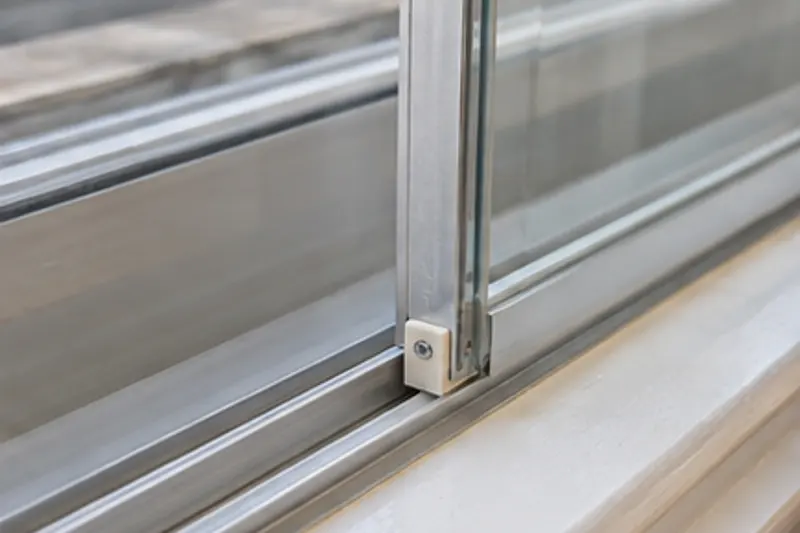
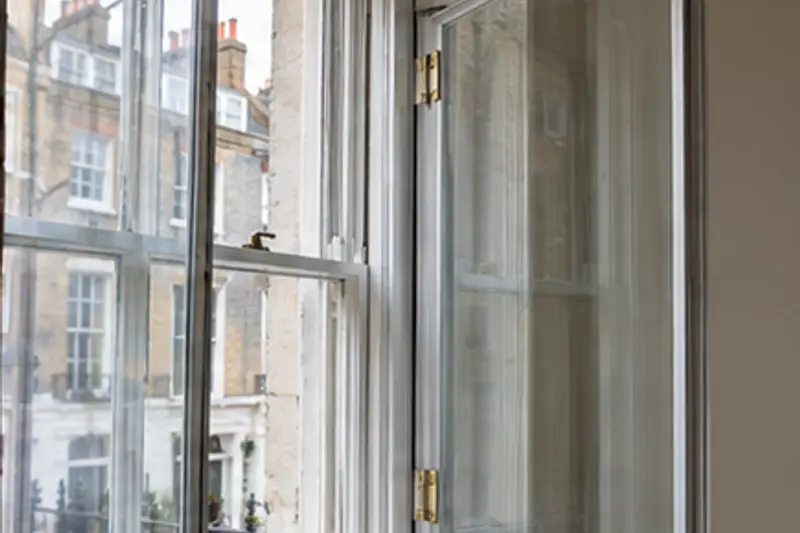
Secondary glazing sits on the room side of an existing window. The inside face may be easy to reach while the face towards the cavity is reached only if the panel is designed to open or slide. Ask whether it moves, has stops or is fixed, and if there is any product guidance available. The outer window should be listed separately from the secondary panel.
Explore the work
Secondary glazing cutaway
Room-facing pane
Check reachable glass and the surrounding sill.
Cavity-facing pane
Confirm whether it is accessible without removing parts.
Original window
Assess the sash and which faces can be reached.
Panel type explorer
Sliding
Review available movement and condition of the track.
Hinged
Check restrictions and surrounding furniture.
Fixed
Confirm what is reachable; fixed panel removal is a separate assessment.
Internal access assessment
Clear sill
Identify a protected working area before using hand tools.
Restricted movement
Check blinds, stops and anything in the panel’s path.
Unfamiliar fitting
Confirm the system and maker’s guidance first.
What to send with your enquiry
Send inside photos showing how each model opens, what is in front of it and which face appears marked. Include any installer instructions.
Secondary glazing process
Inspect
Identify panels and agree which faces are reachable.
Clean
Choose a controlled wash approach around tracks, sills and furnishings.
Finish
Dry reachable edges and review what could be inspected.
Assess what can be reached without moving fittings
Furnished rooms can prevent an already narrow panel from opening far enough to access the cavity. Stops, tracks and seals need to be identified before agreeing any work around them. A controlled hand wash may suit a reachable face when the surface permits it. The condition of the sill and tracks affects how water can be managed.
Identify the two assemblies
Secondary glazing usually adds an independent inner pane or sash to an existing window. A fixed panel, sliding pair or hinged inner sash changes which faces can be reached. Start with a photograph from inside the room showing the whole window and any catches or tracks, without removing anything. Ask about installation notes if they are available. The outer primary window may be a timber sash, a casement or a fixed assembly, each with a different opening arrangement. Explain which assembly is marked and whether you can tell which face is affected. The four glass faces should be considered separately before agreeing what can be cleaned.
Find out how the inner panel normally opens
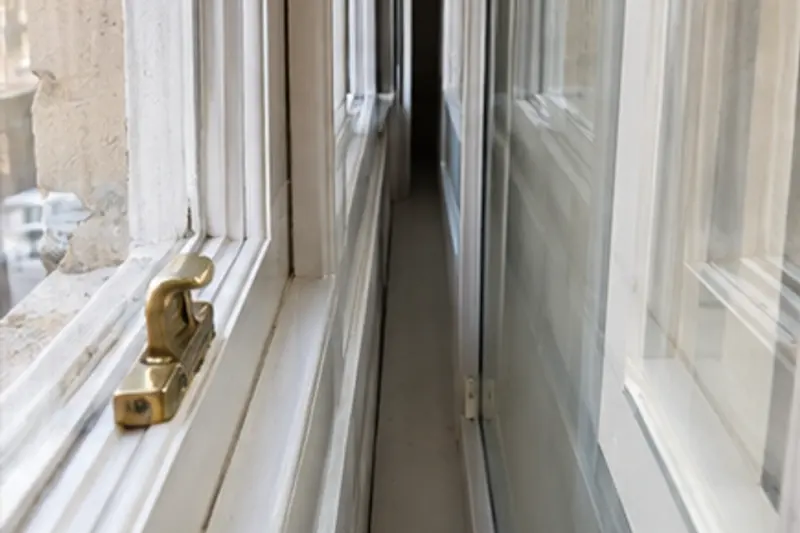
A sliding secondary unit may overlap at the middle and leave part of the glass behind the other pane. Hinged versions can open into the room, where furniture, a curtain rail or a deep reveal may restrict movement. With a fixed panel, the space between the assemblies may only be accessible to an installer. Tell us if a catch is stiff, the panel has been painted shut or a guide has come loose. Avoid forcing anything to show that it opens. The normal opening arrangement and the weight and condition of the pane determine what is sensible. Removing a panel is a separate decision to discuss with the installer.
Assess the space between the panes
Dust can settle on the face towards the gap and be difficult to identify from the room. Condensation can sometimes appear between the assemblies without either pane being dirty. If misting is persistent, record when it appears and whether there is damp around the frame. Avoid assuming that a clean will resolve a ventilation or moisture problem. Where the gap is reachable through normal opening, there may still be hardware, brush seals and narrow tracks that limit tool movement. State which surfaces can be accessed without moving or dismantling the assembly beyond its normal use. If the gap is sealed or awkward, seek advice about reaching it safely.
Protect the sill and furnishings
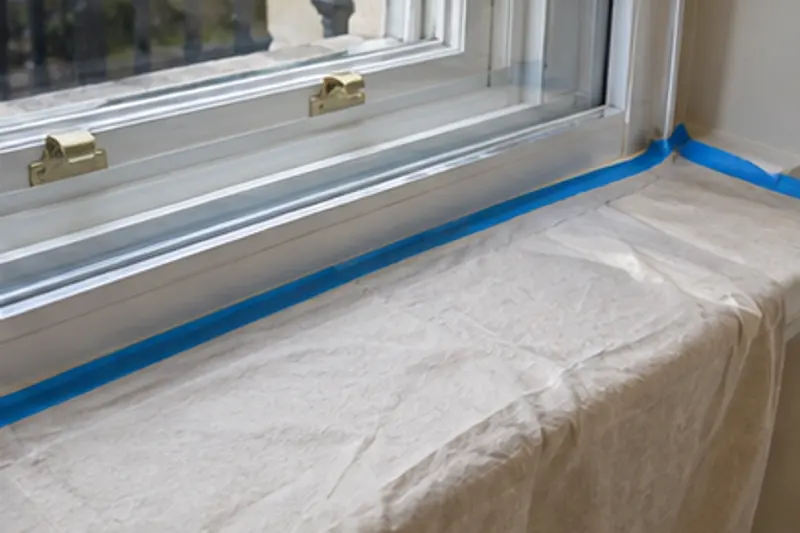
Secondary glazing is often fitted to improve comfort in older rooms where original timber, blinds or shutters remain. A deep painted sill can mark if it stays wet. Check working room near curtains and how far a hinged panel can open before it meets a fitting. Agree which items can be moved and whether the cleaner should leave hardware or fittings untouched. Control the amount of water near tracks and edges, particularly where run-off could reach original joinery. A small hand tool and a clean cloth may provide better control on a reachable face than a larger tool designed for unrestricted glass.
Clean the agreed faces in a useful order
Check for loose grit near the edges before bringing any tool into contact with the glass. Start from the reachable surfaces agreed with the customer and make room for the tool to travel without catching a seal or trim. Where both inner surfaces can be reached, it may help to work on the face towards the gap before finishing the room-facing pane. Confirm which tracks, frames and sills were included. Close the window using its normal arrangement if this can be done without force and report any fittings that fail to operate normally. A quote should name any surfaces left out because they cannot be reached safely.
Check the view after both assemblies are shut
Once the reachable faces are dry, look through the window from the normal room position. Marks on one assembly can line up with a reflection on the other and be hard to place when both are open. Check from an angle in daylight if possible. Note visible dust in an inaccessible gap, marks on the outer face and signs of damaged or aging glazing. A recurring moisture concern should be passed to someone who can assess the window and ventilation. Ask who is responsible for maintenance if the unit was fitted by a landlord or freeholder. The handover should make clear which surfaces were actually checked.
Work around listed or managed property requirements
A London flat or period house may use secondary glazing to retain original timber windows. Ask the owner or managing agent about restrictions before proposing to change anything. A panel holding an unusual shape at the top might need an installer even where a standard slider in the next room opens normally. Internal access can also be affected by radiator covers, panelling or shutters. Include the room names and approximate sizes and point out any original finishes that need care. For several windows, note whether all have the same model. A practical visit can agree accessible faces without treating every window in the building as an identical assembly.
A sliding pair in front of a timber sash
Imagine a bedroom with two overlapping secondary panels in front of a traditional sash. The main streak is visible near the middle, but the near face looks clean in normal light. Take photographs from two angles, including one that shows the track and the usable gap. Say whether both panels slide freely and whether the primary window also opens. If the glass behind an overlap is difficult to reach, the cleaner can discuss which marks can be assessed during the visit and which need the installer. List any other rooms with fixed panels separately. That keeps the enquiry focused on the parts that can be assessed without disassembly.
Explain what you see in each room
Walk through the rooms and make a short list noting the opening type beside each window. A fixed landing panel might need a different decision from a slider in the sitting room. If the same installer supplied both, confirm that they still open normally and note any issue for the property contact. Include a photograph that shows how much room is available in front of the window. An enquiry that distinguishes room faces from the gap lets everyone agree what may be reached.
Secondary glazing cutaway
What we assess
What it means for the visit
Room-facing pane
Check reachable glass and the surrounding sill.
Cavity-facing pane
Confirm whether it is accessible without removing parts.
Original window
Assess the sash and which faces can be reached.
Internal access assessment
Condition or arrangement
What we consider
Clear sill
Identify a protected working area before using hand tools.
Restricted movement
Check blinds, stops and anything in the panel’s path.
Unfamiliar fitting
Confirm the system and maker’s guidance first.
Surfaces and access
Illustrations of the work and the surfaces we assess.
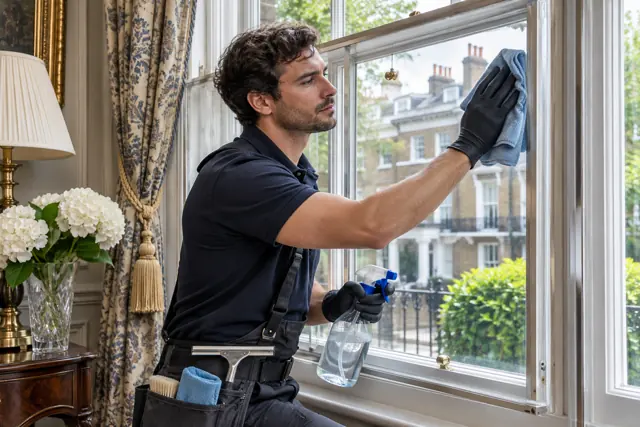
Hand tools near reachable glassSecondary Glazing Cleaning equipment in use
Google Business Profile
Customer reviews on Google
Read what customers say about Shiny across London. Reviews and ratings are from Shiny’s London-wide Google profile.
This was the best window craning service I’ve ever experienced. Extremely professional, took pride in their work and left the place sparkling. Highly recommend.
Windows were cleaned to a good standard. The cleaner turned up and did the job whilst I was not in the property so appreciated that. The process was easy to book from start to finish.
I needed the external windows cleaned at the start of a new tenancy. It was easy to book and a call from the window cleaner before she started helped identify all the windows in a 1 & 2nd floor flat. The tenants are very pleased with the result. The only downside is trying to get a VAT invoice from the company (Top Window Cleaners or Fantastic Services Group). Why can’t you send the invoice as soon as you take payment??
Edmond was excellent. Even removed some high cob webs from the conservatory for me. He is friendly chap and I am amazed at the state of my windows now. Will be rebooking at regular intervals.
Felipe was excellent, he carried out the work very satisfactorily so I would recommend him BUT not the organisation of the job which was sooo painful, required a lot of energy and time from my part, many mistakes were made during the booking process, I had a lot of your customer services agents “harassing me by phoning multiple times in one single days over many days until the job was finally completed. And I really didn’t like being threatened to pay extra constantly for rebooking the service !! Can someone please phone me urgently to sort this out because I’m now ready to cancel my membership