We cover London and locations within the M25. We agree which doors and walkways remain open.
Can reception and the upper glass run on different schedules?
Yes. We can agree separate intervals based on use and exposure.
Use an elevation and room list
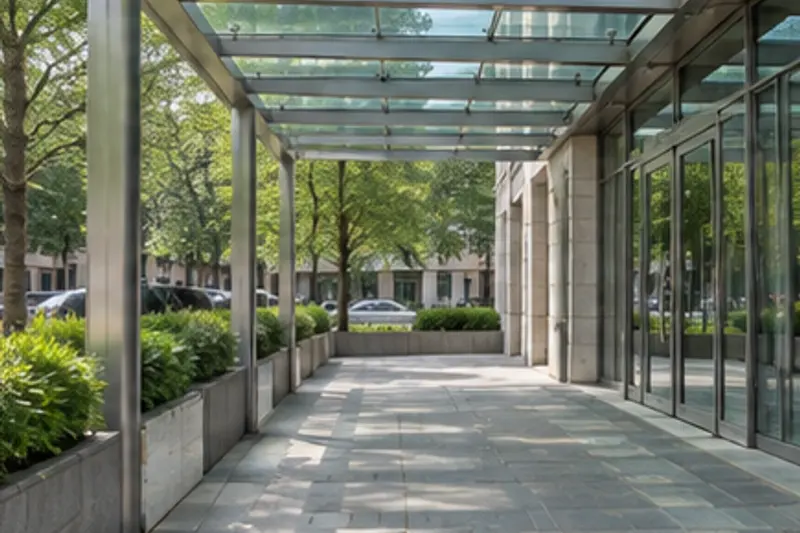
For an office clean, the number of windows doesn’t tell us which parts are accessible or who needs to be informed. We ask for the postcode, floors and elevations, alongside any inside areas you want included. A schedule for a facilities manager might list reception glass, fixed windows, meeting-room partitions and the doors separating communal corridors. Some areas sit under separate management or can only be accessed with a named contact. We establish who can arrange access and check which entrances, stairs or lifts are available before agreeing the visit. For exterior glass, a photo from ground level often shows recesses or canopies better than a count of the individual panes.
Agree how to work around an occupied office
We discuss entry procedures, deliveries and the hours during which particular areas are busy. For meeting rooms, a short break between bookings can give more useful access than a long period when desks or rooms are still in use. Reception doors may need to stay open while we work on the fixed panels nearby. We confirm where tools can be set down and which routes need to stay clear throughout the visit. If there are multiple occupiers, it helps to know who will let us into each area and how to contact them when needed. These arrangements affect both the quote and whether we can finish the agreed glass on the intended day.
Treat internal partitions as individual faces
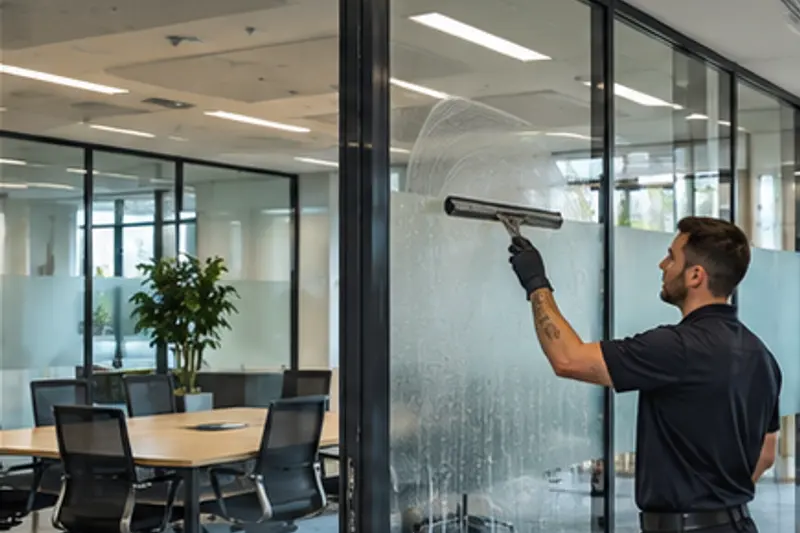
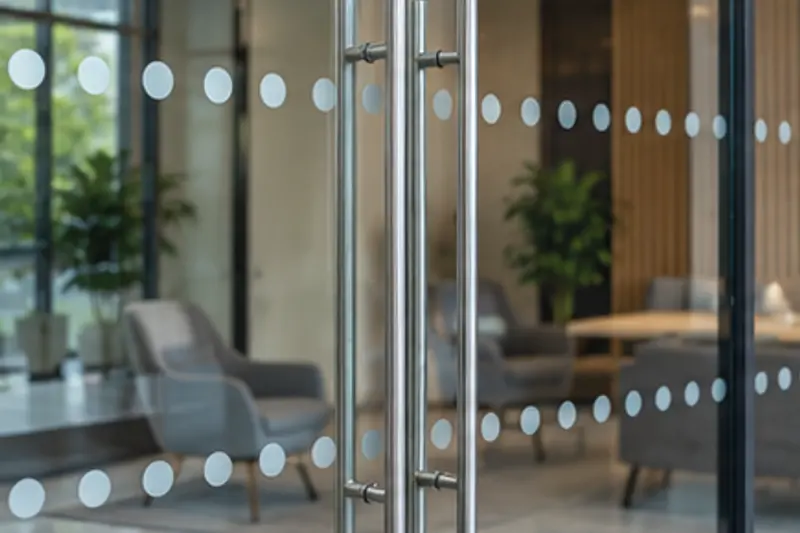
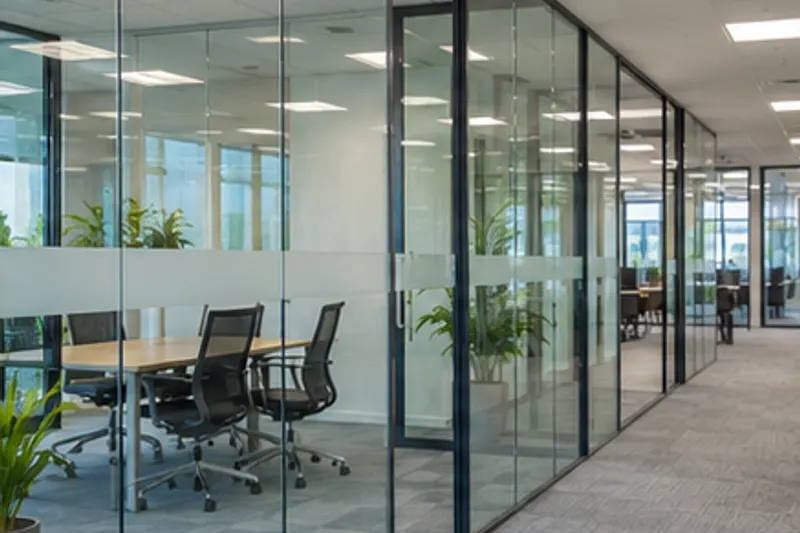
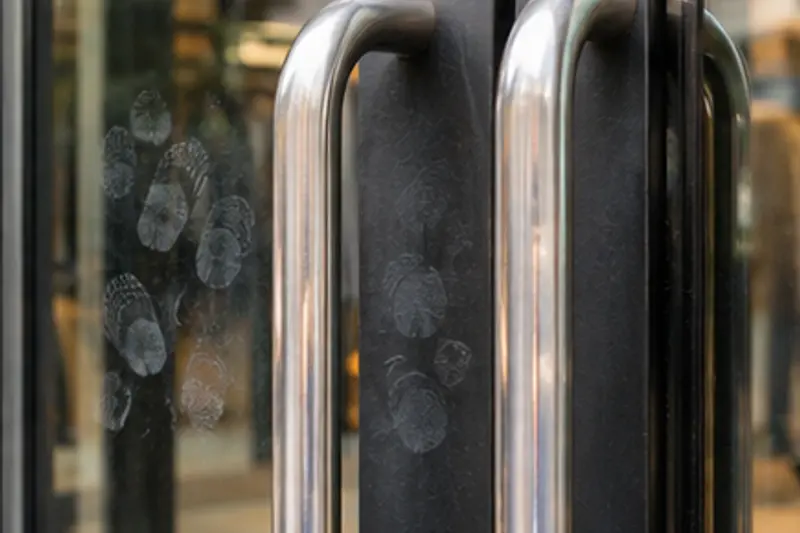
Partition glass often separates two rooms, so access to one side doesn’t tell us how to approach the other. We ask whether both faces are included and check for applied markings, film or other surface finishes. A pane beside a meeting-room door may carry fingerprints near the handle and traffic marks at the lower edge. We control how much water goes onto the glass, choose hand tools that suit the panel and collect moisture near the frame, fittings and floor. It helps to know if furniture stands close to the glass or if one room is occupied throughout the day. We use that information to decide which parts can be reached during the appointment.
Assess the outside from the ground position
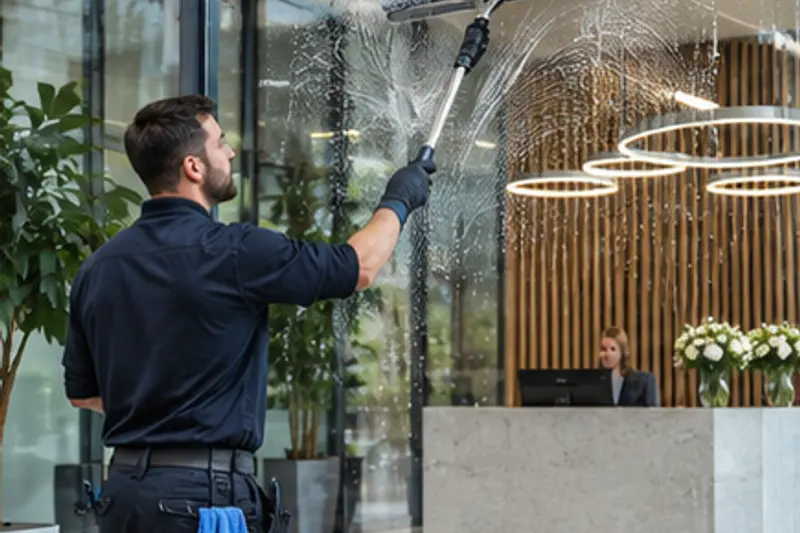
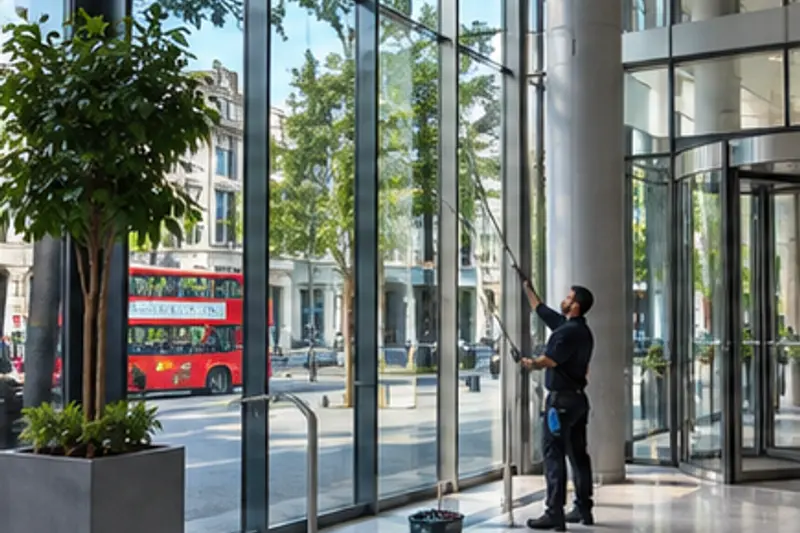
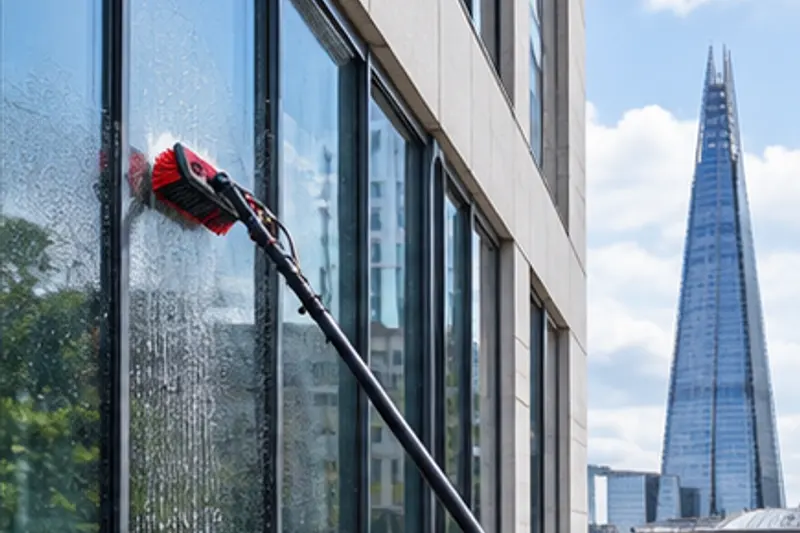
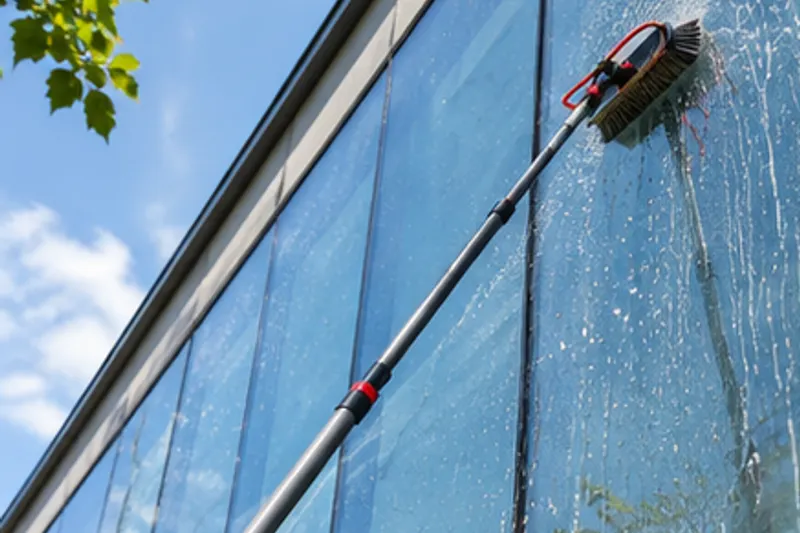
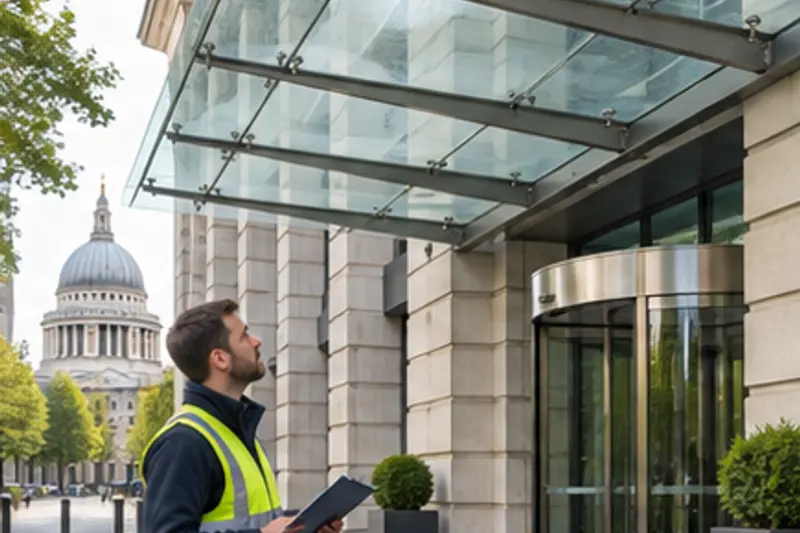
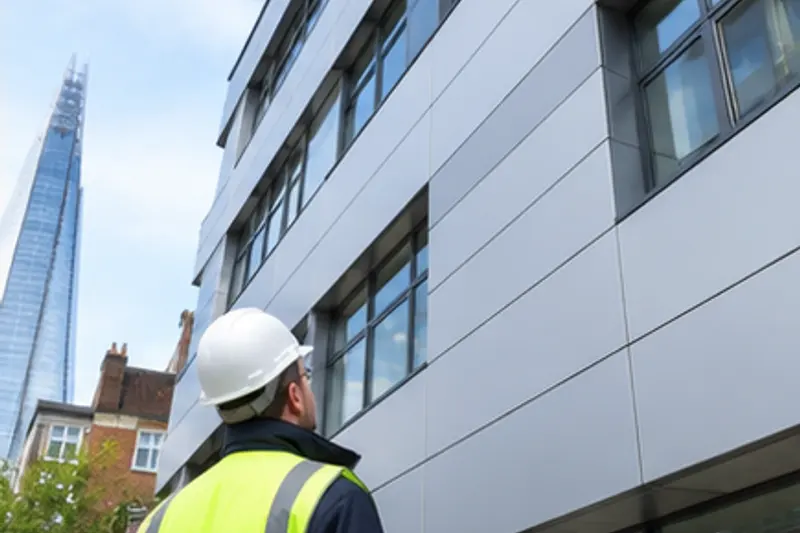
A water-fed pole can suit some office elevations, but we need to see where the brush can meet the glass and where equipment can be operated. A canopy, loading bay or busy pavement may change what is reachable. We consider available working positions, the angle to the pane and the route of the hose around entrances. If the threshold is busy, hand cleaning may suit parts of the lower frontage better. Upper panes, setbacks and areas close to power or similar obstructions need separate access decisions. We confirm which glass can be addressed under the proposed arrangements and discuss other requirements separately when the working position is unsuitable.
Explore the work
Office building explorer
Reception
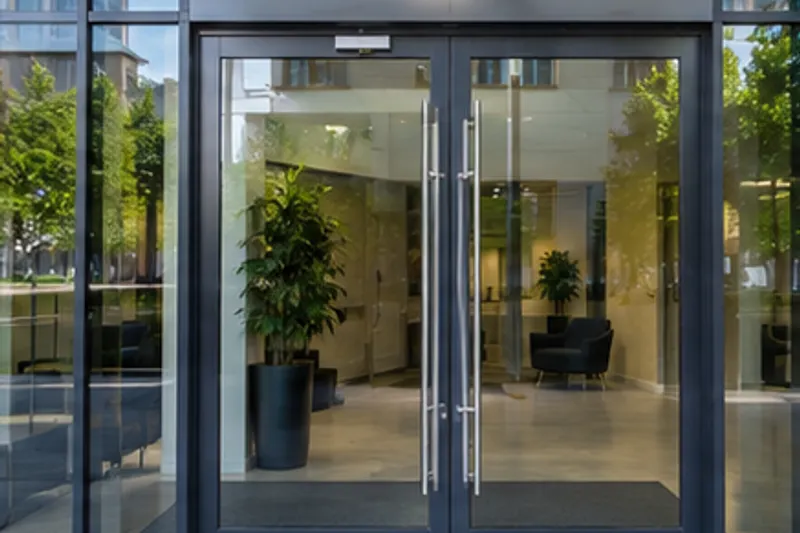
We agree which doors and walkways remain open.
External elevations
We assess height, setbacks and available ground working positions.
Meeting rooms
We confirm both faces and when rooms are free.
Internal partition explorer
Clear pane
We control wash water around carpets and lower tracks.
Applied manifestation
We agree which face carries markings before selecting tools.
Glazed door
We check handles and fittings and work around people passing.
Office cleaning schedule
Busy reception
A shorter interval may suit frequently touched glass.
Meeting rooms
Schedule quiet periods or the time between bookings.
External glazing
Build a separate interval around exposure and access.
Office glazing access
Managed entry
Arrange keys, sign-in or a named contact before the visit.
Occupied areas
Agree how we reach the pane without crowding desks or corridors.
Restricted elevation
We assess what is reachable before offering a cleaning method.
Use the right method around floors and fittings
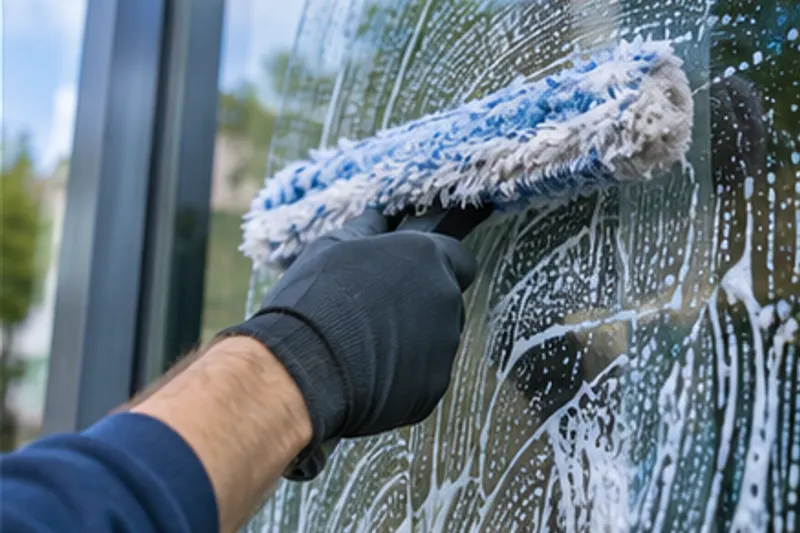
In a carpeted corridor we work with a controlled wash on the reachable glass and collect drips at the lower edge. In reception areas with hard flooring, we still check where moisture could reach threshold mats or people walking past. Hand tools are useful around entrance fittings and at the edges of broad internal panes. On outside faces suited to a pole, a soft brush and purified water loosen ordinary film before the final rinse carries it away. If an exterior frame is included, we assess its condition first and take care where dirty water runs down. We check the finish from a suitable angle and explain if a coating or old damage still shows.
Give the reception a different interval if needed
Regular window cleaning can be planned by the use of each part of the office. Lobby doors and hand-contact areas may show marks long before higher exterior panes look dirty. Meeting-room glass can be cleaned as rooms become available, and some external elevations may need more frequent attention because of exposure to the road. We can discuss an interval that reflects those differences. We review what has collected between visits rather than assuming every area needs the same routine. Building managers can also identify floors that are being refurbished or temporarily occupied differently so we can work around them. The work and access for each visit remain a separate agreement.
Inspect the finish and report access changes
We check the agreed glass and look for missed edges, residue around fittings or water that has run down from a joint. On internal surfaces, we inspect under the available lighting and collect any remaining moisture around the accessible margins. Where there are markings, film or signs of old damage, we’re clear about what the cleaning has addressed. If a room wasn’t available or a door couldn’t be opened, we pass that on to the named contact. It can affect the next schedule as much as the current one. We also flag any change to the working position that should be reassessed, such as a new barrier or site restrictions introduced since the previous visit.
What a manager can send before we quote
List the affected floors and whether the job is outside only or includes reception doors, partitions and other glazed areas. Add the opening hours, quiet periods and any access rules staff will need us to follow. For the exterior, include a ground-level picture showing the whole elevation and anything in front of it. If there are applied markings on internal panes, note which side they’re on if known. We use those details to agree what can be done in a visit and discuss the frequency if you want to book ongoing work. For a large site, it helps to group windows and doors by elevation, area or occupier so all parties are working from the same list.
Set the boundary with the facilities team
An office booking can cover a single reception or a list of rooms and elevations. We record any areas that need a separate access decision, and ask who should be told if we find a restriction during the visit. It helps to have the site contact review the room list with the people who use those spaces. That avoids treating a locked meeting room or unavailable landing as though it had been booked separately. If a scheduled area moves to a later date, we can agree that change and keep the regular visits focused on the parts that need attention most often.
Office building explorer
What we assess
What it means for the visit
Reception
We agree which doors and walkways remain open.
External elevations
We assess height, setbacks and available ground working positions.
Meeting rooms
We confirm both faces and when rooms are free.
Office cleaning schedule
Condition or arrangement
What we consider
Busy reception
A shorter interval may suit frequently touched glass.
Meeting rooms
Schedule quiet periods or the time between bookings.
External glazing
Build a separate interval around exposure and access.
Google Business Profile
Choosing a cleaner for the office
Getting a clean into the diary often means checking with reception and letting staff know. As part of choosing a contractor, take a look at the feedback on our Google business profile. Reviews and ratings are from Shiny’s London-wide Google profile.
This was the best window craning service I’ve ever experienced. Extremely professional, took pride in their work and left the place sparkling. Highly recommend.
Windows were cleaned to a good standard. The cleaner turned up and did the job whilst I was not in the property so appreciated that. The process was easy to book from start to finish.
I needed the external windows cleaned at the start of a new tenancy. It was easy to book and a call from the window cleaner before she started helped identify all the windows in a 1 & 2nd floor flat. The tenants are very pleased with the result. The only downside is trying to get a VAT invoice from the company (Top Window Cleaners or Fantastic Services Group). Why can’t you send the invoice as soon as you take payment??
Edmond was excellent. Even removed some high cob webs from the conservatory for me. He is friendly chap and I am amazed at the state of my windows now. Will be rebooking at regular intervals.
Felipe was excellent, he carried out the work very satisfactorily so I would recommend him BUT not the organisation of the job which was sooo painful, required a lot of energy and time from my part, many mistakes were made during the booking process, I had a lot of your customer services agents “harassing me by phoning multiple times in one single days over many days until the job was finally completed. And I really didn’t like being threatened to pay extra constantly for rebooking the service !! Can someone please phone me urgently to sort this out because I’m now ready to cancel my membership
The published commercial figures are a starting point. Elevations, internal partitions, access and cleaning frequency affect your quote.
Premises
Estimate per visit
Small offices
£50–£100
Larger office buildings or high elevations
From £250, subject to access
Surfaces and access
Illustrations of the work and the surfaces we assess.
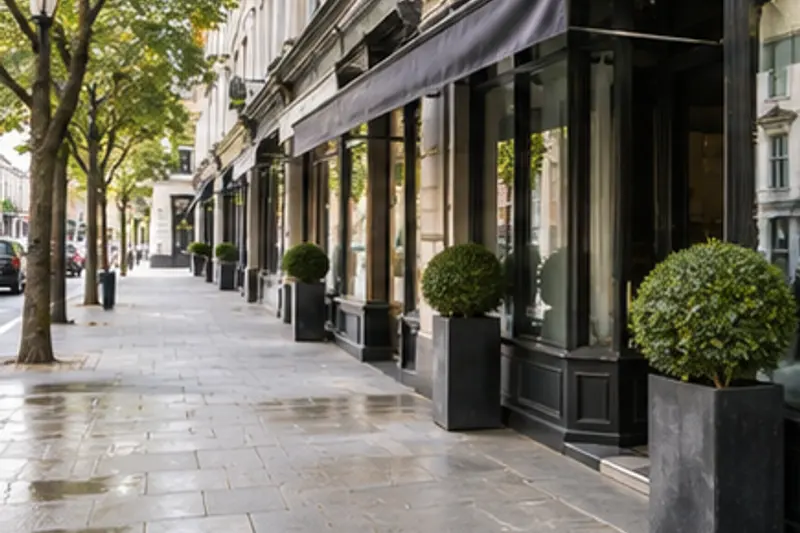
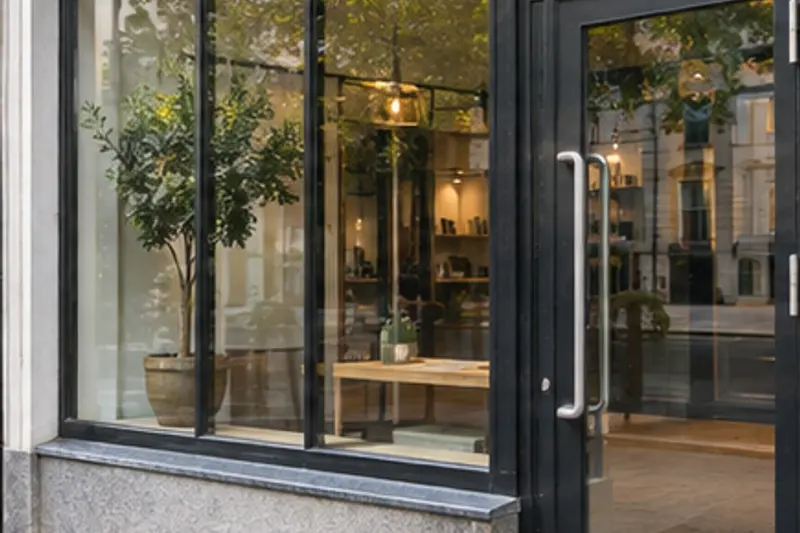
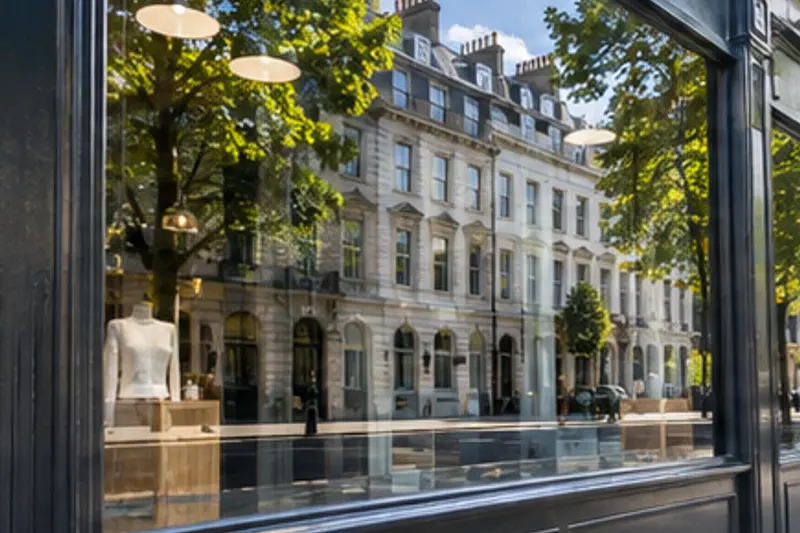
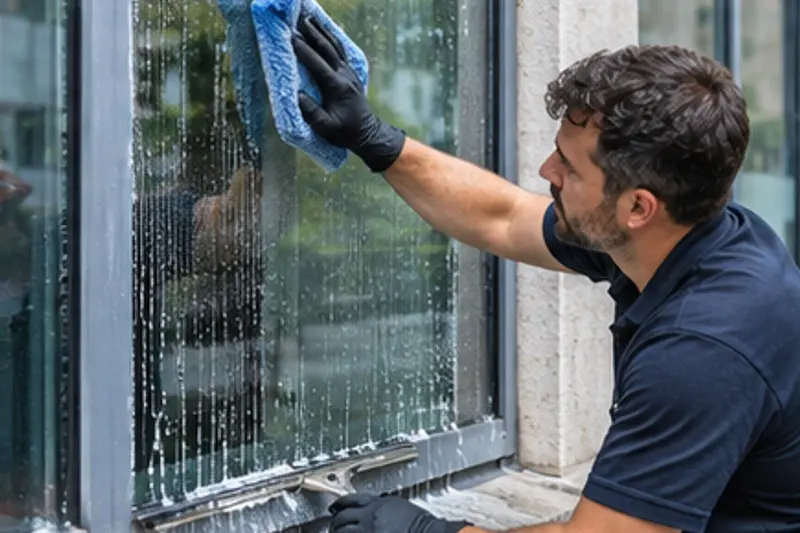
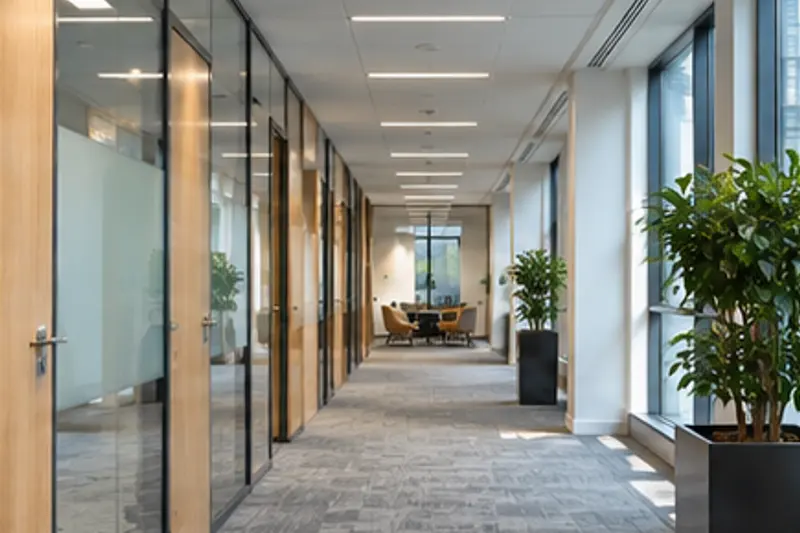
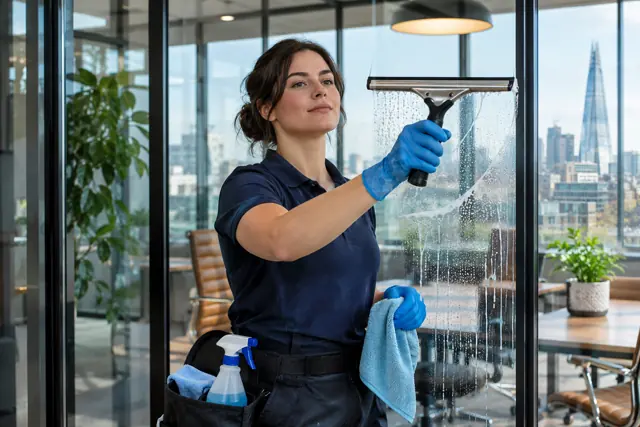
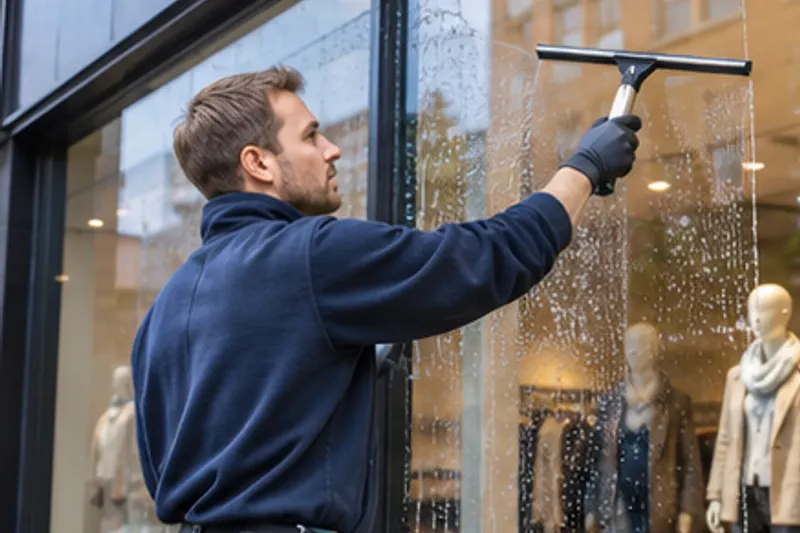
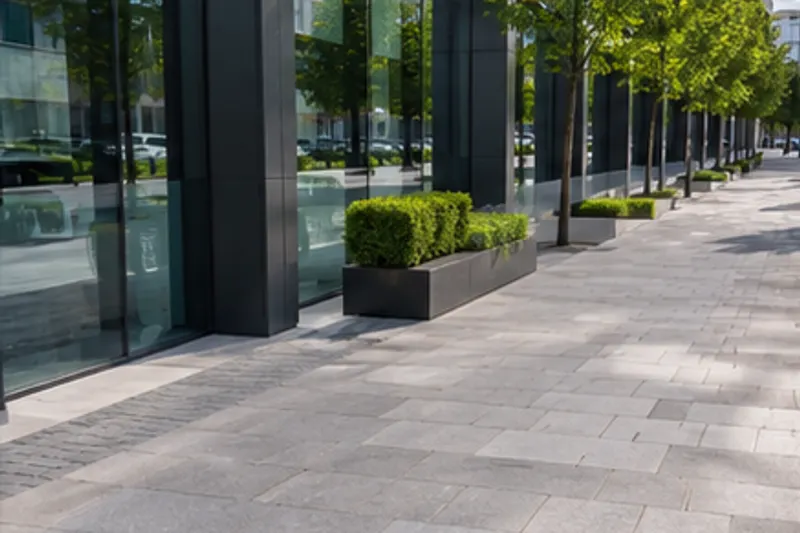
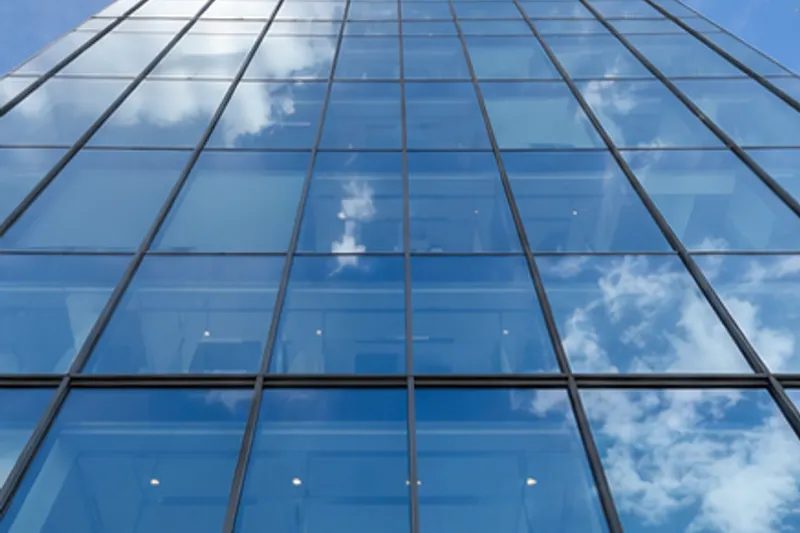
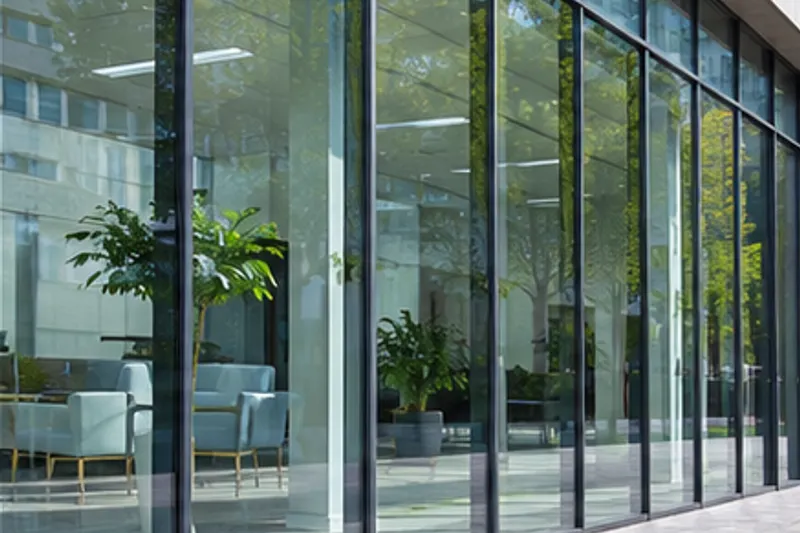
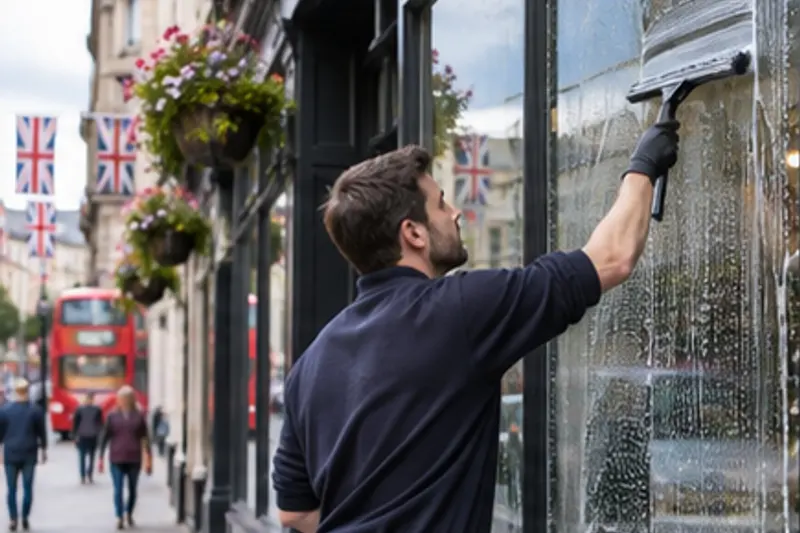
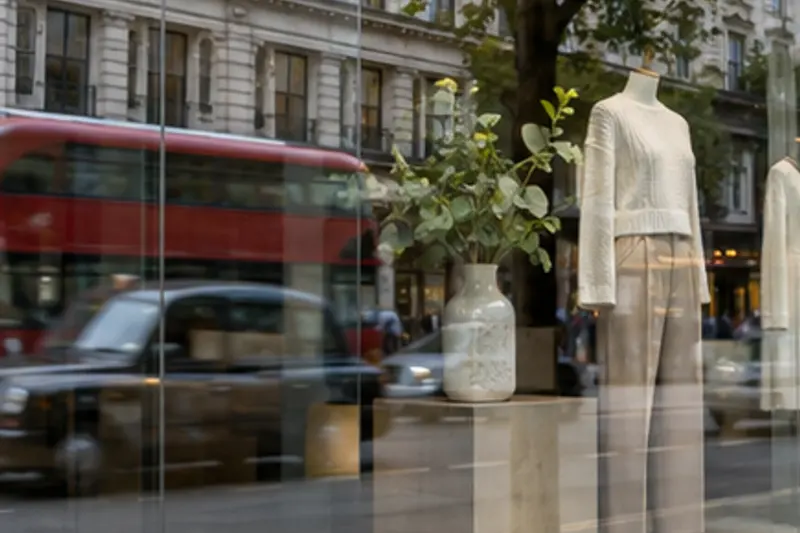
Public approach to an officeHigh office glazing viewed from the groundGround-floor commercial glazing baysLondon high street with cleaner actively using squeegee on shopfrontDoorway handles and fingerprintsDisplay window reflected traffic
Questions before booking
Can reception and the upper glass run on different schedules?
Yes. We can agree separate intervals based on use and exposure.
Who should arrange access to tenant rooms?
A named building contact or tenant representative should agree room access before we arrive.
Can you clean both faces of partitions?
Where both faces are reachable, we can include them by arrangement.
What if our internal glass has manifestation markings?
Tell us if you know which surface carries them so we can assess the finish.
Can we request external glazing only?
Yes. Send the affected elevations and photos showing the approach from ground level.