Can a rooflight in a London extension be cleaned outside?
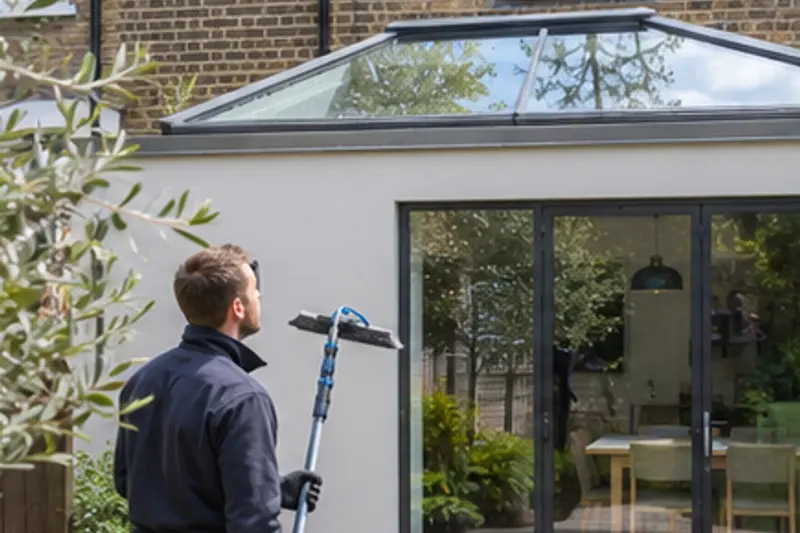
It depends on the distance from the roof edge, the approach from ground level and the material. Send views from the garden and the room so each face can be considered.
Can you assess a skylight above stairs?
Share a photo from the landing and describe what is below the well. Stair access and outside access need separate checks.
Explore the work
Skylight explorer
Outer pane
Roof pitch and position determine whether a brush can reach.
Inside face
We check the ceiling height and the room below.
Roof edge
Tell us about parapets, adjoining roofs and nearby obstructions.
Roof window types
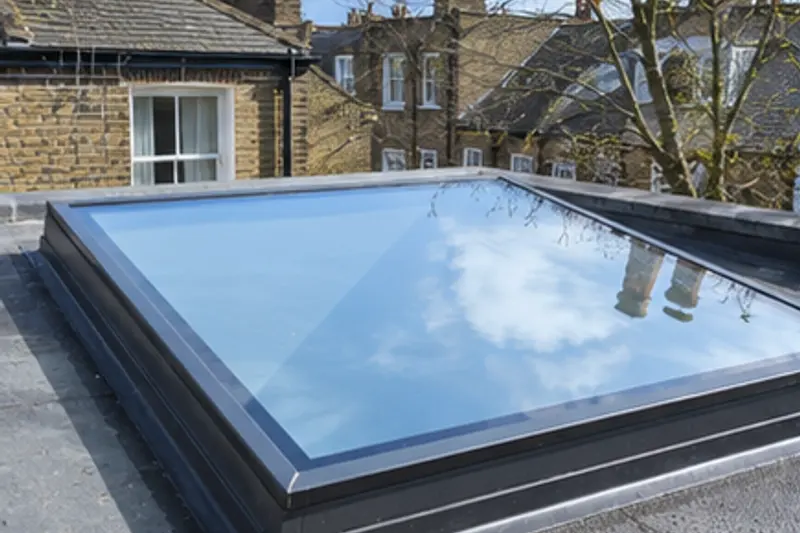
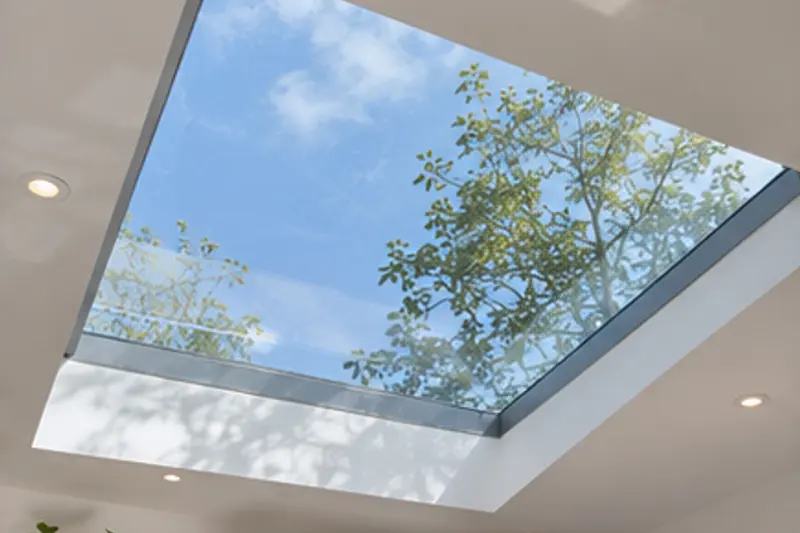
Fixed rooflight
The outside is assessed independently of room access.
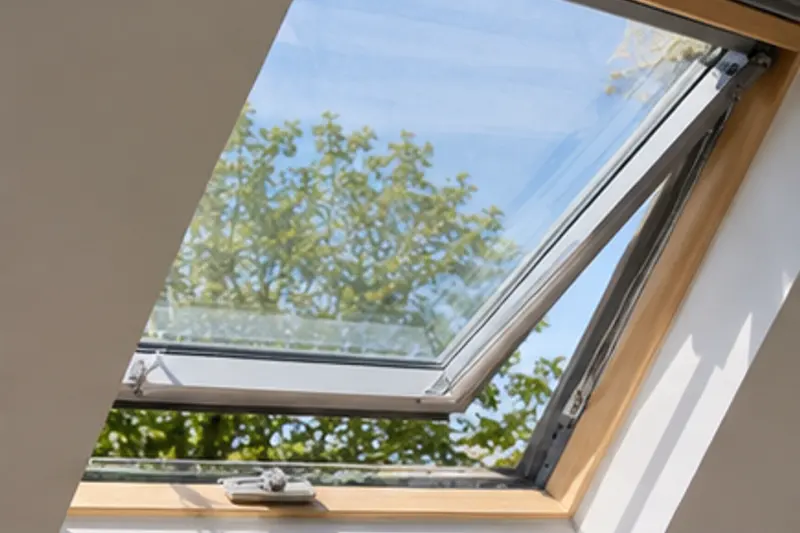
Opening roof window
We check the opening action and what can be reached safely.
Glazed dome
Confirm material and manufacturer requirements before choosing a wash.
Skylight access assessment
Low extension
The depth of the roof can still block the pole angle.
Deep roof well
We check available floor space and height inside.
Unknown layout
A photo from the ground helps us identify what needs assessment.
What to send with your enquiry
It depends on the distance from the roof edge, the approach from ground level and the material. Send views from the garden and the room so each face can be considered.
Skylight dirt and runoff
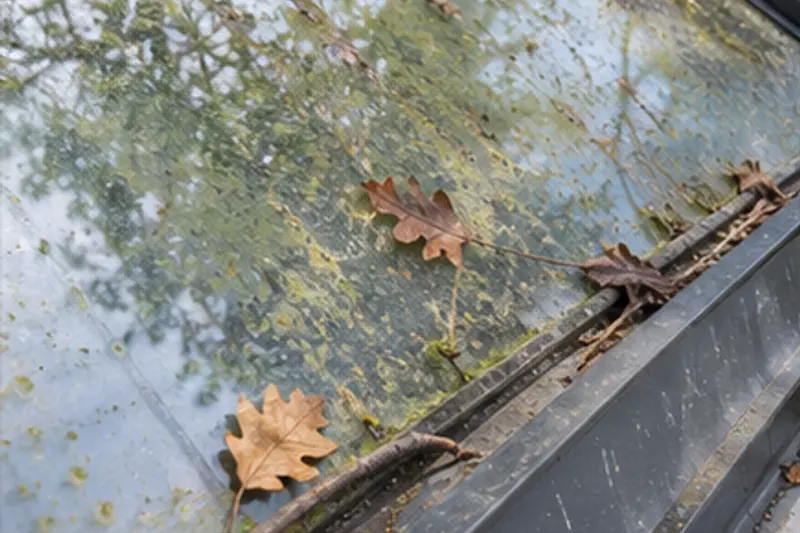
Loose leaves
Check where debris gathers around the reachable edge.
Traffic film
Ordinary film and hard deposits need different assessments.
Run-off
Establish where water goes before approving an outside wash.
Start with the roof and the room below
A rooflight installed near the eaves can present a different working angle from a fixed pane above the centre of a deep extension. The assessment should cover the pitch, how far the glass sits from the edge and what space is available at ground level. Inside, a rooflight can sit above a worktop, stair or narrow ceiling well. Both approaches need to be described separately before a visit can be agreed.
Glazing and rainwater
Check whether it is a hinged roof window, a fixed rooflight or a dome, and identify the material if available. Surrounding flashings, seals and nearby gutters affect the path of a rinse. Surface dirt can collect at the low edge, while moisture visible between panes needs another kind of investigation.
Identify the window from inside
Start with the room. A centre-pivot roof window can often be recognised by its central hinge and handle, while a fixed rooflight has no opening sash at all. Flat rooflights, domes and roof lanterns often look similar from below, but the outer face can be glass, acrylic or polycarbonate. These surfaces do not take the same treatment. The make or any label visible from the room gives a better starting point than a guess based on reflections. Say whether marks appear on the outer face, the room side or somewhere between the panes. When the glazing is difficult to identify, supply a photograph of the whole opening and a second showing the frame, taken without climbing or leaning out.
Plan two approaches to the same pane
A reachable inside face says little about the outside. In a kitchen extension we might have floor space for hand work but very little room beyond the rear wall for an outside pole. For a skylight above stairs, the reverse may be true. The position of the ceiling well, the height of the roof edge and the horizontal distance to the pane all matter. Photograph the roof from the garden at an angle that shows the edge and any parapet or obstruction. Share a wider photograph of the room below if the inside needs attention. The enquiry should say which of the two faces matters most if only one can be reached.
Check opening hardware without forcing it
A roof window that pivots into a cleaning position can change the assessment. That position depends on the particular mechanism and the condition of its fittings. Tell us if the handle is stiff, the sash rubs, the restrictor is stuck or the window has been painted shut. Include motorised blinds or electric openers in the description so the operator can keep equipment clear. Never rely on a child lock or a partially open sash to support the window during a clean. If someone has to unlock the room or bring a key, agree that before the visit. A window that cannot be opened normally can still be assessed as fixed glass.
Inspect the low edge and the roof below
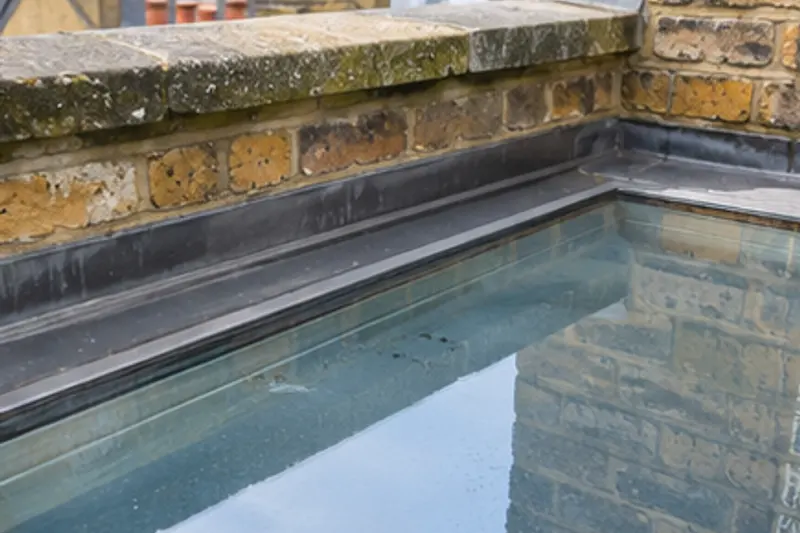
Rain carries loose dirt down the face, so dark deposits often collect just above the lower seal. On a roof lantern, neighbouring faces can drain to different edges and carry dirt across a pane that has already been washed. Leaves against a flashing or grit at the edge should be noted before any rinse. The destination of the water matters just as much. It may fall onto a patio, a passage or a neighbour’s roof. Agree where the water will go and whether anything needs to be moved below. Report leaks around the frame or damp patches around the well separately because cleaning cannot diagnose a failed roof detail.
Choose a surface-appropriate wash
Once access and surface type are agreed, loose dust is lifted before working on stuck marks. On suitable exterior glass, a soft brush and a controlled rinse may be appropriate where there is a stable working position. Inside, a hand washer and cloth allow closer control near painted reveals and timber sills. Care notes for coated glass and plastic domes come first, even where an ordinary window would tolerate another method. Keep the wash away from electrical controls and vulnerable internal finishes. If a mark remains after the initial clean, check it from another angle before deciding whether further treatment is reasonable. A scratch that follows the light can look like dirt from below.
Check what the room actually sees
After the agreed face is cleaned, look at the pane from the room and any safe outside viewpoint. The inside view is especially useful when the roof window sits above a pale kitchen ceiling where a patch stands out in oblique light. Beads can linger near the bottom edge before the glass is dry. Mist between panes, streaks on the other face and older marks inside a coating need different explanations. Ask which faces have been completed if the original enquiry covered more than one. The final handover should state what could be inspected and flag anything that needs a roof-window specialist, such as a recurring leak or a failed sealed unit.
Decide whether the rest of the roof belongs in the enquiry
A single roof window, three fixed lights across a rear extension and a continuous glazed roof are different requests. The first is a pane and its immediate edge. The second may need several working positions. The third brings structural joints, roof drainage and a much larger surface into the assessment. Identify each item on a photo if the property mixes them. Add the floor level and say which approach belongs to the property or is shared. In London, a route that looks direct from a rear window may lead through a neighbour’s passage or a locked courtyard. Establish permission before relying on it in an enquiry.
A rooflight above a narrow side return
Consider a terraced house with a fixed pane along the edge of a deep side extension. From inside it is clear which glass has marks, but from the garden the end of the extension hides the lower edge. A photo taken along the side passage helps show whether an operator can stand far enough back to reach. The same photo may reveal a drainpipe, planter or neighbour’s fence that restricts the approach. A wide shot from the room can show the worktop below and the distance from floor to ceiling. Together these views help distinguish a reachable interior clean from the separate question of exterior access, without anyone stepping onto the roof.
Photographs that help us identify the rooflight
Keep a note of the number of openings and whether each is fixed or opening. If the pane is over a kitchen island, tell us how wide the available floor area is and whether fixtures sit directly below the well. Where a rooflight has a blind in the reveal, mention how it retracts and whether its mechanism is working. If one rooflight differs from the others, mark it in the photographs. An assessment can then address each pane on its own merits.
Skylight explorer
What we assess
What it means for the visit
Outer pane
Roof pitch and position determine whether a brush can reach.
Inside face
We check the ceiling height and the room below.
Roof edge
Tell us about parapets, adjoining roofs and nearby obstructions.
Skylight access assessment
Condition or arrangement
What we consider
Low extension
The depth of the roof can still block the pole angle.
Deep roof well
We check available floor space and height inside.
Unknown layout
A photo from the ground helps us identify what needs assessment.
Surfaces and access
Illustrations of the work and the surfaces we assess.
Fixed rooflightOpening roof windowWeathered glazing and leavesRooflight run-offUnderside inside roomPane near parapet
Google Business Profile
Customer reviews on Google
Read what customers say about Shiny across London. Reviews and ratings are from Shiny’s London-wide Google profile.
This was the best window craning service I’ve ever experienced. Extremely professional, took pride in their work and left the place sparkling. Highly recommend.
Windows were cleaned to a good standard. The cleaner turned up and did the job whilst I was not in the property so appreciated that. The process was easy to book from start to finish.
I needed the external windows cleaned at the start of a new tenancy. It was easy to book and a call from the window cleaner before she started helped identify all the windows in a 1 & 2nd floor flat. The tenants are very pleased with the result. The only downside is trying to get a VAT invoice from the company (Top Window Cleaners or Fantastic Services Group). Why can’t you send the invoice as soon as you take payment??
Edmond was excellent. Even removed some high cob webs from the conservatory for me. He is friendly chap and I am amazed at the state of my windows now. Will be rebooking at regular intervals.
Felipe was excellent, he carried out the work very satisfactorily so I would recommend him BUT not the organisation of the job which was sooo painful, required a lot of energy and time from my part, many mistakes were made during the booking process, I had a lot of your customer services agents “harassing me by phoning multiple times in one single days over many days until the job was finally completed. And I really didn’t like being threatened to pay extra constantly for rebooking the service !! Can someone please phone me urgently to sort this out because I’m now ready to cancel my membership