What should a London premises manager send for a canopy enquiry?
Send photographs of the glass, doorways and drainage edges plus opening hours and the name of the person who can agree access.
Can you assess the underside only?
Yes, the underside can be assessed independently. Marks visible through the glass may still be on the upper face.
Agree the extent of the roof above the entrance
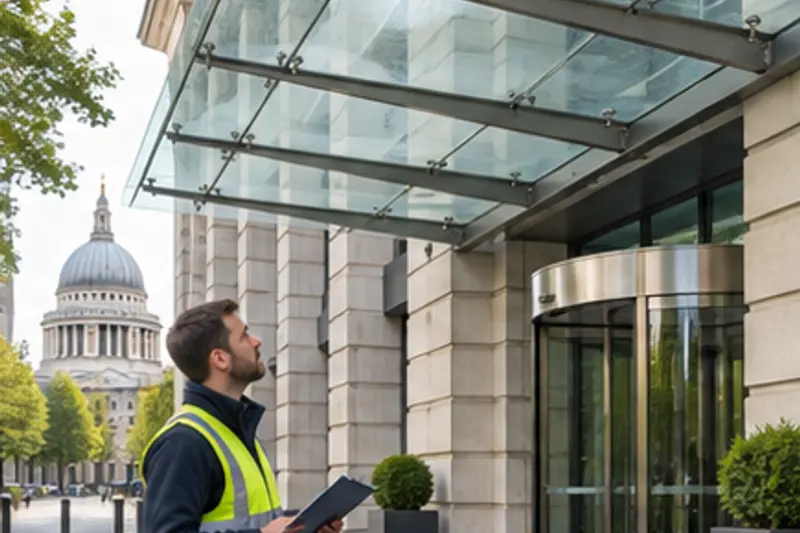
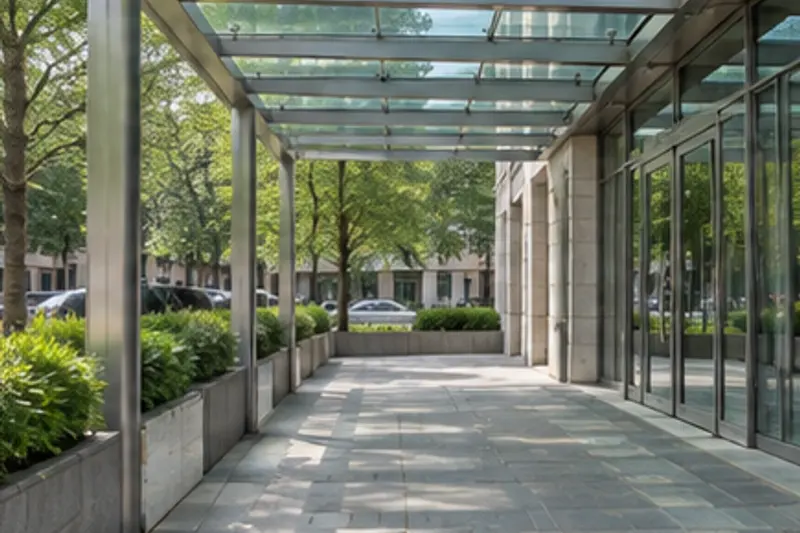
A glazed canopy commonly includes an upper face exposed to weather, an underside over an entrance and a series of supports around both. A ground-level photo showing the whole doorway helps distinguish panels that are on the canopy from surrounding office glazing. Confirm which faces and frames are being considered and who can agree the access arrangements.
Plan what happens below the glass
Water and loose debris coming from an upper face may land on the pedestrian route beneath it. The time of the visit, route around the entrance and which doors must remain in use are part of the assessment. If there are fixtures, signage or heaters below, identify how they affect the proposed method.
Identify the glass above the entrance
A canopy is usually a relatively shallow roof or projecting shelter. There may be glass panels above the entrance, a horizontal underside visible from below, and a frame with gutters or drip edges. Count the sections and say which faces matter most. Photographs taken from the pavement at a safe distance and from under the entrance can show different features. Identify signage, lighting and any open joints. Where overhead glass has been damaged or panes appear loose, notify the responsible site contact before asking for a clean. An enquiry about appearance should be kept separate from inspection of fixings or checks on the structure itself.
Explore the work
Canopy structure
Upper glass
Check what can be reached without putting equipment on the canopy.
Underside
Assess hand access above the entrance.
Frame
Check coatings and visible fixings near the glass.
Canopy surface explorer
Plain glass
Identify accessible faces and condition.
Applied finish
Establish where the finish or film is fitted.
Supporting frame
Inspect exposed edges and where dirt gathers.
Commercial entrance access
Opening hours
Confirm an agreed quiet time.
Shared route
Agree how people can pass safely around the working area.
Restricted access
Confirm the site manager’s requirements before proposing a method.
What to send with your enquiry
Send photographs of the glass, doorways and drainage edges plus opening hours and the name of the person who can agree access.
Canopy runoff visualiser
Outer slope
Map where water will flow past the lower edge.
Blocked outlet
Assess visible obstruction before washing an upper face.
Doorway below
Agree how to manage drips near the public entrance.
Plan around the busy entrance
A canopy may cover the only public entrance. Access has to account for staff, visitors, deliveries and the door swing, even when the glass can be reached from one side. Ask the building contact to identify the quietest period and any alternative entrance. Discuss whether a small section can be worked on while the rest stays clear. If people cannot safely be kept away from the work area or run-off, a different time or method is needed. Mention shared pavements, fire exits and where equipment can be brought in. The person responsible for the premises should agree the arrangements with the contractor before a date is booked.
Assess the upper and lower faces separately
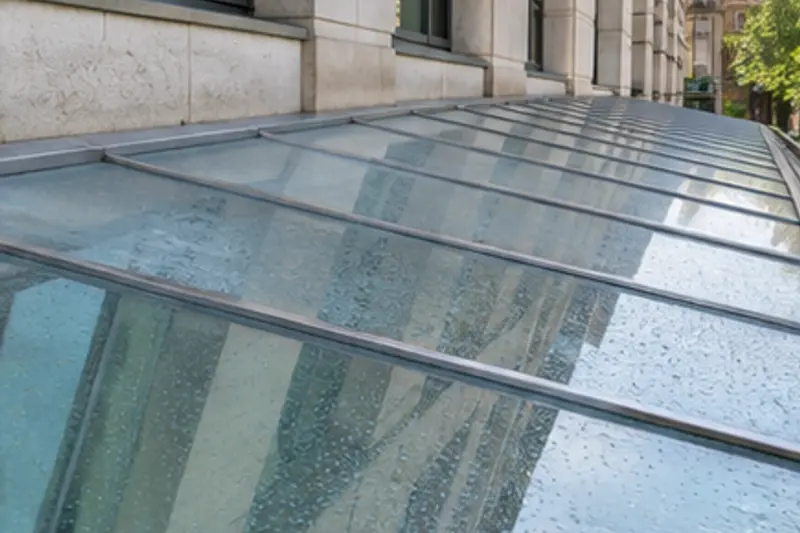
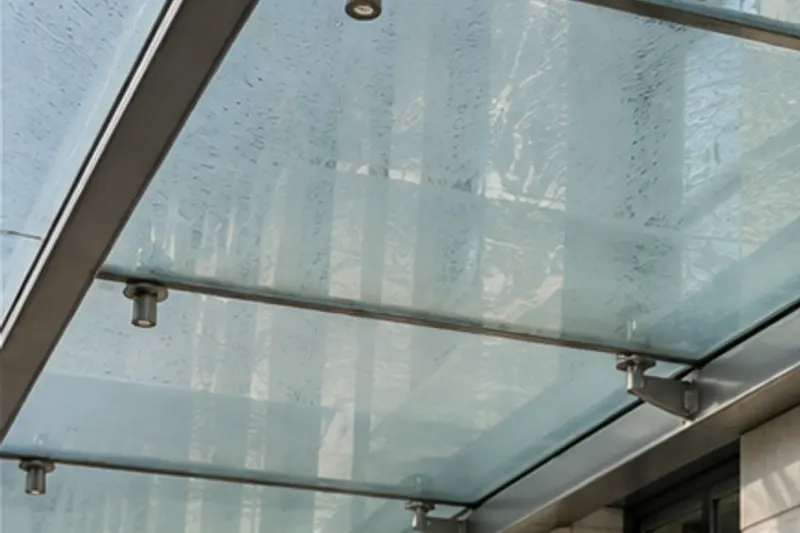
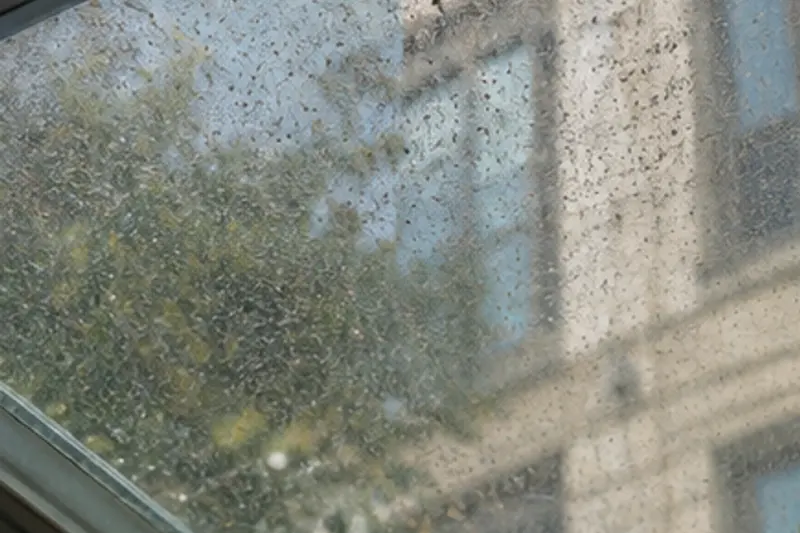
The upper face usually catches outdoor debris while the underside may carry spider webs, fine dust or marks from the entrance environment. The two faces may require different positions and methods. Check whether a protective film or coating appears in the glazing specification. The lower face is the one pedestrians see most, but a deposit above it can be visible through clear glass. Say if you only need one face cleaned. A reachable underside does not establish a safe approach to the upper face. Avoid relying on the canopy to carry equipment or a person. Structural access arrangements, if needed, should be settled by the appropriate site specialist.
Follow the drainage route
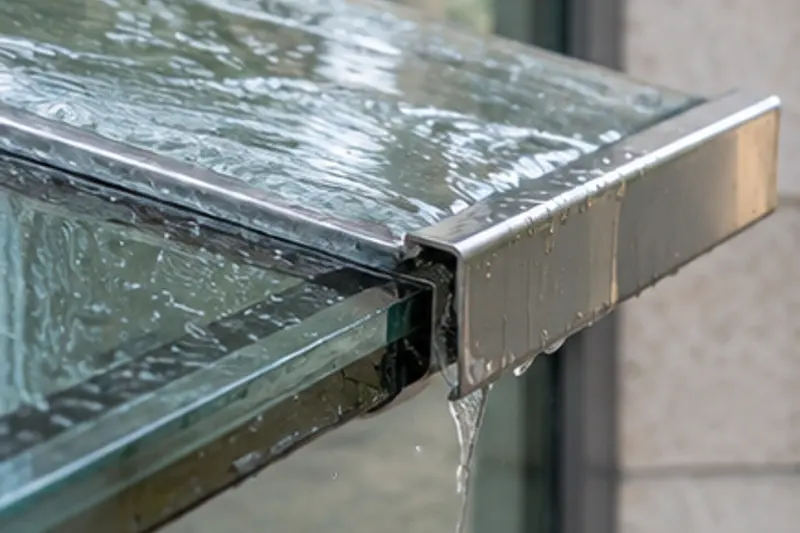
A canopy often sheds water along a front lip or into channels that disappear behind cladding. Note which edge drips after rain and whether water is already pooling above the door. A wash can send loose dirt across a section that has just been cleaned if the route is overlooked. Plan the sequence with the lowest edges and adjacent finishes in mind. Keep rinse water away from door controls, fittings and people passing below. Tell us if there is a known blocked channel or a history of leaks. Clearing an outlet or diagnosing a leak can require separate work, even if the visible glass is accessible for washing.
Inspect brackets and seals before contact
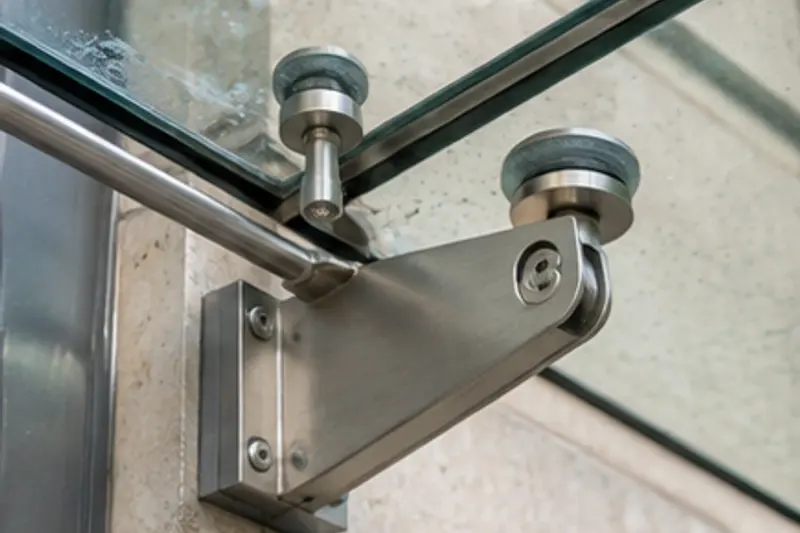
Glass panels may have exposed clips, seals and tie rods. The contact surfaces can include metal finishes that differ from the glass itself. Look for staining where metal meets the pane and record any loose or damaged parts for the site contact. Tell us whether the canopy has recently been installed or repaired. A cleaner should agree what to touch and what to leave alone, with the supplier’s guidance where available. If paint, adhesive or hard water marks have built up around the fittings, start by assessing them rather than assuming ordinary rinsing will lift them. A safe proposal should distinguish the surfaces to wash from components that need attention by another contractor.
Control the wash at the doorway
Set up only in the area agreed with the building contact and confirm the route is clear. On suitable surfaces, loosen dirt without spreading it across the opening or onto the lower face. A controlled amount of water can be particularly important close to signage, switches or freshly painted trim. Inside or underside work may require hand tools where there is a suitable working position. The method should match the glass and the surrounding finishes. Stop if people need to reclaim the area or if run-off goes somewhere unintended. Confirm which sections remain before deciding whether work can continue under a revised arrangement.
Review the canopy from the approach
When the entry route is clear, look from the normal approach and underneath. Residue left on the opposite face can stand out against a bright sky once ordinary dirt has been lifted. Dried drips, mineral deposits and internal fogging may take a separate investigation. Note any inaccessible edges and report loose fixtures or drainage concerns to the premises contact. If the work includes the shopfront below, agree how those panes will be checked after the canopy has drained. A photograph from the same viewpoint as the enquiry can help the site contact compare what changed. For regular visits, agree which face needs attention and how often the entrance can be made available.
A canopy shared by several tenants
In a managed retail parade, a single canopy may run past several doorways, while one tenant only wants the glazing above their unit cleaned. Identify where the panels begin and end and who can approve the work. Mention any public restrictions and planned deliveries, then describe which part is most affected by dirt. A joint above the boundary may carry water from one section to another. Send photos showing both the panel arrangement and the space below, including lights or signs next to the glass. That lets the assessment determine whether a limited visit is practical and whether other tenants need to be involved before booking.
Coordinate with the person who controls the doorway
For a place open to the public, identify who can approve changing the route, when deliveries arrive and how much time is available. If a canopy covers a second entrance that is seldom used, mention whether it can be closed while work takes place. Describe lighting, signs and door controls near the glass. Photos showing the entrance from both sides help establish where someone can work while allowing safe access elsewhere. Confirm the plan with the site contact before setting a date.
Canopy structure
What we assess
What it means for the visit
Upper glass
Check what can be reached without putting equipment on the canopy.
Underside
Assess hand access above the entrance.
Frame
Check coatings and visible fixings near the glass.
Commercial entrance access
Condition or arrangement
What we consider
Opening hours
Confirm an agreed quiet time.
Shared route
Agree how people can pass safely around the working area.
Restricted access
Confirm the site manager’s requirements before proposing a method.
Surfaces and access
Illustrations of the work and the surfaces we assess.
This was the best window craning service I’ve ever experienced. Extremely professional, took pride in their work and left the place sparkling. Highly recommend.
Windows were cleaned to a good standard. The cleaner turned up and did the job whilst I was not in the property so appreciated that. The process was easy to book from start to finish.
I needed the external windows cleaned at the start of a new tenancy. It was easy to book and a call from the window cleaner before she started helped identify all the windows in a 1 & 2nd floor flat. The tenants are very pleased with the result. The only downside is trying to get a VAT invoice from the company (Top Window Cleaners or Fantastic Services Group). Why can’t you send the invoice as soon as you take payment??
Edmond was excellent. Even removed some high cob webs from the conservatory for me. He is friendly chap and I am amazed at the state of my windows now. Will be rebooking at regular intervals.
Felipe was excellent, he carried out the work very satisfactorily so I would recommend him BUT not the organisation of the job which was sooo painful, required a lot of energy and time from my part, many mistakes were made during the booking process, I had a lot of your customer services agents “harassing me by phoning multiple times in one single days over many days until the job was finally completed. And I really didn’t like being threatened to pay extra constantly for rebooking the service !! Can someone please phone me urgently to sort this out because I’m now ready to cancel my membership