We cover London and locations within the M25. Height and lateral distance both matter.
Is a floor number enough for a quote?
We also need the position of the window, the ground below and any projections.
Explore the work
Building height explorer
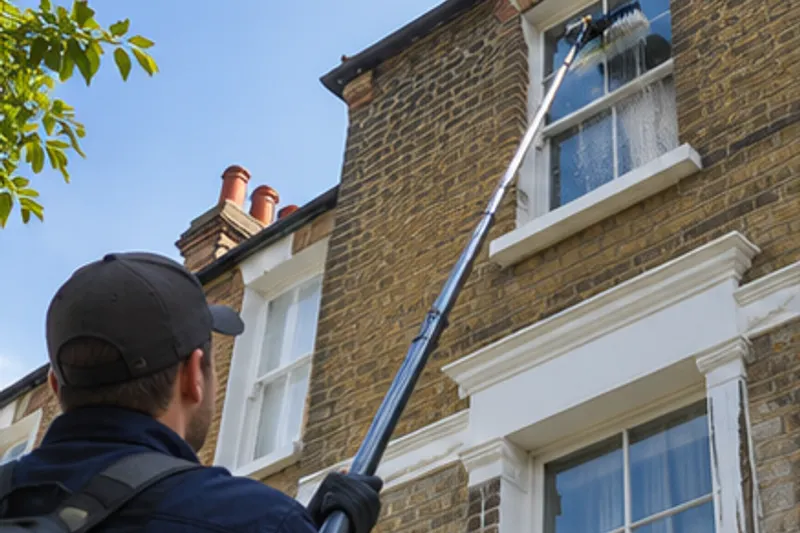
Upper frontage
Height and lateral distance both matter.
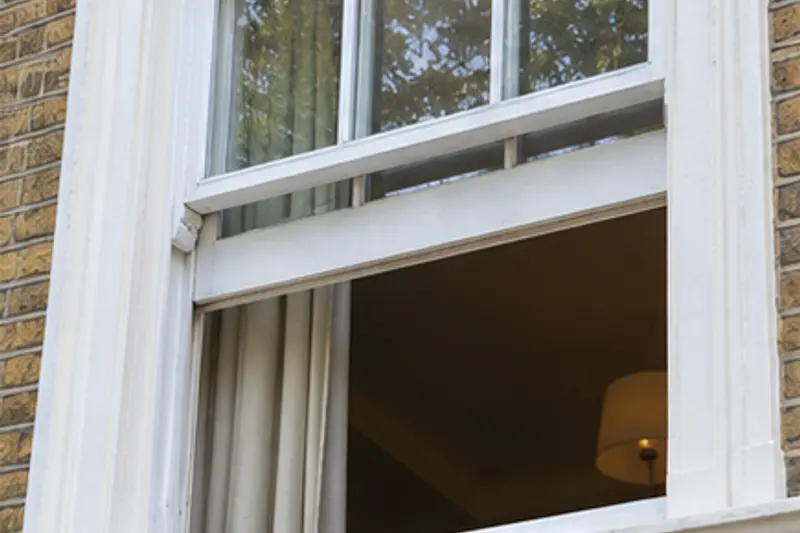
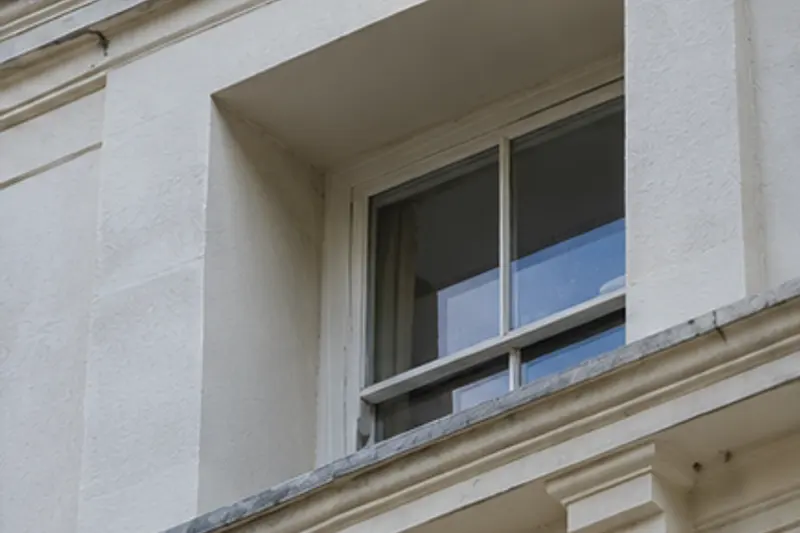
Set-back panes
We assess whether the head will meet the glass squarely.
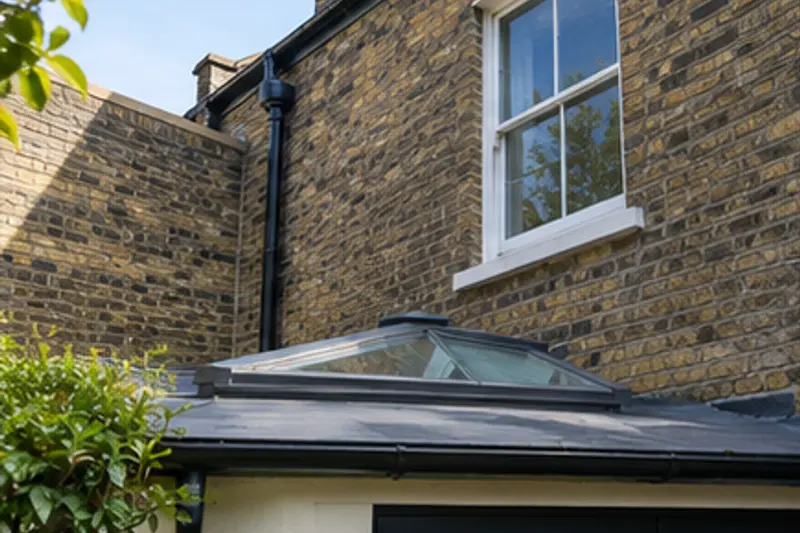
Glass above an extension
Its roof can obstruct the working angle.
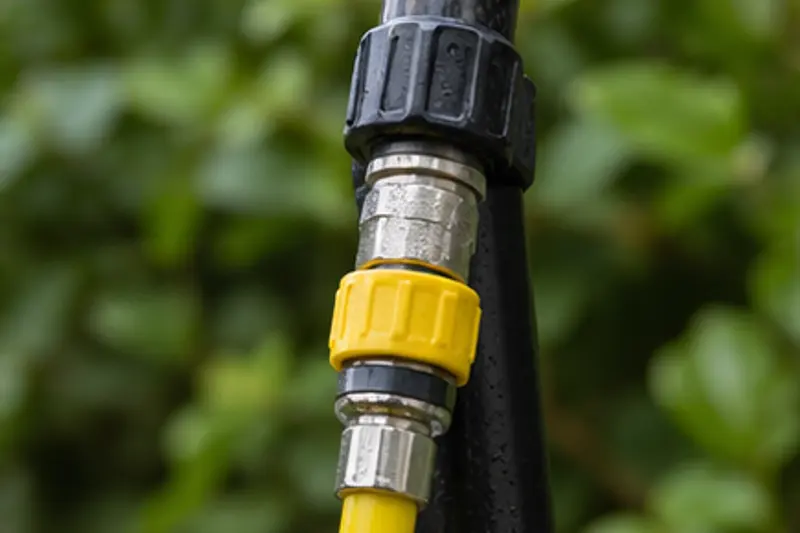
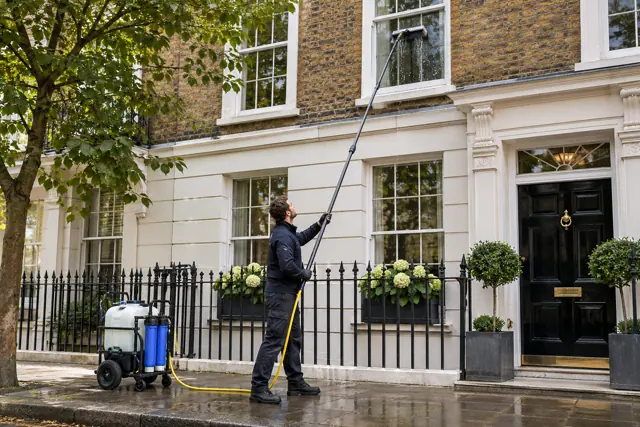
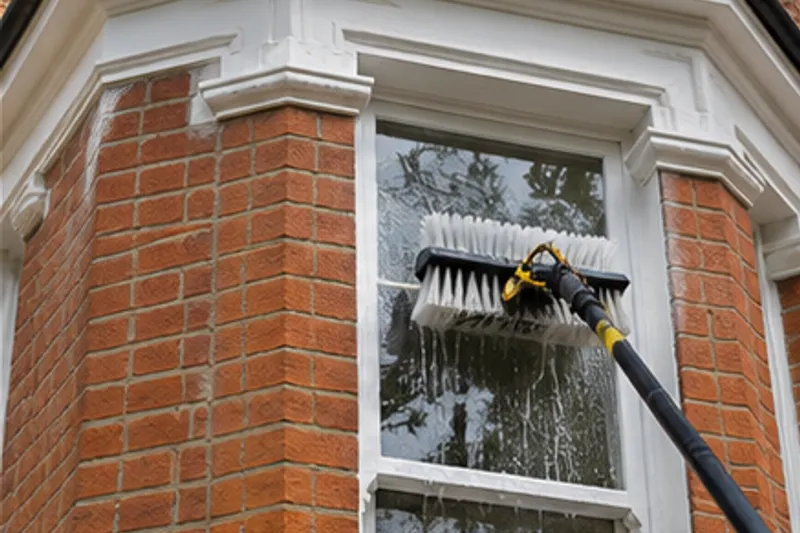
Telescopic pole technology
Pole sections
Reach depends on the working position and the ability to control the brush.
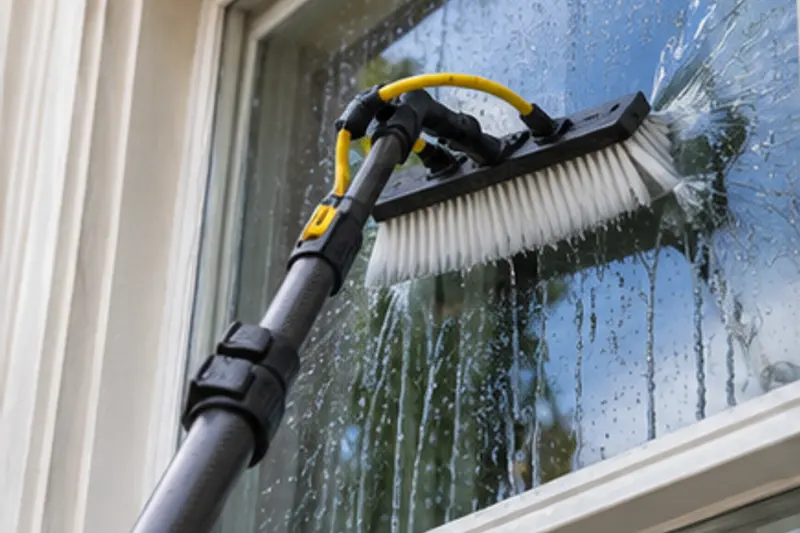
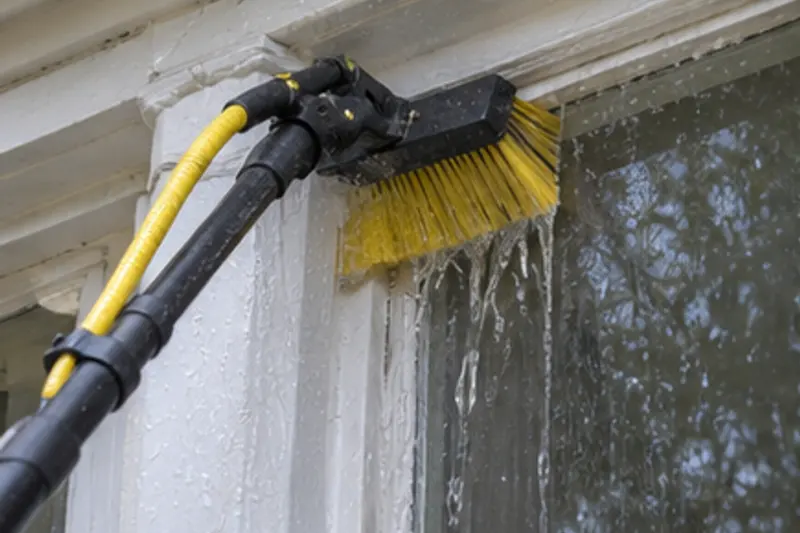
Angled head
We use the angle that lets the brush reach the pane without touching nearby surfaces.
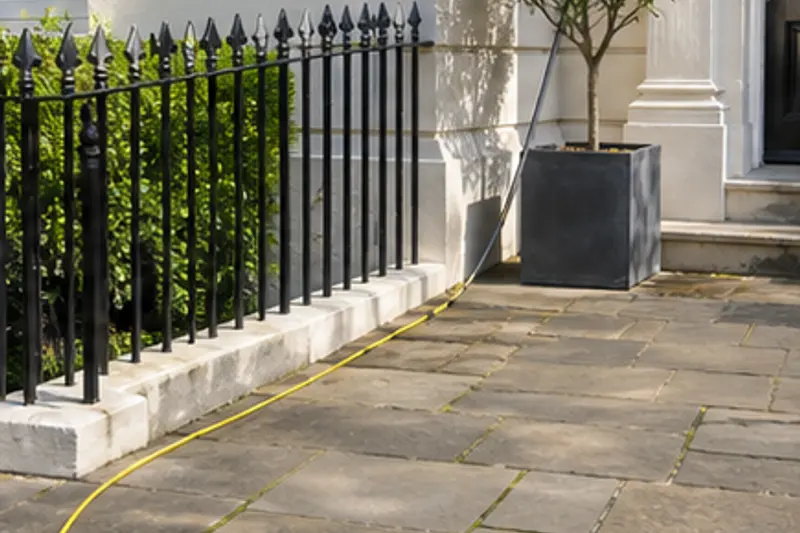
Water line
We agree a route that keeps the hose clear of entrances.
Ground access assessment
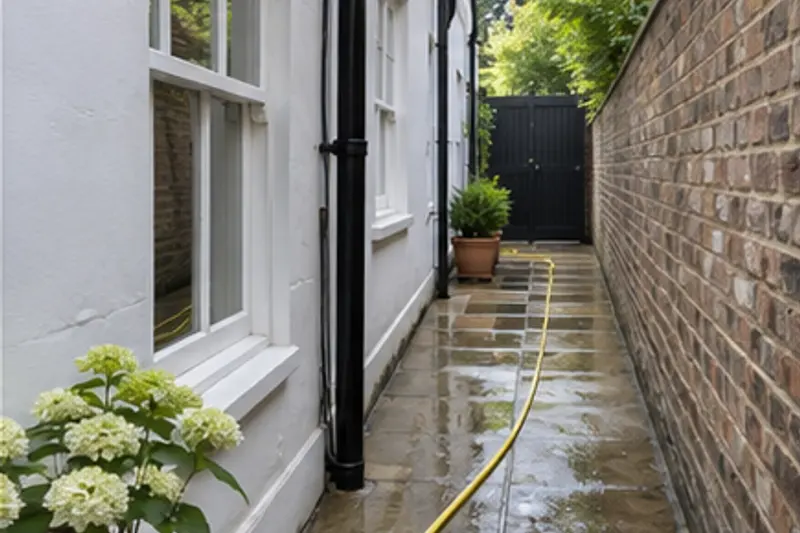
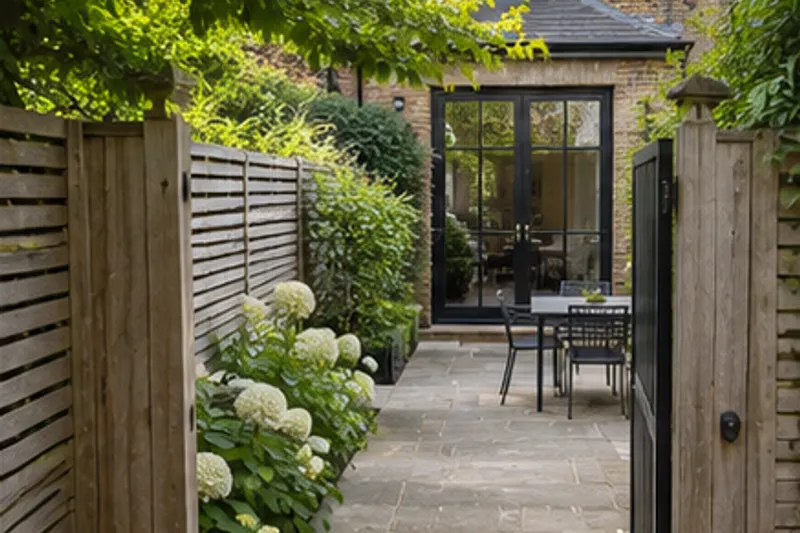
Private garden
Check access through the gate and grounds underfoot.
Shared courtyard
Confirm who can grant access and when the space is used.
Public frontage
Allow an assessment of pedestrians, doors and hose routing.
Reach and obstruction
Clear line
The accessible panes can be assessed for a ground-based wash.
Overhang
The brush may be unable to reach the lower edge from the available position.
Obstructed access
We confirm the limit before agreeing the quote.
Start with what sits under the window
A request for high reach often begins with the floor number. That’s useful, but we also need to know what’s below the pane. A clear garden beneath an upper window is quite different from a deep extension or a pavement where people are continually passing. We ask where we can stand, how far back we can move and whether the proposed position would interfere with doors or a shared path. Photos taken from an accessible ground position give us a better view than a close-up of the pane alone. Where a window sits at the side of a property, tell us how wide the approach is and whether there are gates, steps or an overhang. We leave reach open for assessment until those details are clear.
Identify the working angle, then consider the pole
A telescopic pole increases the distance between the cleaner and the glass, but the brush still needs to meet the pane at a workable angle. Depth matters as much as height for glass set back behind a roof edge. We assess whether we can bring the brush in squarely and keep it steady across the top and lower corners. A sill projection can stop us reaching the bottom of a pane even if the centre is visible. The same issue can occur on a bay below another window. We consider which side of a projection offers the best position and whether we can move between faces without bringing the equipment into contact with the building or the ground route used by others.
Check whether a ground position gives enough control
The surface underfoot and room to handle the equipment both influence what can be done. An open level area can be quite different from a narrow border beside a fence or a sloping path. We assess the hose route and what the equipment will pass over while it is being moved. In shared grounds, we need to know who controls access and at what times the area is in use. Where the only obvious approach is near a public entrance, we check deliveries, pedestrians and the available working space before agreeing it. Where access can’t be arranged sensibly, we confirm that the pane needs a different assessment or explain that it will fall outside the booking.
Read the elevation pane by pane
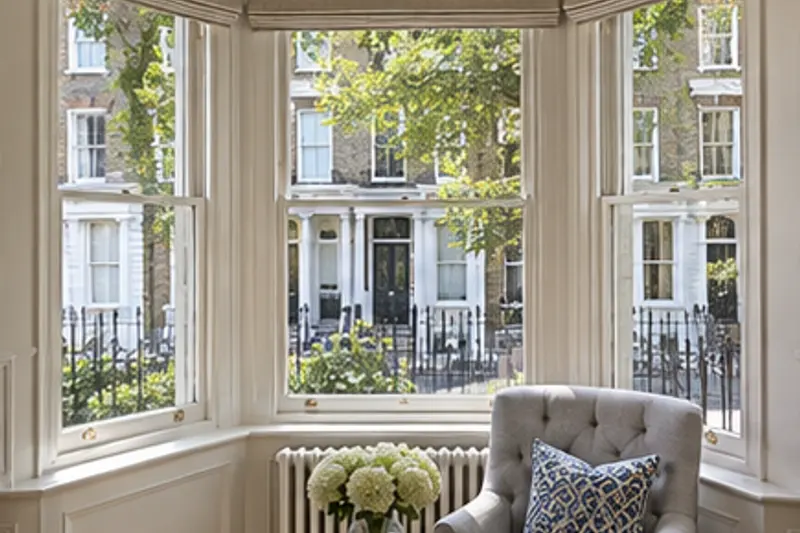
Window positions can change across a single floor. Some face forward and others sit in shallow recesses, in a side return or above a canopy. We look at each of those before quoting rather than assuming that a working method for one will apply to the rest. On a narrow frontage we may have to assess access from two positions to check both the main panes and their returns. If the building has an extension or another structure with fragile roof glazing below, we include that in the visual assessment. We ask for a photo showing the whole elevation and the ground beneath it. Once we can see both, it’s easier to explain which glass is in reach and why.
Prepare a water-fed wash for the agreed panes
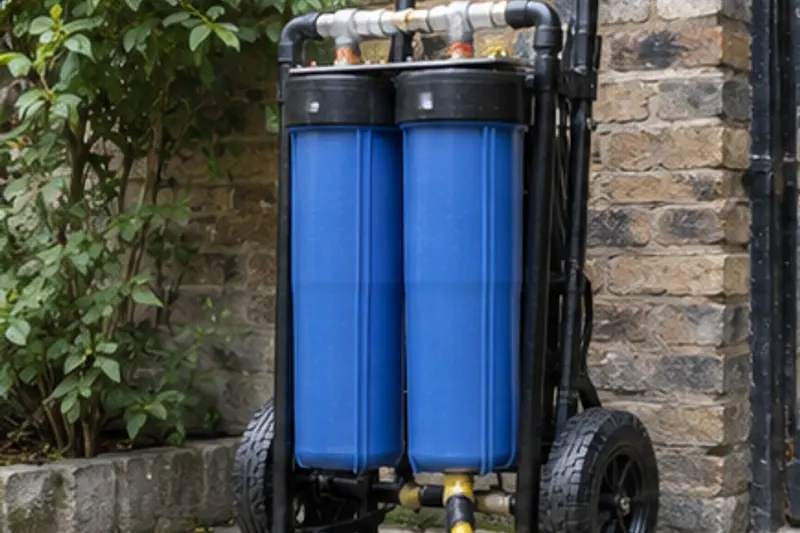
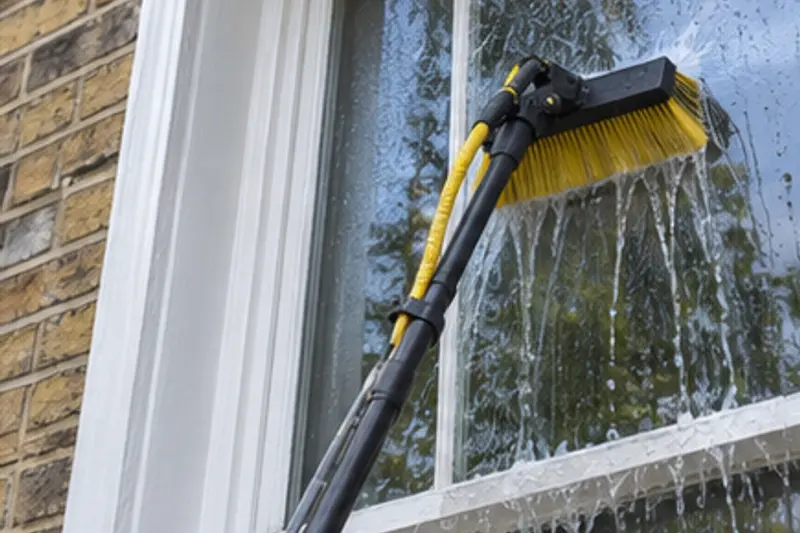
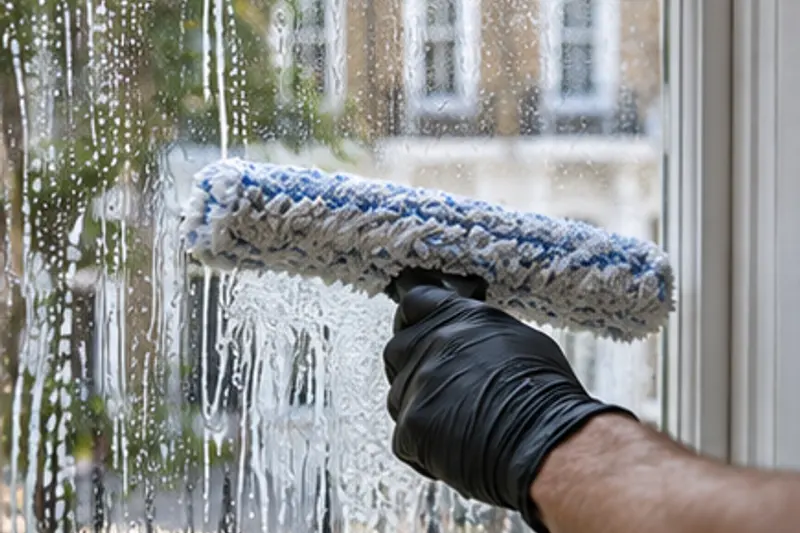
Where a pole is appropriate, we prepare the purified water supply and check the hose path before bringing the brush into position. We select a brush head and angle to fit the pane and avoid working across a long projection if it makes the glass hard to control. We check the frame condition first. Where reachable frames are part of the booking, we address their loose dirt before the final rinse of the glass. The brush works along the top edge and accessible sides so dirt has a route to clear. The rinse then carries the loosened material away. We look at where it drains to avoid leaving dirty water on glass below that has already been cleaned.
Separate height from surface condition
Once physically reachable, glass can still have deposits that call for a separate assessment. Ordinary dust and traffic film generally respond to a wash and rinse. Cement, paint spots or an aged mineral deposit may need closer inspection than equipment can provide at that working position. We ask about recent building work so the booking can allow for the problem to be considered before we start. If a finish or coating is visible or known, we check what can be used on it. Visible frame damage or persistent marks should be discussed separately from how high the pane sits. That distinction helps us keep a regular upper-floor clean focused on the surfaces and methods we can responsibly agree.
Check the result and explain what was reachable
For higher panes we make an inspection from the best available viewing angle rather than judging the finish only from wherever we first set up. We check the lower edge after the rinse and look for dirt that has run down from a joint or rail. Where a projection blocks the view, we tell you about the limitation. If the working position turns out to be too narrow or an entrance cannot stay clear, we explain which pane was affected rather than leaving you guessing. We also note any arrangement that will matter on the next visit, such as a key for a side gate or a time with fewer people using the courtyard.
Give the quote enough detail to reflect the property
Send the postcode, the elevation, the approximate floor level and a short description of the glass. Include who controls access if the building has a shared entrance or a managed courtyard. Let us know about loading areas, roofs and awnings, and provide photos taken from ground level if you can. A similar-looking window on another side of the building may need a completely different approach once the space below it is considered. We agree the work and access for your building before setting an appointment. Regular upper-floor visits can then be planned around the same arrangements, with a new assessment whenever the property or access changes.
Make room for changes on the day
High reach is assessed with the route and conditions we can actually use. A vehicle in the working area, a gate that won’t open or an unexpected restriction can change that position on the day. We confirm whether there is another suitable approach before doing the affected panes. Tell us early if work is happening at the building, access times have changed or another contractor is using the frontage. Those details help us plan a realistic visit and explain which elevation may need separate arrangements. A repeat appointment can follow the existing plan once access has been reconfirmed.
Building height explorer
What we assess
What it means for the visit
Upper frontage
Height and lateral distance both matter.
Set-back panes
We assess whether the head will meet the glass squarely.
Glass above an extension
Its roof can obstruct the working angle.
Ground access assessment
Condition or arrangement
What we consider
Private garden
Check access through the gate and grounds underfoot.
Shared courtyard
Confirm who can grant access and when the space is used.
Public frontage
Allow an assessment of pedestrians, doors and hose routing.
Google Business Profile
When the windows are hard to reach
If an upstairs pane sits above a porch or extension, talk us through the space below it. To get to know the company before calling, you can read what people have posted on Google. Reviews and ratings are from Shiny’s London-wide Google profile.
This was the best window craning service I’ve ever experienced. Extremely professional, took pride in their work and left the place sparkling. Highly recommend.
Windows were cleaned to a good standard. The cleaner turned up and did the job whilst I was not in the property so appreciated that. The process was easy to book from start to finish.
I needed the external windows cleaned at the start of a new tenancy. It was easy to book and a call from the window cleaner before she started helped identify all the windows in a 1 & 2nd floor flat. The tenants are very pleased with the result. The only downside is trying to get a VAT invoice from the company (Top Window Cleaners or Fantastic Services Group). Why can’t you send the invoice as soon as you take payment??
Edmond was excellent. Even removed some high cob webs from the conservatory for me. He is friendly chap and I am amazed at the state of my windows now. Will be rebooking at regular intervals.
Felipe was excellent, he carried out the work very satisfactorily so I would recommend him BUT not the organisation of the job which was sooo painful, required a lot of energy and time from my part, many mistakes were made during the booking process, I had a lot of your customer services agents “harassing me by phoning multiple times in one single days over many days until the job was finally completed. And I really didn’t like being threatened to pay extra constantly for rebooking the service !! Can someone please phone me urgently to sort this out because I’m now ready to cancel my membership
Illustrations of the work and the surfaces we assess.
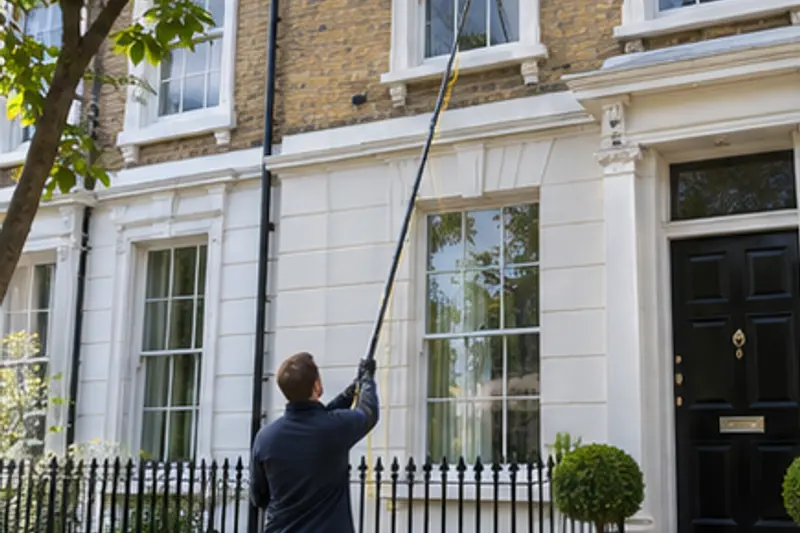
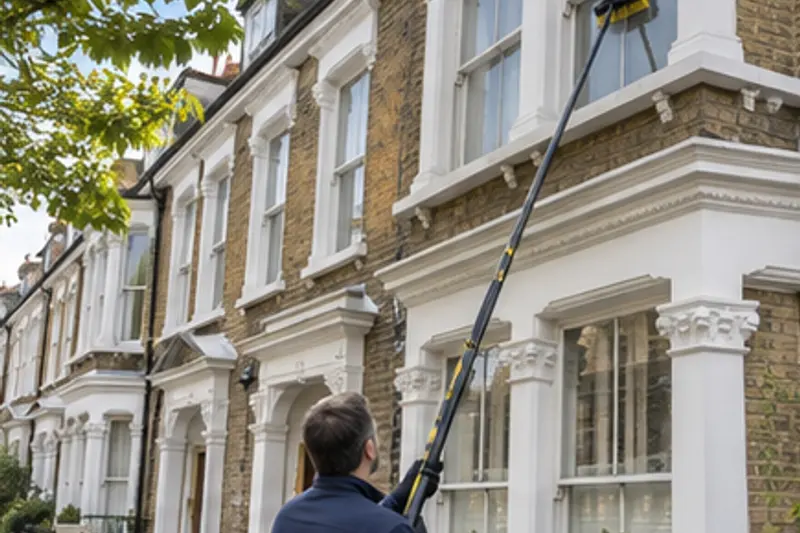
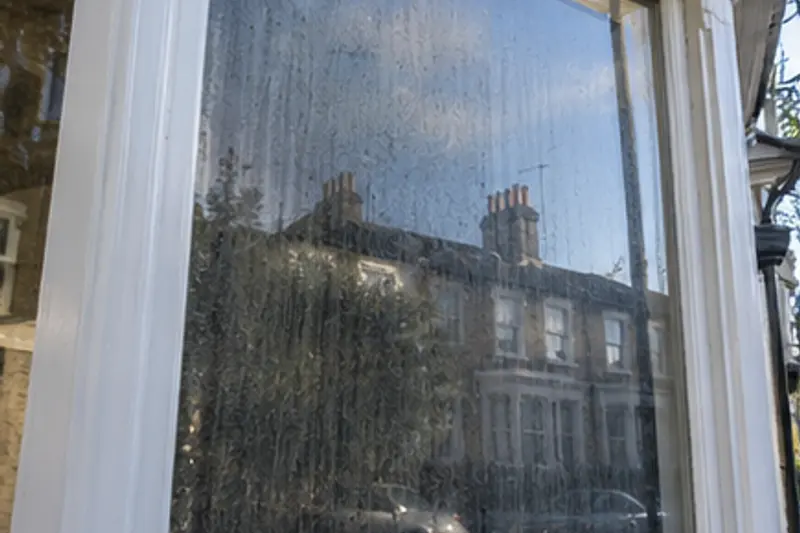
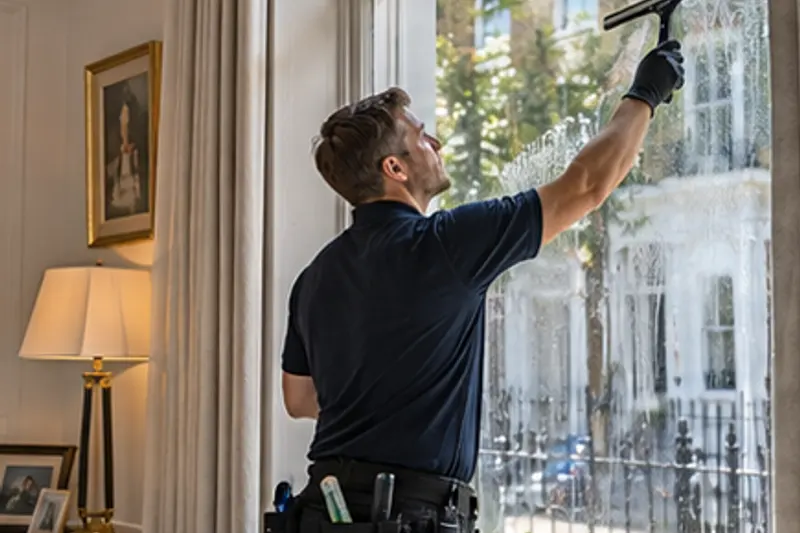
Cleaner using hand tools indoorsGarden access to residential glazingLondon house with several window typesLondon terrace façade, cleaner working with water-fed brushBay glass traffic filmRinsing upper sash
Questions before booking
Is a floor number enough for a quote?
We also need the position of the window, the ground below and any projections.
Can you reach over a canopy?
We assess canopy depth and the available ground position before agreeing the glass.
Do you guarantee a maximum height?
Reach depends on the building, the equipment and the working angle. We confirm it for the property.
Does the rear elevation need a separate check?
Yes, gates, garden levels and extensions can change which panes can be reached.
Can heavy building residue be removed at height?
We assess the surface and available working position separately, since it may need more than a standard clean.