What information is needed for a London cladding enquiry?
Provide the material and care guidance if available, together with photos of the affected area, its height and access from ground level.
Can I include nearby windows and signage?
List the surfaces separately. They may need different treatment and practical arrangements around the entrance.
Verify the façade material
Two panels that look almost identical from street level may have different coatings. A facilities contact may be able to supply a specification, previous maintenance record or maker’s cleaning guidance. Assess the panel condition and exposure alongside that information before considering how to wash the surface.
Identify what changed on the face
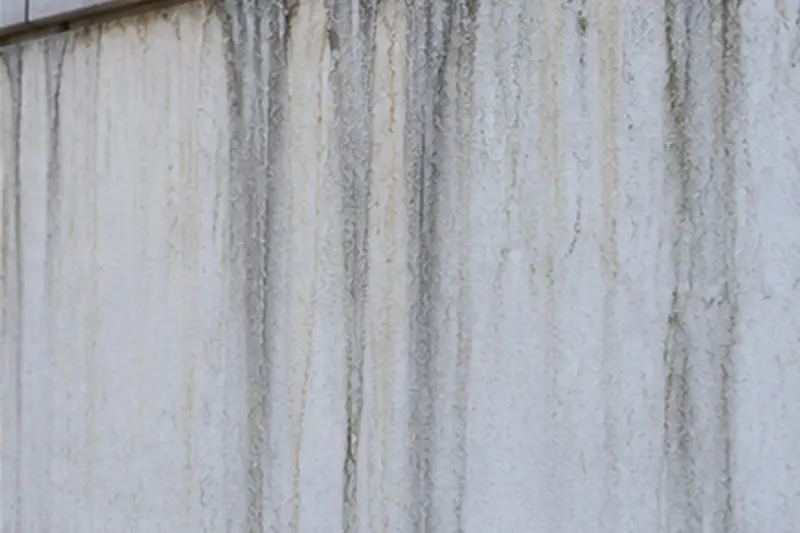
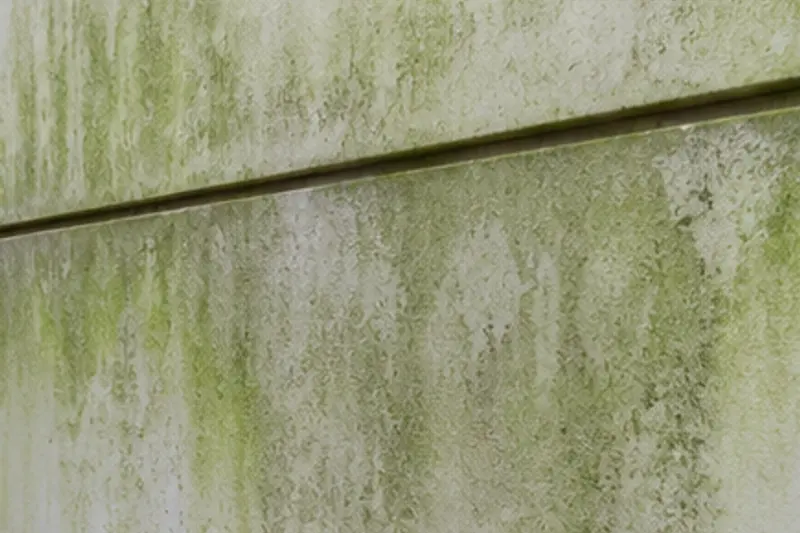
Run marks beside a joint can be loose surface dirt or discolouration associated with drainage. Weathering can change a coating even when debris is removed. A sheltered elevation and a road-facing entrance may require different assessments. The position of nearby pedestrians, steps or low fixtures also affects what may be workable.
Identify the façade system before asking for a wash
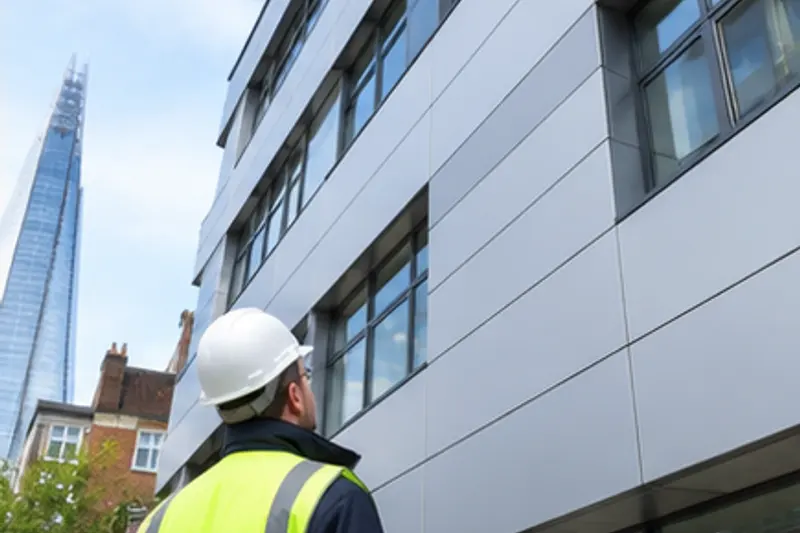
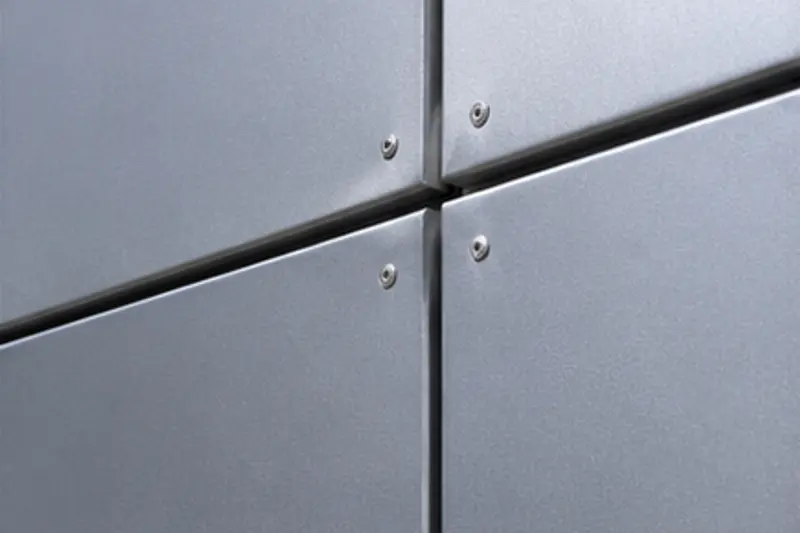
A smooth panel seen from the pavement might be powder-coated aluminium, a composite panel or a painted board. The edges and fixings may reveal more, but the building’s maintenance documents are a better guide. Describe how the panels are arranged, which areas are affected and whether parts have recently been replaced. Ask the owner for the manufacturer’s care instructions and any restrictions that come with the warranty. If the surface cannot be identified, avoid specifying a wash on the basis of colour or shine. This is especially important when the property includes render, glazing and signage next to the panels. The written quotation should identify the actual surfaces proposed for cleaning.
Read the pattern across the elevation
Dirt running beneath a sill often has a clear path down one panel, whereas a broad faded patch can reflect weathering. Shaded sides may show green growth, while an elevation facing a road can carry an even film. Marks concentrated around fixings or exposed edges need attention before contact. Record panels that are loose, swollen, cracked, corroded or peeling. Those defects may require an inspection by a façade contractor. Provide a photograph of the full elevation so a close-up can be located. Tell us when the marks first appeared and whether previous treatments changed them. The appearance of one panel may differ from its neighbours for reasons a wash will not resolve.
Explore the work
Building facade explorer
Main panels
Identify the substrate and surface coating.
Joints
Check how the panels meet and whether seals look damaged.
Lower elevations
Examine traffic film and ground access.
Cladding material selector
Aluminium
Obtain coating details before considering a method.
Painted board
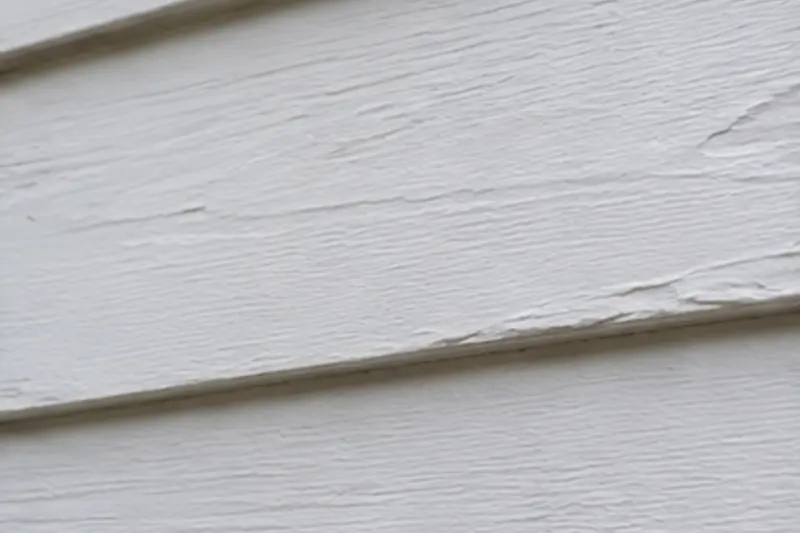
Check for weak paint or surface deterioration.
Unknown material
Ask the building manager for product information first.
Exterior condition inspector
Traffic film
Identify loose surface build-up and affected elevations.
Algae
Check sheltered sections and how drainage behaves.
Discolouration
Weathering or finish damage can remain after washing.
What to send with your enquiry
Provide the material and care guidance if available, together with photos of the affected area, its height and access from ground level.
Facade cleaning assessment
Hand access
Review small reachable areas and the surrounding finishes.
Reach from ground
Assess the working angle, height and ground access.
Unknown finish
Confirm product and manufacturer requirements before proposing any method.
Consider joints, ventilation and openings
A cladding panel is only part of the assembly. It may sit over a ventilated cavity or beside a joint designed to move. The route for water around seams, flashings, vents and door heads matters when assessing a cleaning method. Tell us if there are known leaks or if a particular vent must remain dry. Careful work near those areas may require a reduced amount of water or a decision to leave part of the surface alone. Make clear who will inspect suspected defects. A cleaner can describe visible marks and record what was accessible. Establishing the condition behind the panels is a separate task for the person responsible for the building.
Agree how the site can remain in use
The working position for a shop canopy, service yard or office entrance can be constrained by people below the panels. Walk through the likely route for equipment and water with the site contact. Agree where doors need to remain open, where footfall is highest and when deliveries usually arrive. Notify people in adjacent units if the work might affect their access. A high panel above a narrow pavement needs different arrangements from a broad low wall behind a controlled gate. Share information about electrical signs, lights and services near the work. The proposed method needs to be practical for the building and the people who use it during the visit.
Agree a representative test area
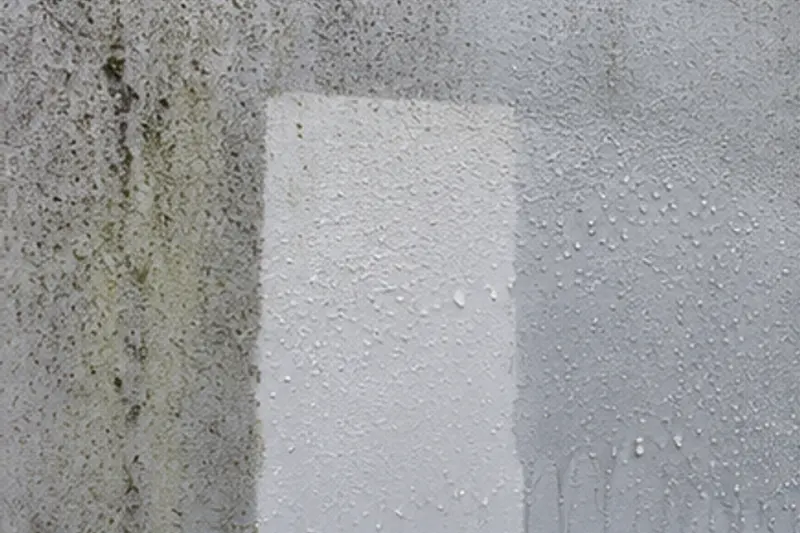
With the surface identified and permission obtained, discuss whether a discreet test patch is appropriate. A patch should represent the finish and the stain you want to address. Check the result in dry conditions: a wet surface can temporarily hide staining or make a faded panel look more even. Record what was used, which areas reacted differently and whether the client accepts the visible result. If the finish appears to be failing, another wash is unlikely to resolve the underlying condition. Avoid committing to a method for an entire façade based on one clean panel where the rest uses a different coating or has a different history.
Plan the wash in sections
The method should follow the manufacturer’s limits and account for nearby glazing, paint and signage. Loose material should be dealt with before working more closely on the intact surface. Wash in a sequence that keeps run-off from crossing completed sections where possible. Work from agreed positions and control the amount of water near joints and sensitive fittings. Confirm what happens if a mark will not move within the permitted method. In some cases, the quote may cover an initial trial or a small group of panels. Discuss when a separately priced treatment or a referral to a façade specialist would be more appropriate than repeating the same process.
Check the elevation from useful viewpoints
Look along the panel faces and view the cleaned area from the normal distance used by visitors. Differences between surfaces can be more apparent once they have dried. Compare photographs taken in similar light so a change in reflection is not mistaken for a change in finish. Note any persistent stains, areas left due to access and repair concerns reported to the owner. If the work was agreed as a trial, explain whether the same method would produce a reasonable result elsewhere. The handover is also an opportunity to identify recurring deposits, such as a persistent drip from an adjacent sill that may mark the same panel again.
A frontage that mixes panels and glazing
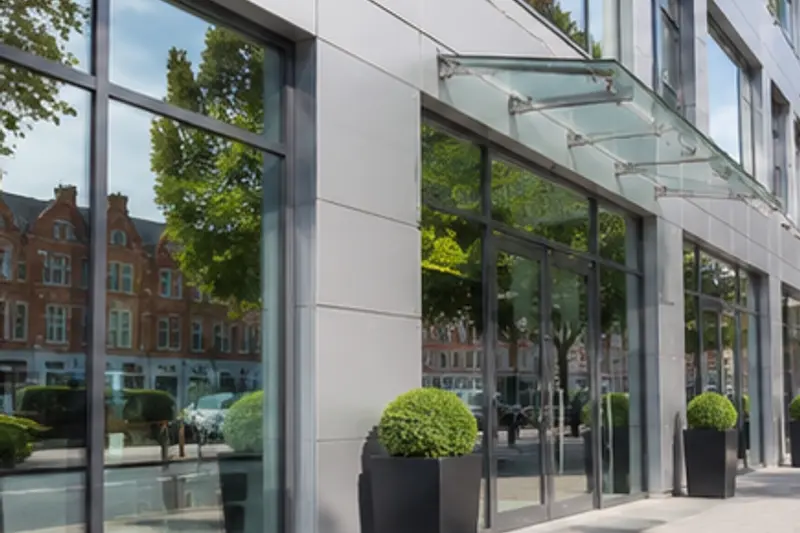
A ground-floor retail unit may have painted panels below its windows, a different finish above the sign and exposed joints at each corner. Send an image of the whole elevation and identify exactly which parts show dirt. Give details of the shop’s opening and delivery times and say whether the pavement is public. If windows are also included, list them separately because their treatment and rinse route may differ. The tinted panel beside the entrance might need a product-specific assessment even when the nearby glass can be washed routinely. That information helps establish whether one practical visit can cover both jobs or separate arrangements are needed.
Before arranging access for a sample area
Ask the premises contact to select a representative panel away from the busiest door. Identify where the same surface continues around the building and flag elevations that use another product. If the coating has been changed in the past, share any notes or photographs. Use a small area as a basis for a discussion about the finish once dry. Where the panel appears damaged, contact the owner or façade specialist before anyone attempts a trial.
Building facade explorer
What we assess
What it means for the visit
Main panels
Identify the substrate and surface coating.
Joints
Check how the panels meet and whether seals look damaged.
Lower elevations
Examine traffic film and ground access.
Exterior condition inspector
Condition or arrangement
What we consider
Traffic film
Identify loose surface build-up and affected elevations.
Algae
Check sheltered sections and how drainage behaves.
Discolouration
Weathering or finish damage can remain after washing.
Surfaces and access
Illustrations of the work and the surfaces we assess.
This was the best window craning service I’ve ever experienced. Extremely professional, took pride in their work and left the place sparkling. Highly recommend.
Windows were cleaned to a good standard. The cleaner turned up and did the job whilst I was not in the property so appreciated that. The process was easy to book from start to finish.
I needed the external windows cleaned at the start of a new tenancy. It was easy to book and a call from the window cleaner before she started helped identify all the windows in a 1 & 2nd floor flat. The tenants are very pleased with the result. The only downside is trying to get a VAT invoice from the company (Top Window Cleaners or Fantastic Services Group). Why can’t you send the invoice as soon as you take payment??
Edmond was excellent. Even removed some high cob webs from the conservatory for me. He is friendly chap and I am amazed at the state of my windows now. Will be rebooking at regular intervals.
Felipe was excellent, he carried out the work very satisfactorily so I would recommend him BUT not the organisation of the job which was sooo painful, required a lot of energy and time from my part, many mistakes were made during the booking process, I had a lot of your customer services agents “harassing me by phoning multiple times in one single days over many days until the job was finally completed. And I really didn’t like being threatened to pay extra constantly for rebooking the service !! Can someone please phone me urgently to sort this out because I’m now ready to cancel my membership