What should I send for a post-build window assessment in London?
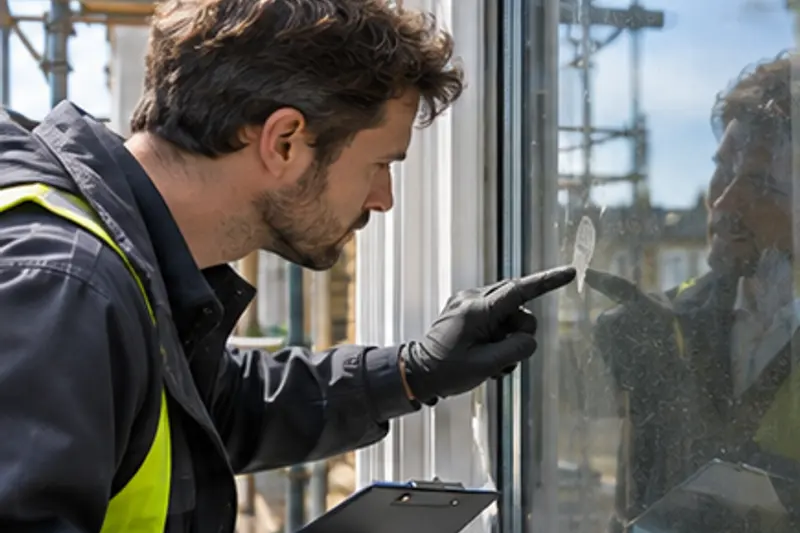
Send wide and close photos taken from safe positions, note the recent trades, and share any care instructions supplied with the glazing.
Can a builders’ clean remove damaged glass marks?
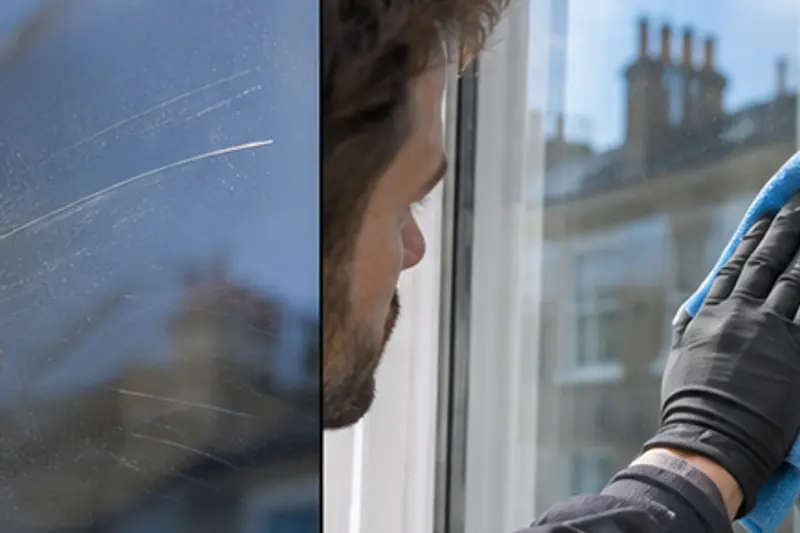
Loose residue and damage require different decisions. Scratches or etching can remain after the residue has been lifted.
Establish what is still on the glass
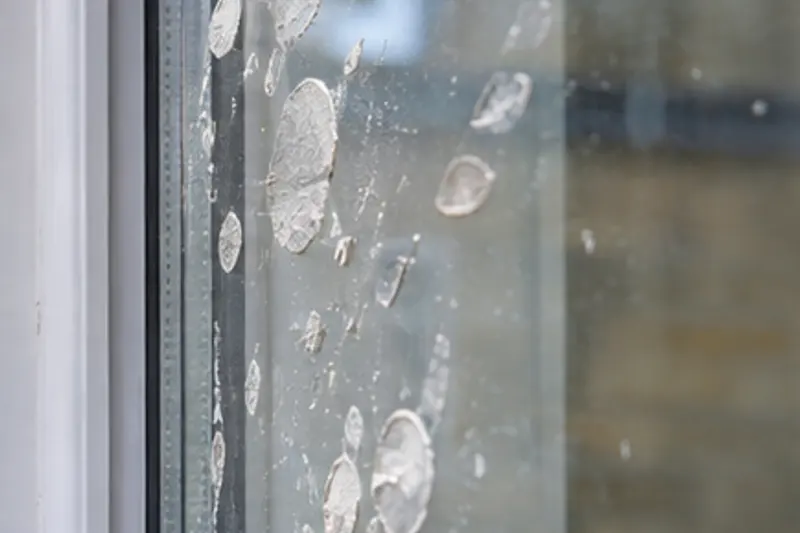
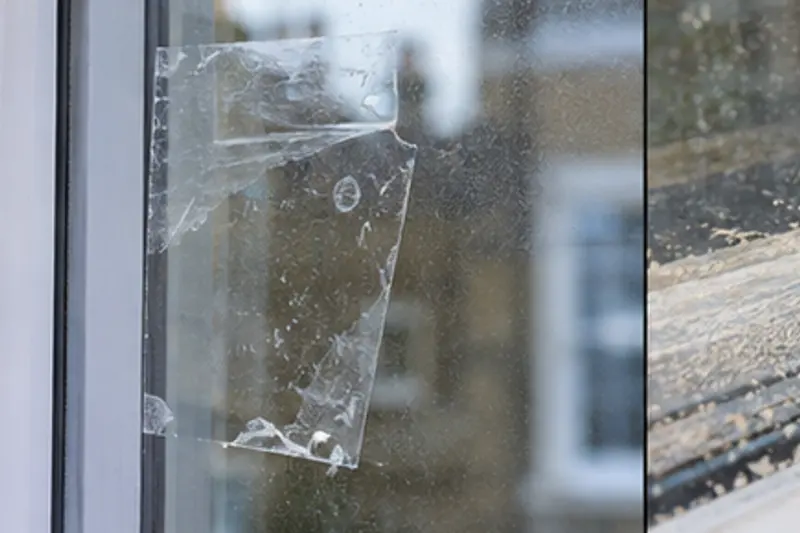
A newly decorated room can have a mixture of loose dust, paint specks, adhesive and harder construction deposits. Often the exact material isn’t obvious until the glass can be viewed in good light. The assessment should ask what products were used and whether there is a known coating or applied film on the pane.
Explore the work
Construction residue inspector
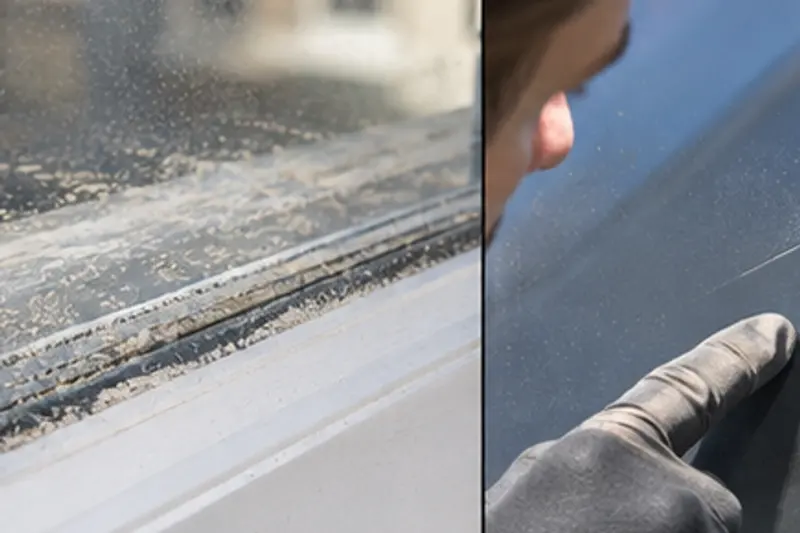
Loose dust
Assess how it gathers at the edges and whether other residues are present.
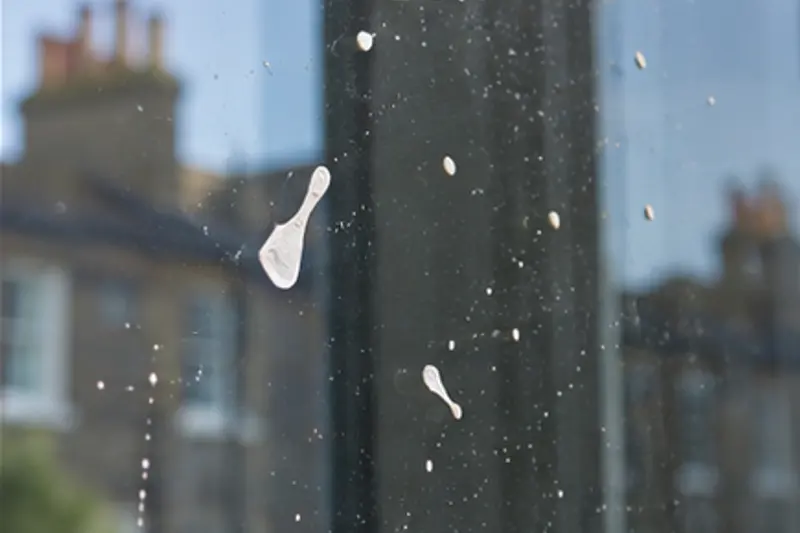
Paint spots
Identify the coating and the type of paint before selecting a method.
Cement residue
Hard deposits need separate assessment because treatment can affect the glass.
Paint, adhesive and plaster
Paint
Establish whether the glass is clear, coated or filmed.
Adhesive
Check if it is on the pane or next to a fitted seal.
Plaster
Assess the grain and adhesion before any removal is agreed.
Glass damage assessment
Scratch
A physical mark may remain after the glass is cleaned.
Haze
Determine what face the mark appears on and whether it is between the panes.
Deposit
Record what is visible and confirm a suitable test approach before offering treatment.
What to send with your enquiry
Send wide and close photos taken from safe positions, note the recent trades, and share any care instructions supplied with the glazing.
Post-construction process
Survey
Confirm the building work is complete in the affected area.
Test
Agree the surface, residue and whether to carry out a controlled assessment.
Finish
Check from different angles and distinguish remaining damage from dirt.
Record scratches and hard deposits separately
A scratch can become easier to see once loose film has been removed. It should not be classified as dirt still waiting to come off. A hard deposit around a frame or seal calls for a closer assessment of the surface underneath. Any proposed method needs to be considered against the glass maker’s care instructions before treatment is offered.
Establish what happened before the marks appeared
Ask what trades worked near the glass and when the window was installed. An undisturbed layer of plaster dust is different from primer wiped across a pane or a small deposit of mortar on its face. If protective film is involved, try to identify the product and how long it has been exposed. Share details supplied by the installer, particularly any instructions about labels, films or coated glass. A well-lit photo of the whole pane helps show where the marks sit in relation to the edges. A second photo may show a detail without touching the surface. Avoid trying a scraper, solvent or abrasive pad to test a mark yourself.
Work out what is on the pane
Residues from paint, plaster, tape and sealants have different properties. Dust can hide a scratch, while an adhesive smear may hold fine grit. Cement-based material can leave a rough raised deposit, an outline or a lasting mark. Do not rely on colour alone to identify it. Check whether the project used grinding, cutting or welding near unprotected glazing, as affected marks may be damage. Natural reflections, especially on toughened glass, can also make marks more obvious in some light. A cleaner needs to know whether the glass remains under an installer’s warranty and whether work near it is still ongoing. Obtain any restrictions before considering treatment.
Agree which surface may be contacted
A pane can have a coating on one face, a tint or a film. The edge seals, painted frames and plastic trims have their own tolerances. An approach that releases a label on uncoated stock glass could damage another surface or its finish. If there is uncertainty, ask the installer or supplier for the glass specification and aftercare instructions. The contractor assessing the residue should explain any test area and how results will be judged. State whether marks are near a seal or trim that cannot be protected. When the material or coating cannot be identified, it may be sensible to leave the affected area for a specialist assessment.
Keep loose grit away from the contact surface
The first wash should be planned to avoid dragging loose grit across dry glass. The handling of loose material depends on the finish, the position and the surrounding surfaces. A sill full of mortar dust can recontaminate a pane that has already been washed if the sequence is wrong. Agree whether sills, frames and tracks are included, and whether the builder will remove debris before cleaning. Inside an occupied home, plan where equipment and dirty water will be handled away from new flooring or timber. If work is still dusty, wait until the source of dust is dealt with so the final inspection can be meaningful.
Discuss a small test before a larger treatment
Where advice permits, the contractor may suggest trying an agreed method on a limited area before treating a whole pane. Choose a test location that is representative and can be examined in suitable light. Record what changed, whether the residue came away and what marks became visible beneath it. If the result raises doubts about a coating, scratch or etched outline, stop and discuss it before progressing. The customer should understand the difference between price for assessment and price for removal. A patch may become clearer without matching the rest of the pane. That is a reason to document the outcome rather than promising a completely even finish.
Distinguish residue from damage at handover
Once loose surface material has been removed, look across the pane under ordinary and oblique light. A remaining line that catches light along its length may be a scratch. A mark that looks haze-like may come from a seal or a feature within the glazing. A stubborn deposit still above the surface can call for a different treatment assessment. Photos before and after the visit should be compared from similar positions. Record the areas treated, those left alone and any concerns to raise with the builder or glazing supplier. Where appearance is critical to a snagging list, agree who needs that record and when the handover should take place.
Plan around the final trades
A clean that takes place before sanding, rendering or decorating finishes may gather fresh residue by the next day. Ask the site contact when nearby work will be complete and which protective measures are still needed. Confirm access to the outside and inside faces, including any storeys reached only from a shared passage. Discuss site sign-in, whether the rooms are empty and whether the glazing has already been inspected for damage. An inhabited London flat presents different working constraints from an empty extension. List any panes with unusual deposits so the assessment can be prioritised instead of treating newly installed doors and older windows as a single job.
A new door set after rendering
Imagine that a rear extension has three glazed doors with fine dust across all the panels and hard spots near the outer frame. The main concern is the view into the garden, but the joinery is newly painted. Describe which deposits seem loose, which are raised and whether the installer has provided cleaning instructions. Photographs from the room and garden can show which face is affected and whether tracks are also full of debris. A suitable visit may include a standard wash after loose grit is dealt with and a separate assessment of harder marks. A repair or polishing referral may be appropriate where the affected area has already been damaged.
Prepare a short record for snagging
List the affected panes and when each issue was first noticed. Include which trades were active nearby, whether protection was in place and the date of any earlier clean. The same mark can look very different against a bright sky and a dark room, so take photographs from similar viewpoints when comparing progress. If a builder or installer needs to see the result, agree who will be present. Keep the assessment record separate from decisions about responsibility or repair.
Construction residue inspector
What we assess
What it means for the visit
Loose dust
Assess how it gathers at the edges and whether other residues are present.
Paint spots
Identify the coating and the type of paint before selecting a method.
Cement residue
Hard deposits need separate assessment because treatment can affect the glass.
Glass damage assessment
Condition or arrangement
What we consider
Scratch
A physical mark may remain after the glass is cleaned.
Haze
Determine what face the mark appears on and whether it is between the panes.
Deposit
Record what is visible and confirm a suitable test approach before offering treatment.
Surfaces and access
Illustrations of the work and the surfaces we assess.
Paint flecksAdhesive residueLoose surface dustEdge guardOblique inspection of scratchesSurface wipe using soft tools
Google Business Profile
Customer reviews on Google
Read what customers say about Shiny across London. Reviews and ratings are from Shiny’s London-wide Google profile.
This was the best window craning service I’ve ever experienced. Extremely professional, took pride in their work and left the place sparkling. Highly recommend.
Windows were cleaned to a good standard. The cleaner turned up and did the job whilst I was not in the property so appreciated that. The process was easy to book from start to finish.
I needed the external windows cleaned at the start of a new tenancy. It was easy to book and a call from the window cleaner before she started helped identify all the windows in a 1 & 2nd floor flat. The tenants are very pleased with the result. The only downside is trying to get a VAT invoice from the company (Top Window Cleaners or Fantastic Services Group). Why can’t you send the invoice as soon as you take payment??
Edmond was excellent. Even removed some high cob webs from the conservatory for me. He is friendly chap and I am amazed at the state of my windows now. Will be rebooking at regular intervals.
Felipe was excellent, he carried out the work very satisfactorily so I would recommend him BUT not the organisation of the job which was sooo painful, required a lot of energy and time from my part, many mistakes were made during the booking process, I had a lot of your customer services agents “harassing me by phoning multiple times in one single days over many days until the job was finally completed. And I really didn’t like being threatened to pay extra constantly for rebooking the service !! Can someone please phone me urgently to sort this out because I’m now ready to cancel my membership