Agree which doorway stays usable during the clean
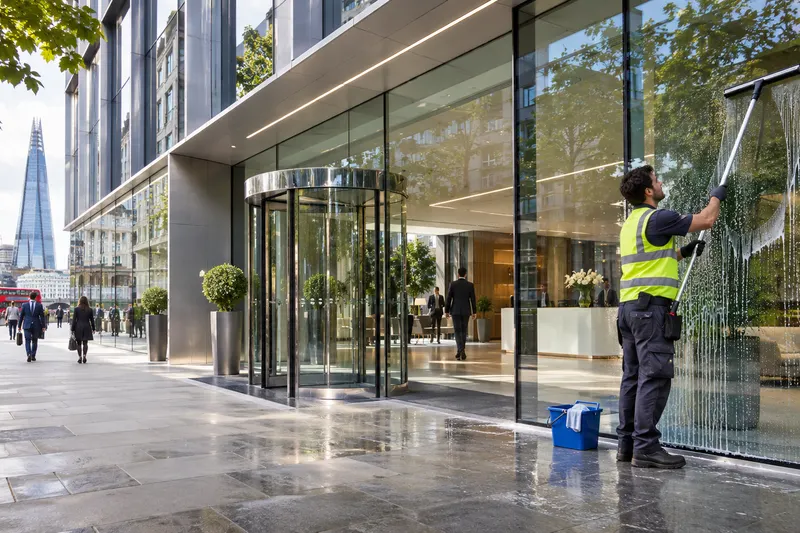
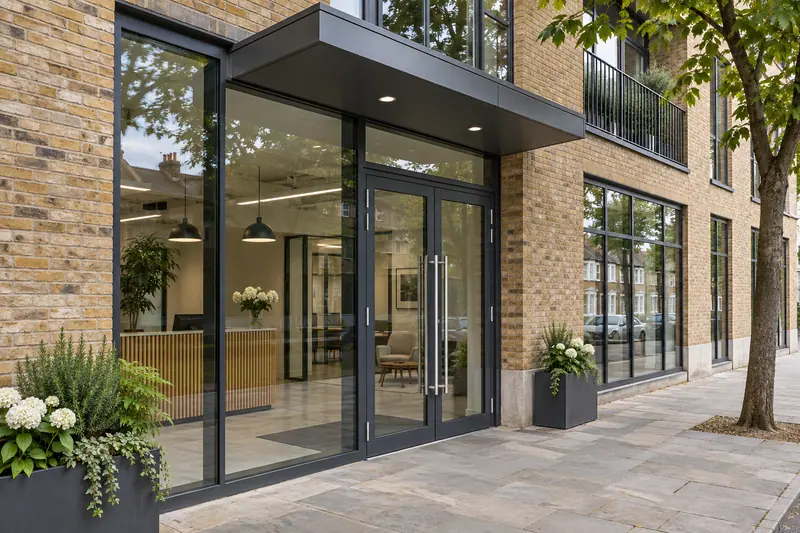
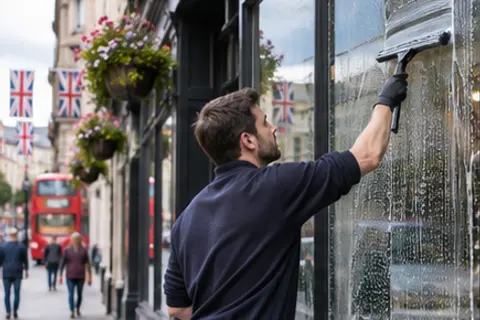
There may be a small glazed vestibule behind a street-level office door. On the outside the glass shares space with visitors, deliveries or a door that swings out. Inside there may be a matwell or a floor regularly used by staff. We decide when each side can be cleaned and where the person doing the work can stand. The building contact can explain which parts of the entrance need to remain open. A short interval with lower footfall may help with hand cleaning at the threshold, especially if both faces of the moving leaf are booked.
For office window cleaning we agree which panes are public-facing and which are near occupied workspaces. Tell us whether partition glass, a glazed side panel or internal meeting-room door is part of the enquiry. If privacy film is applied on one face, we need to know where it sits so we can take account of the care guidance. We protect the nearby surface as required and collect moisture around the edges of an inside pane. In a commercial entrance, the customer does not need to guess whether that internal pane was included if the agreed list identifies it clearly.
Start with the surfaces that could send dirt back down
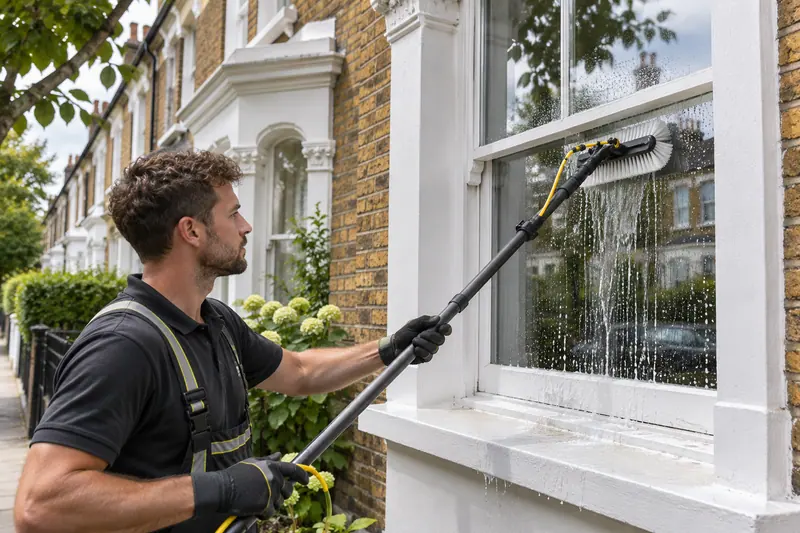
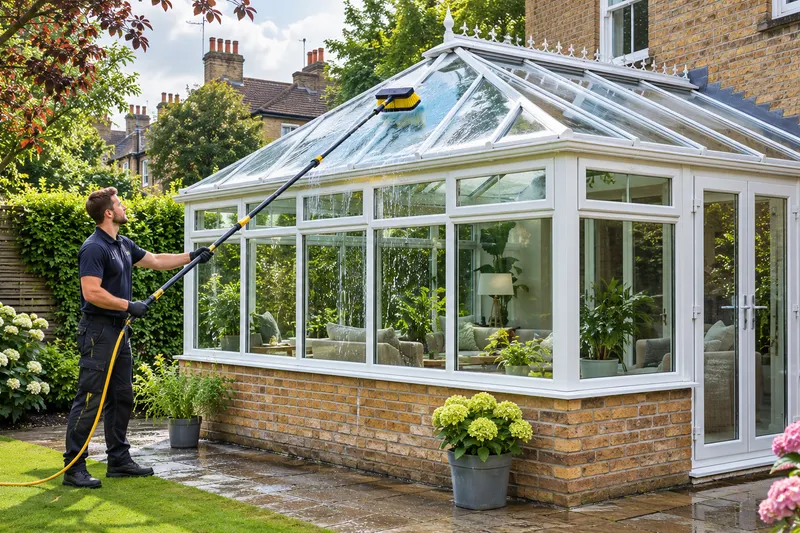
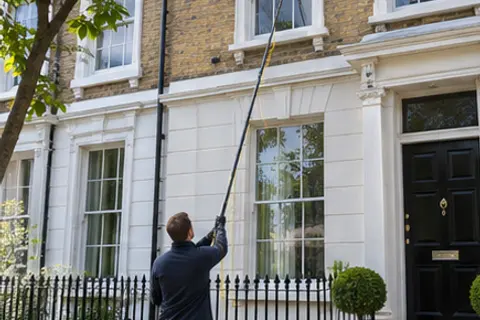
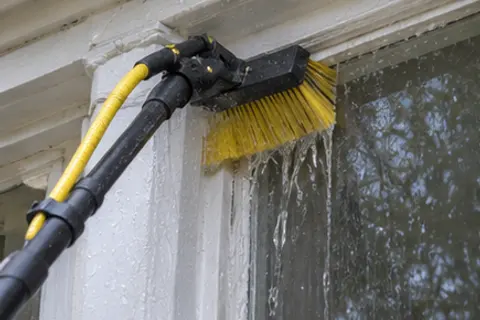
If the agreed work includes sound reachable frames, we start with the higher part so wash water has time to run away before the final pass on the glass. Narrow bars can collect pollen and street film around the corners. We choose a brush or hand tool depending on the material, access and amount of water the surroundings can take. The washing stage loosens the material and the rinse carries it away. Where we use purified water, leaving fewer minerals in the rinse reduces what can remain when the surface dries. We look at the lower rail and the visible edges before moving on.
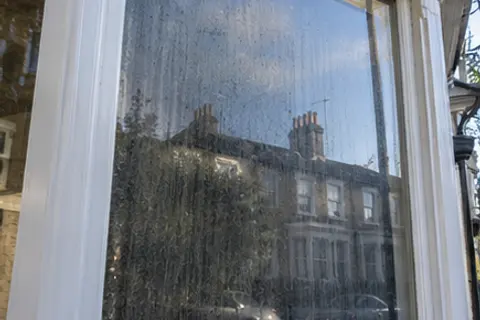
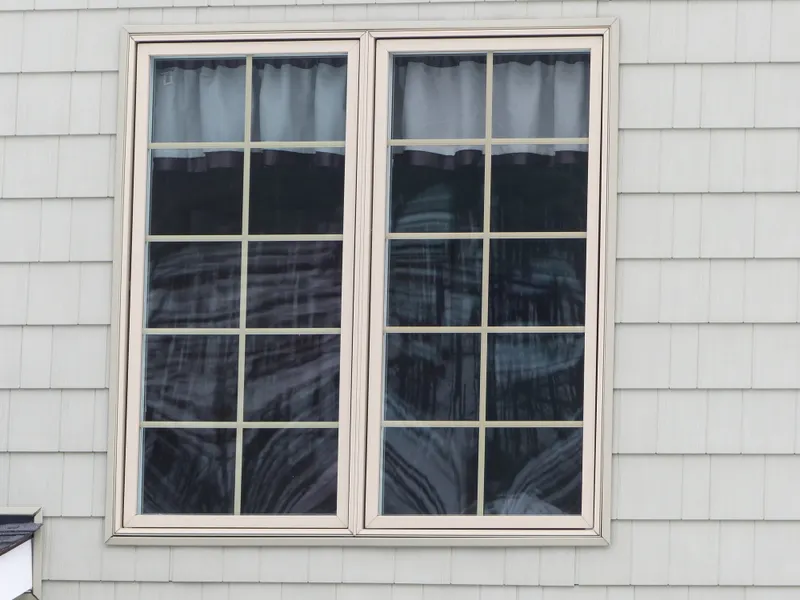
If a fixed pane has a pale line where it has been repeatedly wetted, the original drip path is worth identifying. We ask about roof run-off or a leak and check what can be seen after a routine wash. A left-over mark can be related to a deposit, a scratch or damage to the surface or coating. Those possibilities call for different decisions, which we can discuss once we know what remains visible. Tell us before a quote if an older mark is the main reason for arranging the visit, since it may need a separate inspection.
Record the detail that made access possible
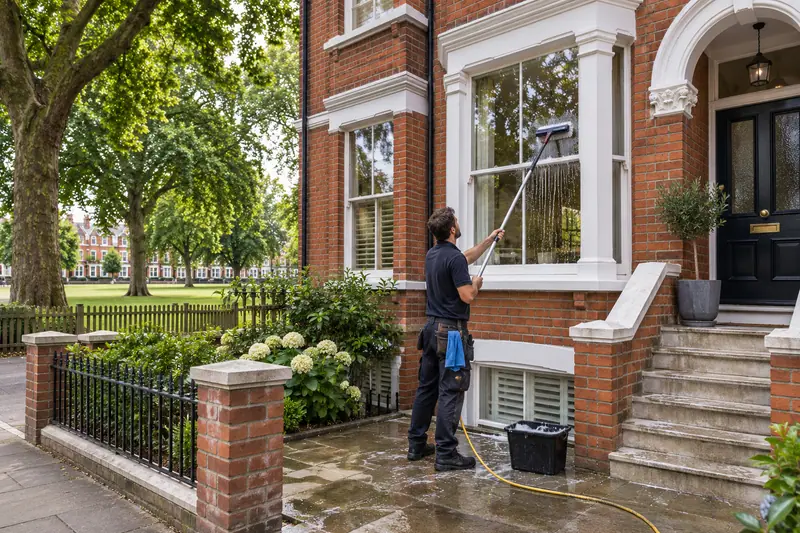
Before leaving we check the agreed glass from a suitable angle and explain any visible limitation. If the front work depended on a keyholder, a temporarily empty delivery entrance or permission to stand in a communal area, we note that so the next booking can use the same route if it is still available. Tell us if a room is being refitted or if a garden gate will be replaced. If you have alternating bookings for exposed glass and selected inside panes, a short room list helps keep the two arrangements clear. We discuss the interval based on how the glass actually looks between visits.
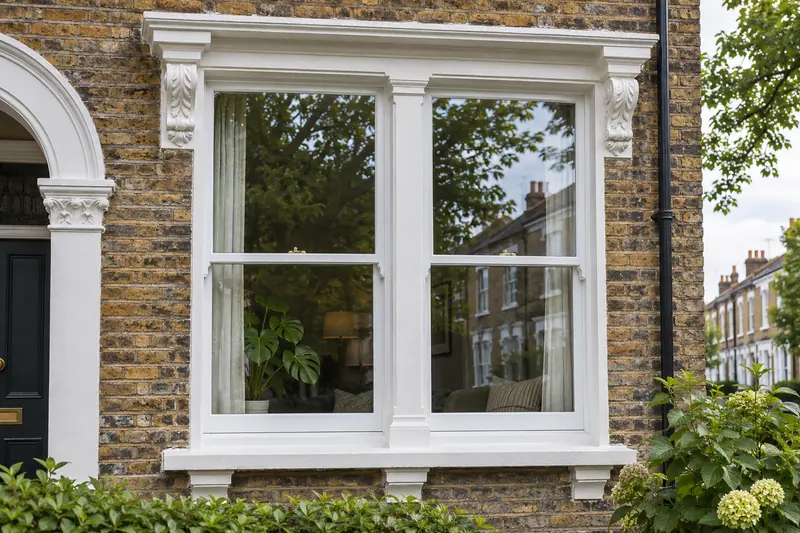
The window cleaning pricing guide sets out why a count and a postcode alone will not settle every quote. Two otherwise similar windows can require very different access if one sits behind machinery or a deep projection. For a useful assessment give the postcode, faces wanted and the name of the person who can agree the approach. Attach a straight view of the glass and a wider picture with the ground below in view where possible. If booking for a business, add the usual hours of access and the time when the entrance has the fewest people using it.