Separate the lower terrace doors from a balcony barrier
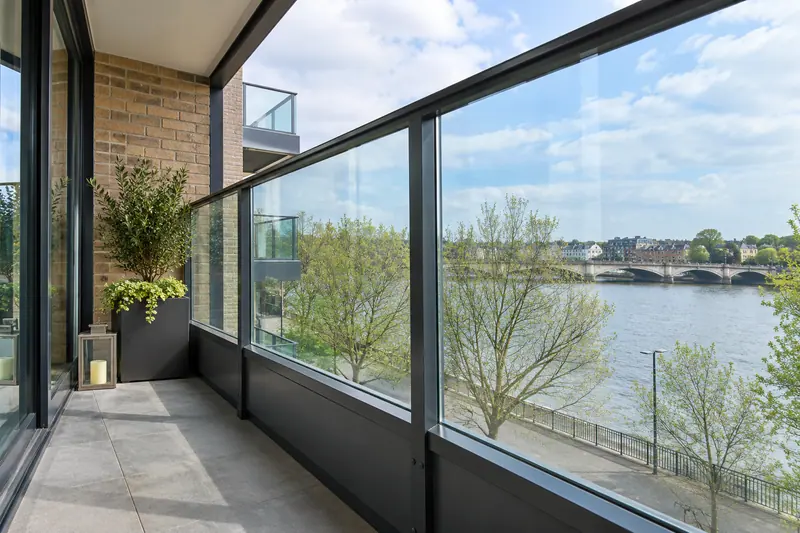
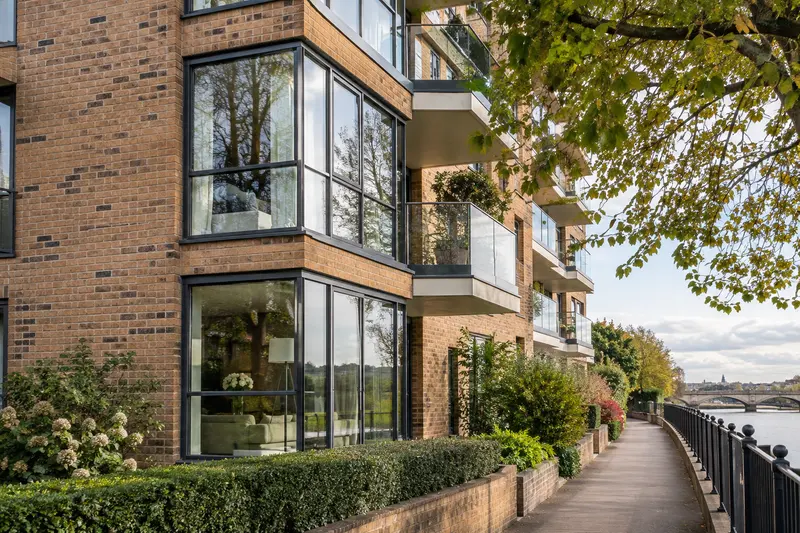
A glazed balcony can contain a door, fixed panes and a separate glass barrier. Say which of those faces you want cleaned, where the marks appear and whether the barrier glass belongs to the building. A normal position inside the balcony can be assessed for reachable faces, but it does not establish access to the far side of the barrier. We do not work by leaning over a rail or using it to carry equipment. If one face needs a different contractor or a building arrangement, we make that distinction before giving a price.
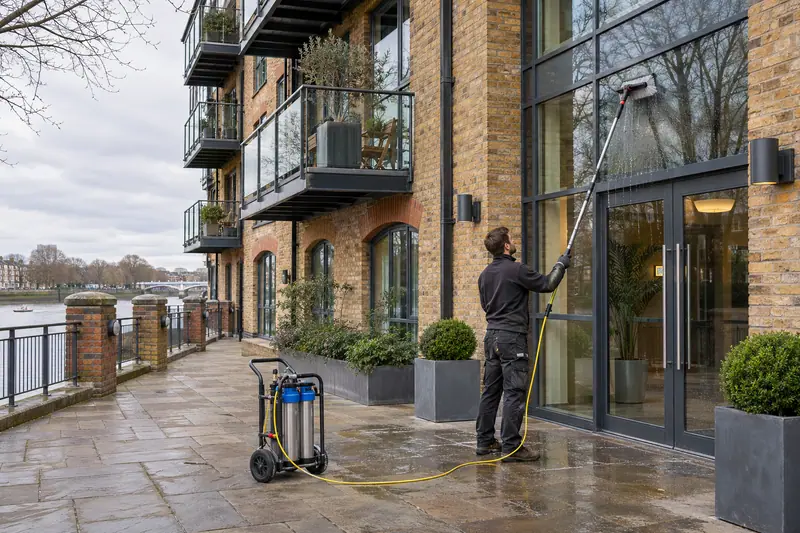
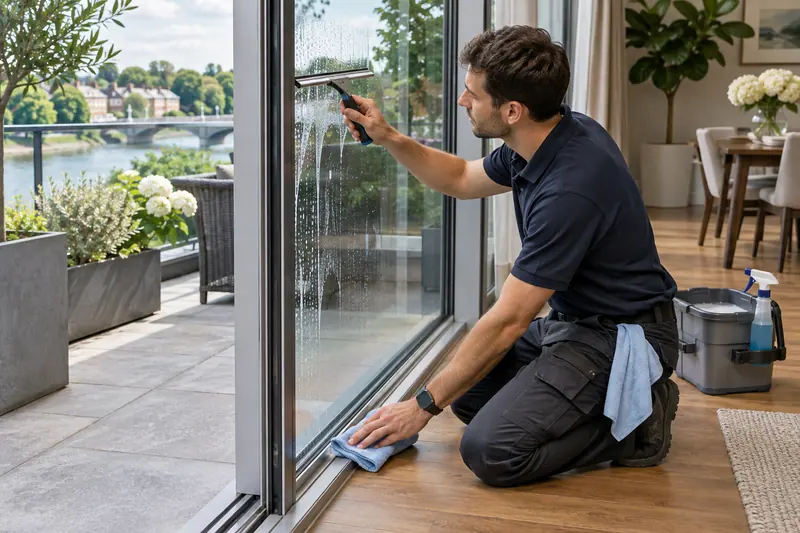
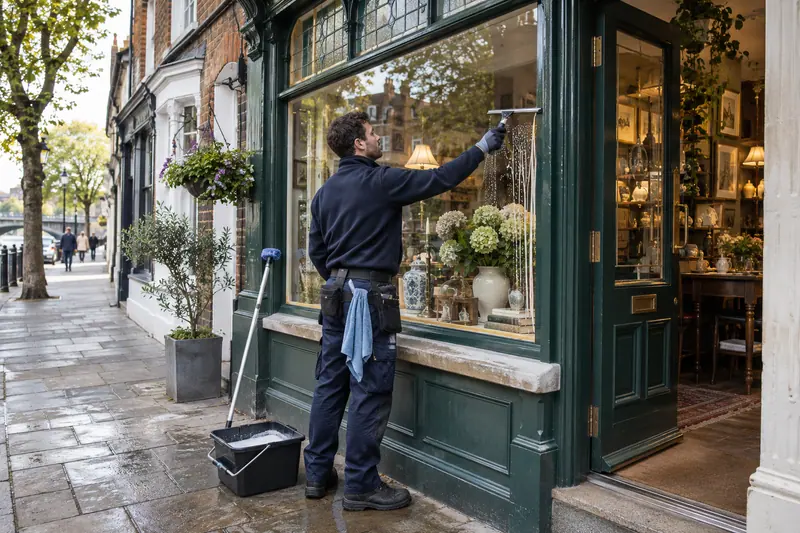
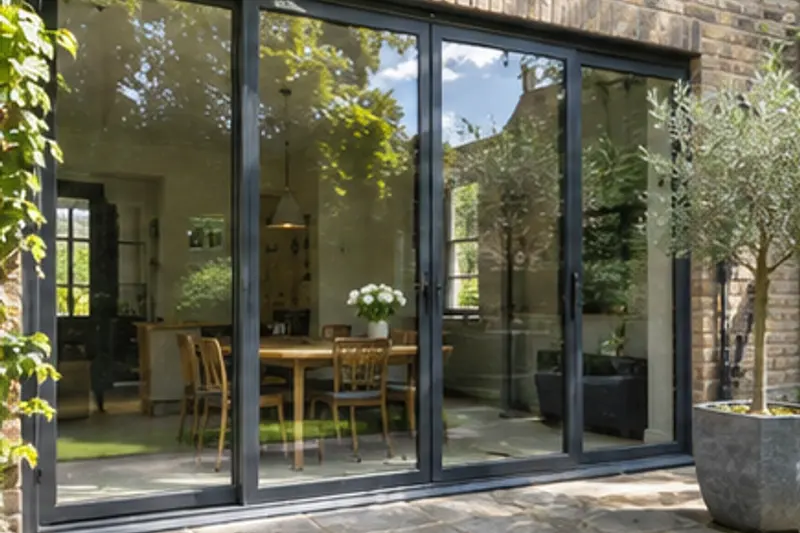
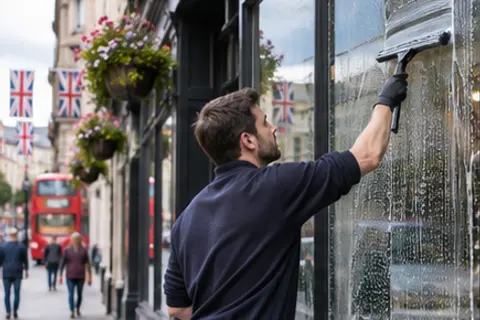
For the doors into the flat, we check any fixed panels, the height of the sill and whether there is a track or threshold close to a floor that needs protection. Water from a wider pane can run down quickly over a low edge. A hand washer and squeegee can give control where the surface and room suit them, and we collect water at the frame as we go. Ask about interior window cleaning if the priority is reachable room-side faces only. Tell us whether furniture can be moved and whether the internal glazing includes panes beside the doors.
Match the wash to the frame, reveal and standing position
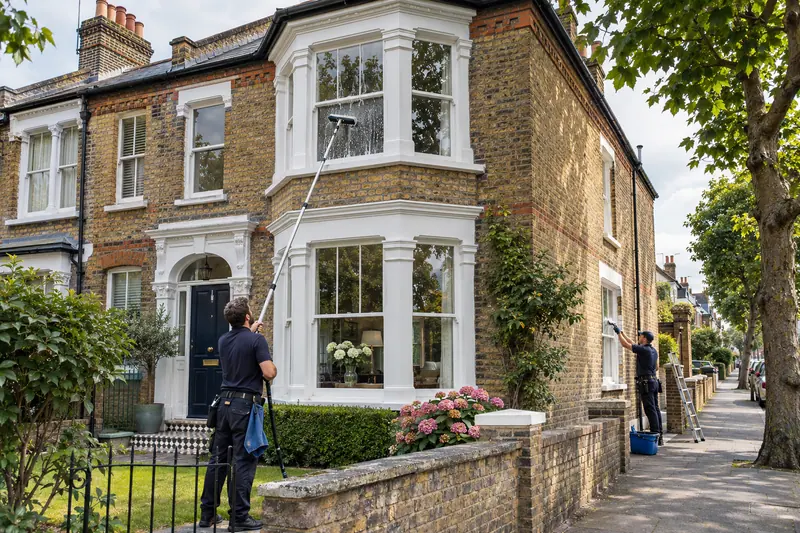
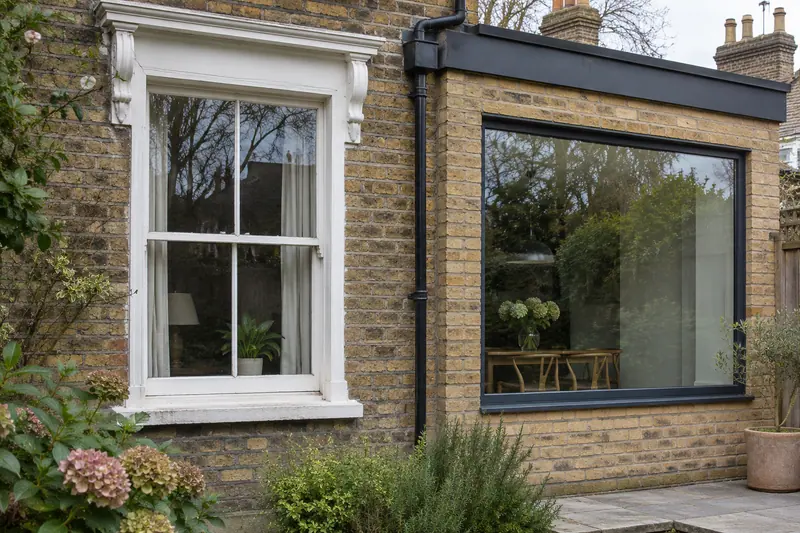
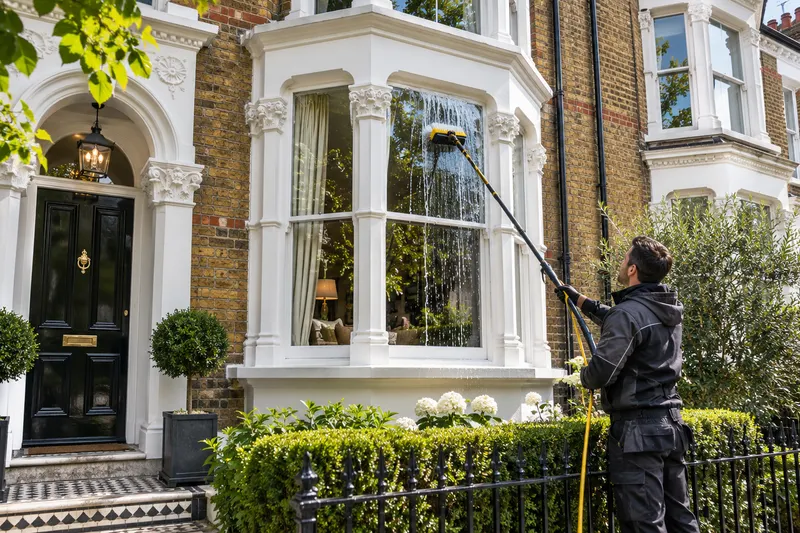
The borough’s Putney Lower Common appraisal notes timber casements and sliding sashes, including examples with decorative glazing bars. An individual house may also have replacement panes or fixed glass in a later extension. We look at the condition of paint, putty and joints where they can be seen, and ask about any newer finish that comes with cleaning instructions. A glass face can be agreed while a fragile painted edge is left alone. Tell us if the window was recently decorated, a handle sticks or a pane has been changed. A clear view of the bars and the lower corners helps when describing the concern.
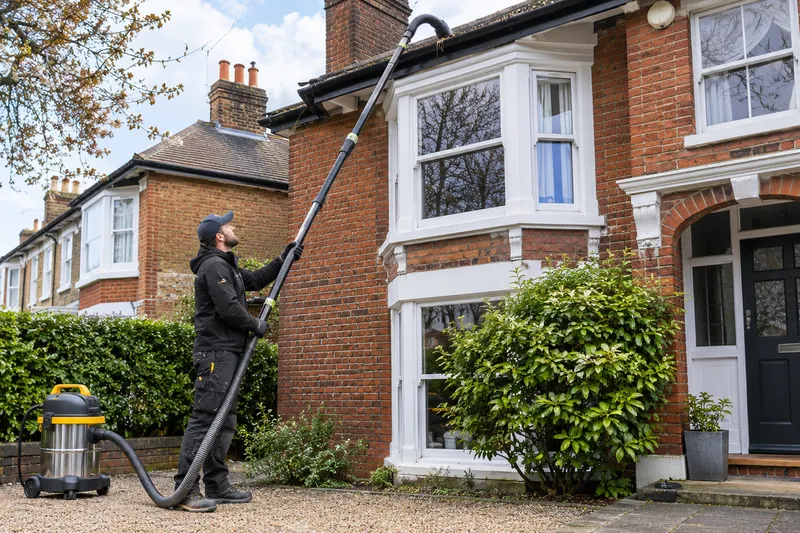
On a canted bay, the front pane and the angled returns may need different positions. We look for space to move while keeping a steady angle to the glass. A soft brush and purified water can suit an agreed outside pane, where the standing position and surrounding surfaces are suitable. On a low pane, hand tools may make it easier to control water near the edge. Higher panes need their own reach assessment. We check the edges to establish useful reach, since being able to touch the centre does not mean the whole face can be cleaned.
Follow the water on exposed and sheltered sides
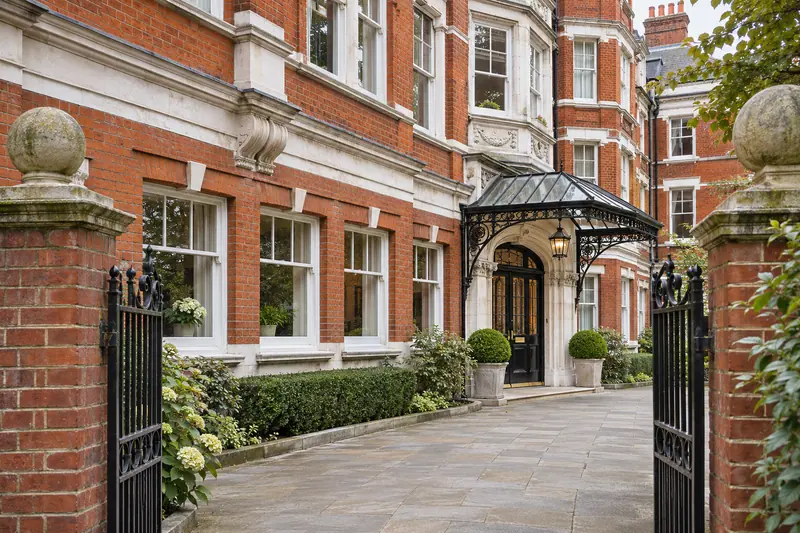
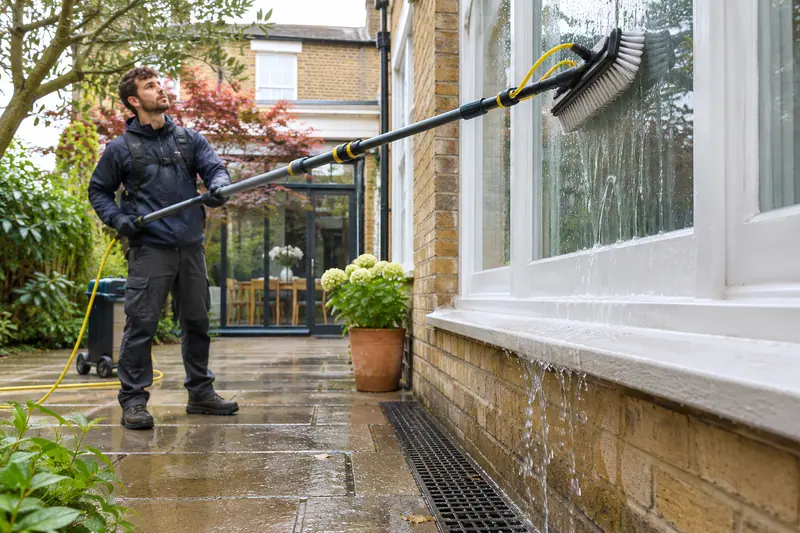
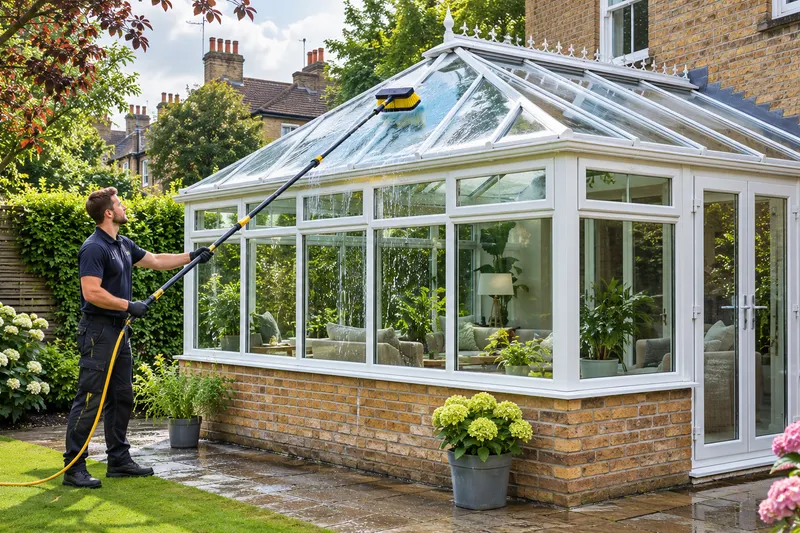
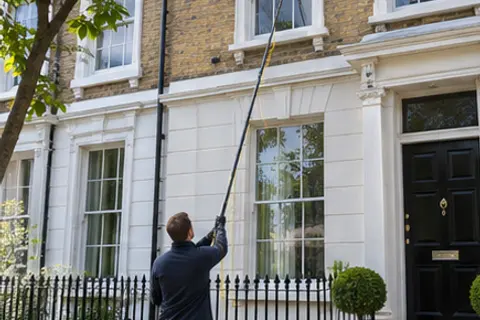
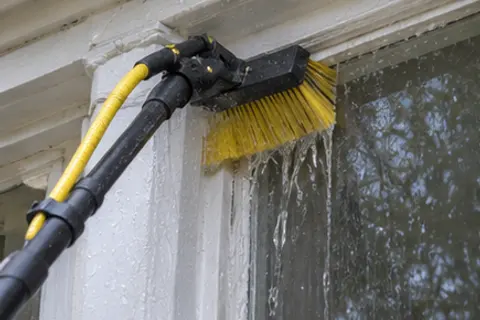
An exposed river-facing pane and a window under a deep entrance canopy can show different kinds of dirt. The first is exposed to weather; the second may retain dust where rain seldom reaches. We check the actual surface before selecting the wash. With a suitable water-fed brush, we loosen ordinary dirt and rinse it away, keeping an eye on how water leaves the pane. If low glass lies below a window we have already washed, we allow for run-off when deciding the order. The aim is to avoid moving dirt onto a surface that has just been finished.
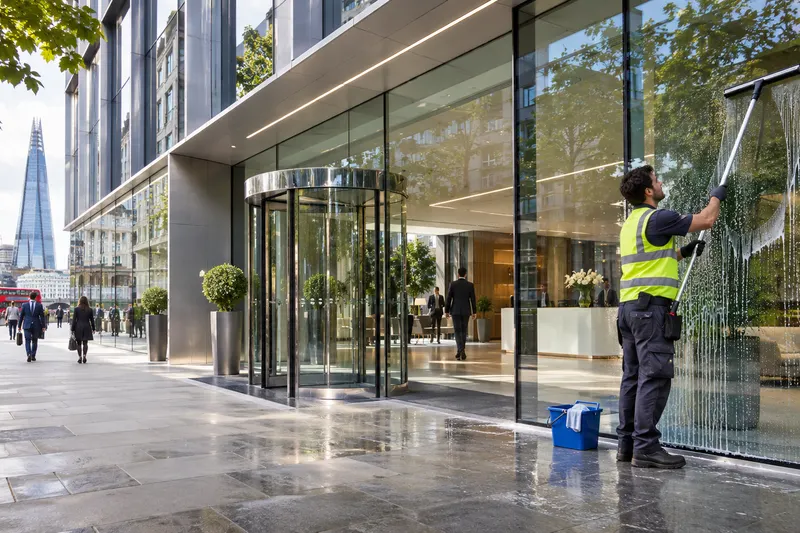
On a managed site, ask where wash water can go and which routes need to stay dry or open. A paved approach can lead directly towards an entrance, and a balcony may sit above someone else’s access. We agree what can be done without sending water over a public or shared route at a busy time. Hard deposits, mist within a sealed unit and scratches can remain after a routine wash. We explain what we can see from a usable position and discuss any further assessment without treating an unexplained mark as ordinary dirt.
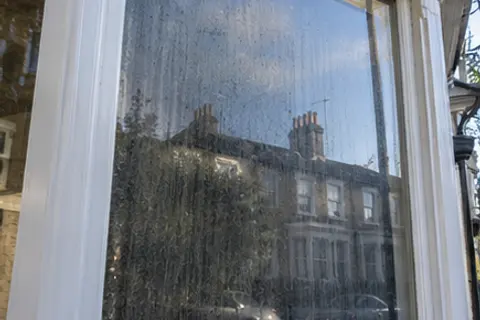
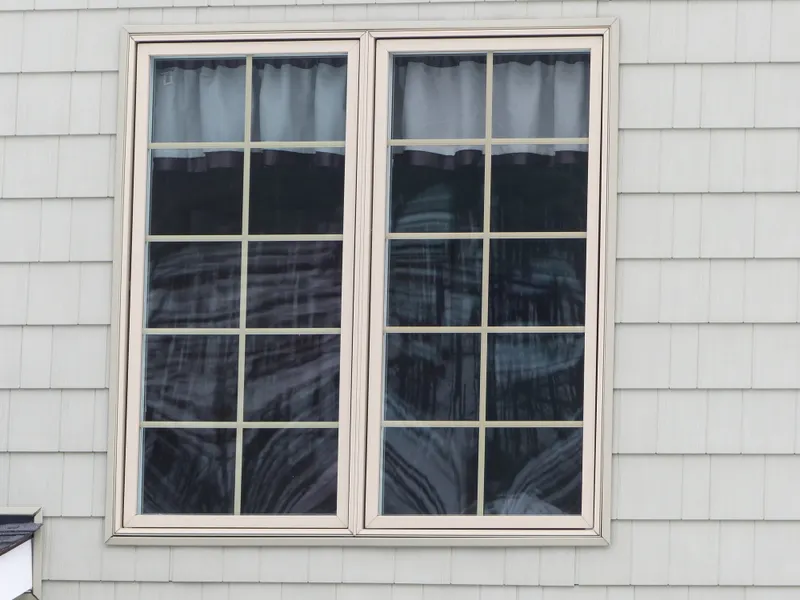
There is also a difference between glass that looks dirty from the room and glass whose outside face has an ordinary film. A low sash near an entrance may show fingerprints on one face and marks left by rain on the other. On an old pane, the same reflection can appear in both when viewed at an angle. We often check the view from both sides when they are accessible, because this helps identify the face that actually needs washing. If the customer wants a particular mark reviewed, a short description of where it appears and when it is visible can avoid including a longer run of glass unnecessarily.