Describe the face you can actually touch
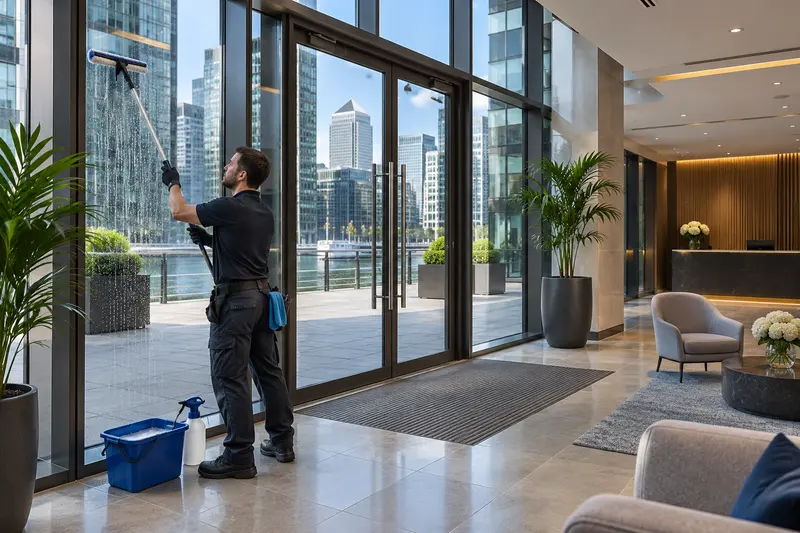
When a wall of apartment glass looks onto the docks, the view is continuous, but the glass is usually divided into faces we need to discuss separately. From the room, a fixed pane can be quite straightforward to handle. Its opposite face may form part of the building envelope, with no route from the apartment at all. Tell us where you see the mark, whether the pane opens normally, and which side you can identify from your usual position. An inside-window booking can be agreed independently of the outside face.
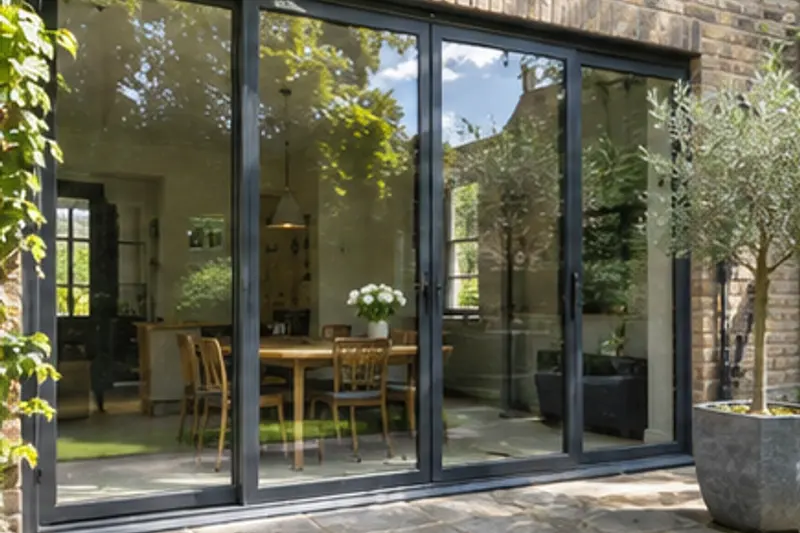
A door onto a balcony should also be described separately from the fixed glass beside it and any balustrade beyond it. If an unclear mark is visible from the sofa but almost disappears when you approach, mention the light or viewpoint that makes it visible. A photograph taken from a normal position inside the room can help distinguish a mark on the reachable surface from one that appears to be outside. There is no need to change a restrictor or open a difficult window to take a photograph. We assess doors and panes as they normally operate.
Give a full-height pane enough room for hand work
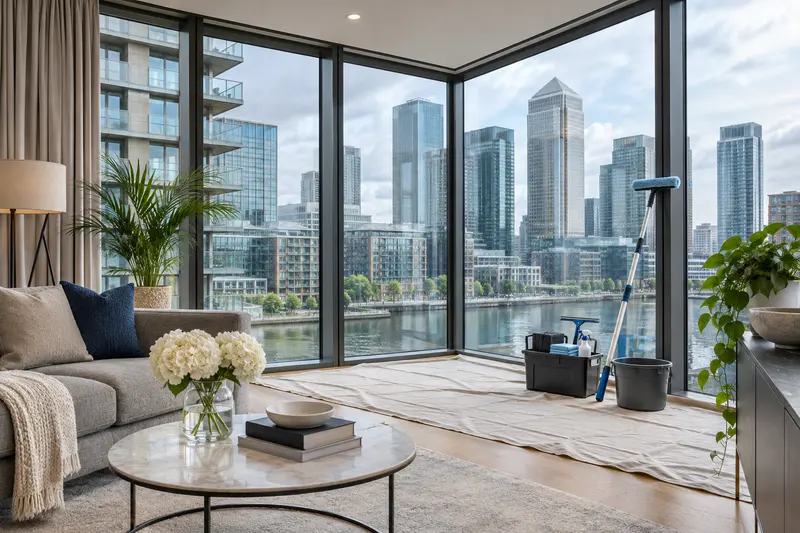
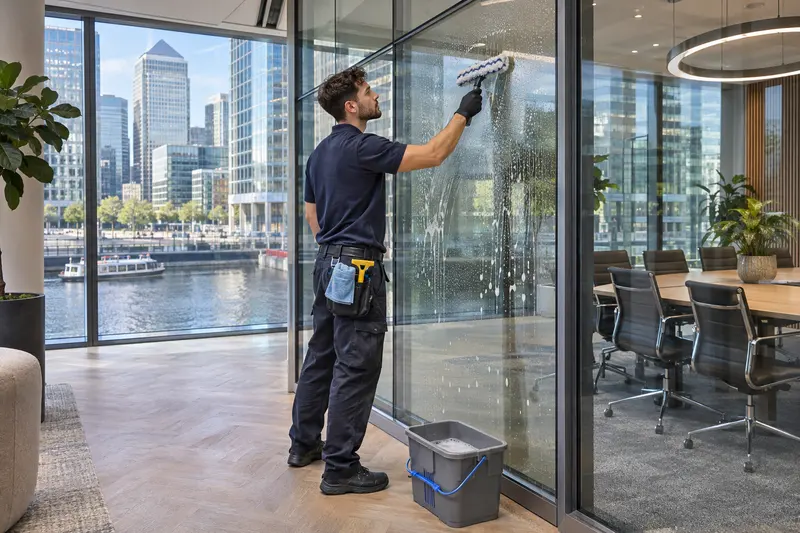
Large inside panes are often close to furniture, sockets, floor finishes and equipment. An empty-looking gap beside the glass is useful only if we can guide a tool across the face without catching a fitting or leaning over furniture. Let us know whether there is a blind, curtain, deep radiator shelf or fixed desk in front of the window. We agree what can stay where it is. A photograph showing the sill and the room floor can be more helpful than an entire view of the building from outside.
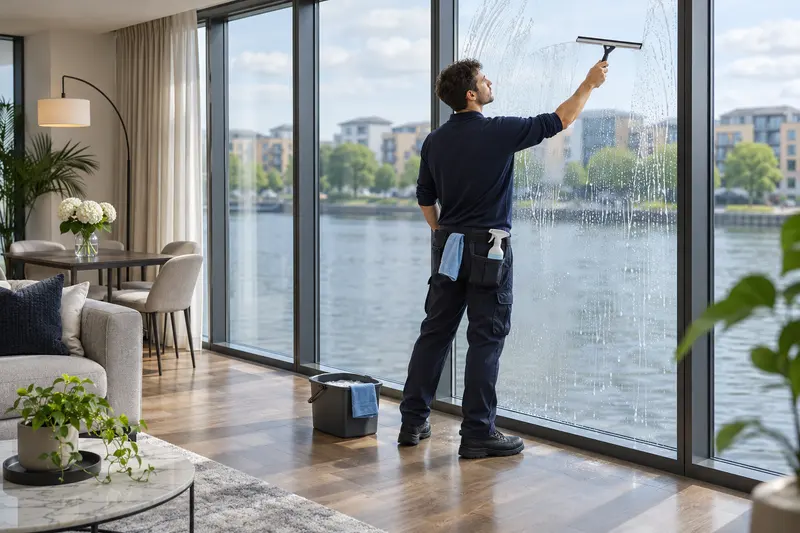
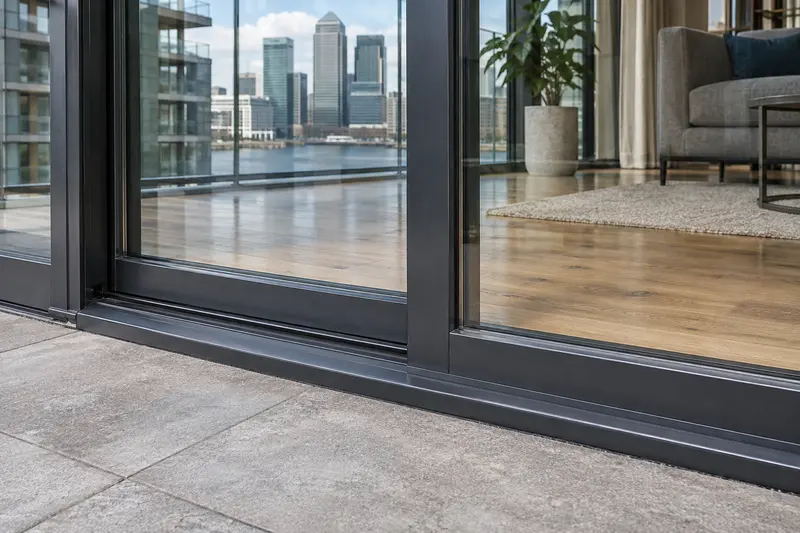
For reachable interior glazing, we use hand tools suited to the pane and the surrounding finishes. A controlled amount of water helps where a door track drops below the floor or timber runs against the lower edge. We put protection where it is needed before wetting the pane, then collect moisture at the accessible edges. If a fitting prevents us washing a corner without moving something that should stay attached, we explain this and agree which face can be included. Our plan should identify the glass and any adjacent parts explicitly so that an inside wash is not mistaken for cleaning a track, blind or electrical fitting.
Look for films, coated glass and signs of a different problem
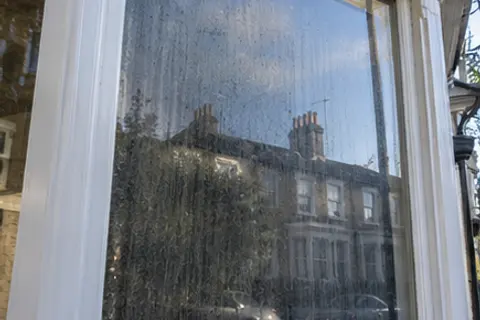
Light reflected from neighbouring elevations and water can make a pale mark more obvious at certain times. A mark outside a fixed pane can seem to sit on the room side, especially when the room behind you is dark. We look at the reachable glass from an ordinary viewing position and check what can be assessed during the clean. Tell us whether the glass has a film or special finish, and share any care instructions supplied by the owner or building manager. A nearby pane that looks identical can have a different finish.
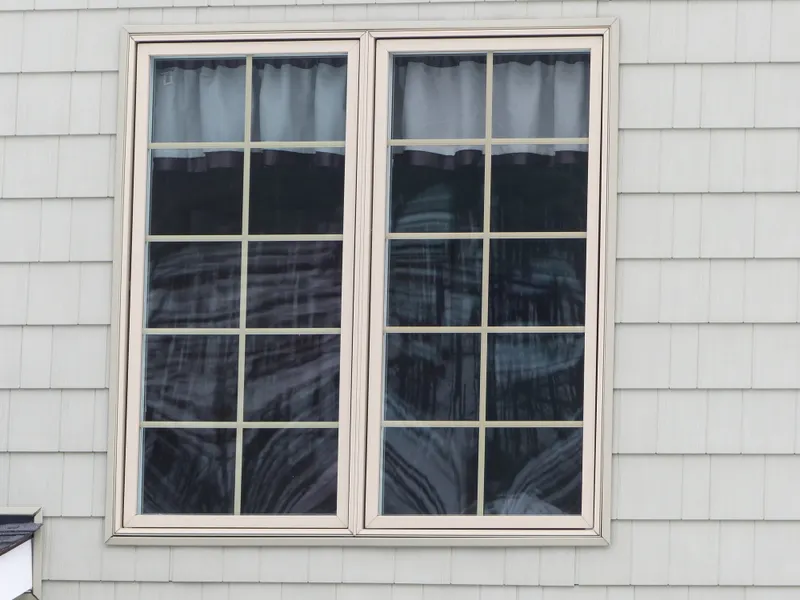
Surface dust, fingerprints and ordinary marks can respond to suitable washing. Adhesive, a worn coating or mist visible within a sealed unit can need separate attention. We do not make a promise to remove such marks as part of routine cleaning. If a concern is known before the visit, flag it when describing the window. Where we can inspect only the inside face, we explain that limit. The record of work should distinguish what we washed, marks that are still visible and any parts that need the owner or a glazing specialist to look at.