Separate the shop glass from the building above
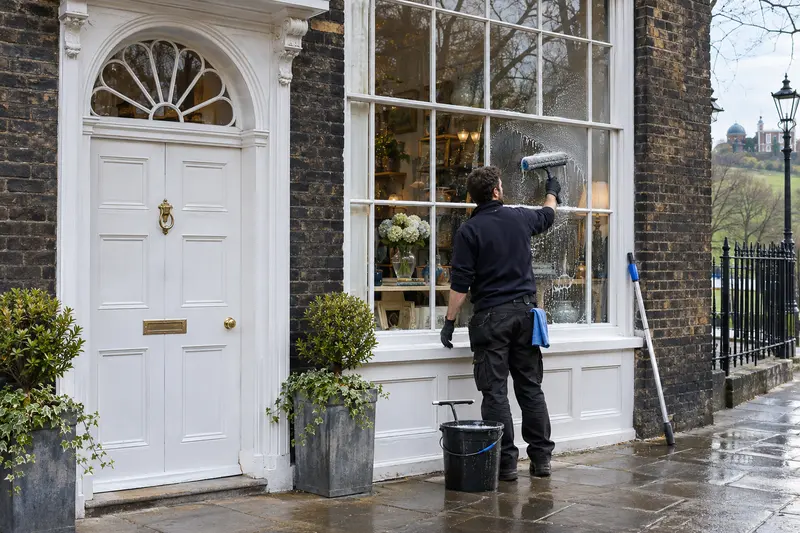
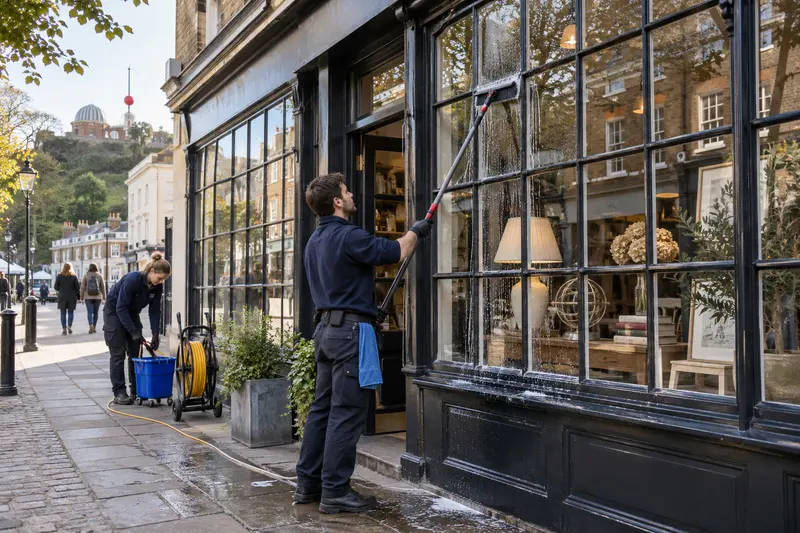
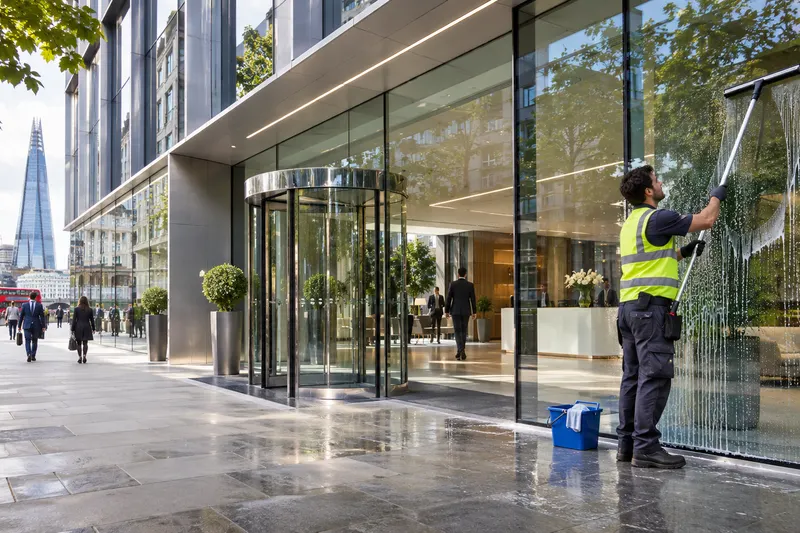
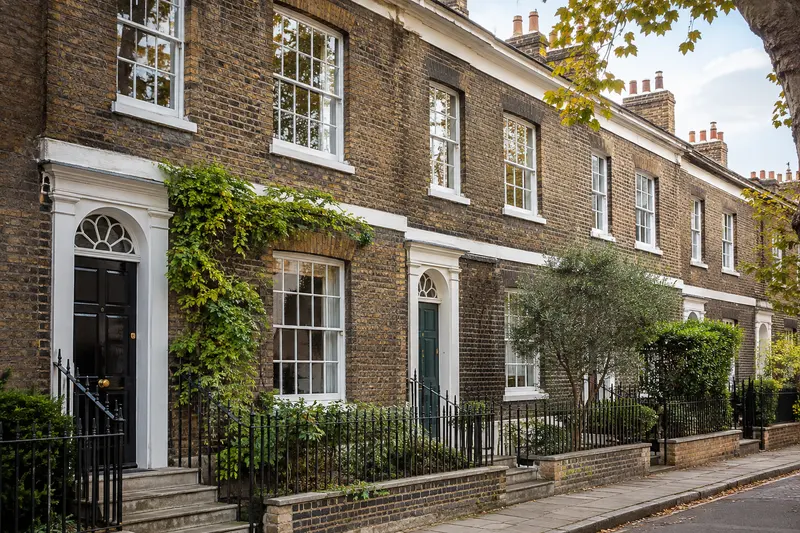
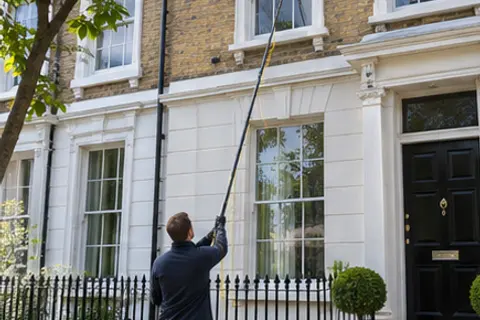
Royal Greenwich’s published shopfront guidance describes the traditional elements of town-centre frontages. A shop display in a period terrace can have a low stallriser, narrow panes by the door and a glazed light above it. The upper windows may belong to a different occupier. Please describe the panes your premises can include and tell us who can agree access to the rest. We check the opening, how the entrance is used and which faces can be washed without working close to a route that needs to remain open. A photograph taken diagonally along the shopfront helps us see the door recess as well as the display.
For an occupied shop, a delivery that uses the same doorway as customers can affect the working order more than the size of the glass. Include opening times and tell us whether we can work at a quieter point in the day. The door and the glass on the other side of a fixed display may need different times. Our shop front cleaning enquiry can cover a first visit for the entrance and a different interval for panes that collect fewer day-to-day marks.
Choose an order around the workshop or room in use
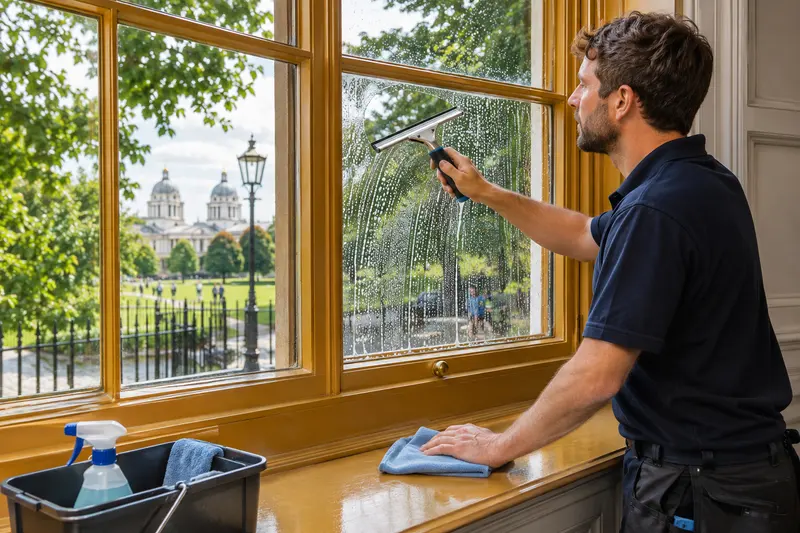
The glass above a counter can look empty from outside while stock, a desk or electrical equipment fills the room side. Before washing the inside face, tell us what has to stay where it is. We can discuss working at one end first, or limiting the visit to those panes with enough useful space. A door that has to stay usable and a quiet room that can be cleared do not present the same washing sequence. We agree where the tools can be placed and return each part of the room to use when the agreed glass has been finished.
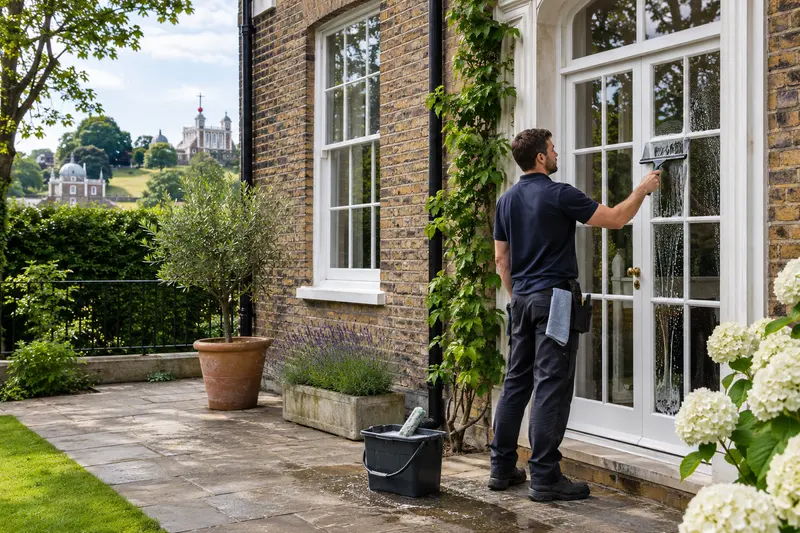
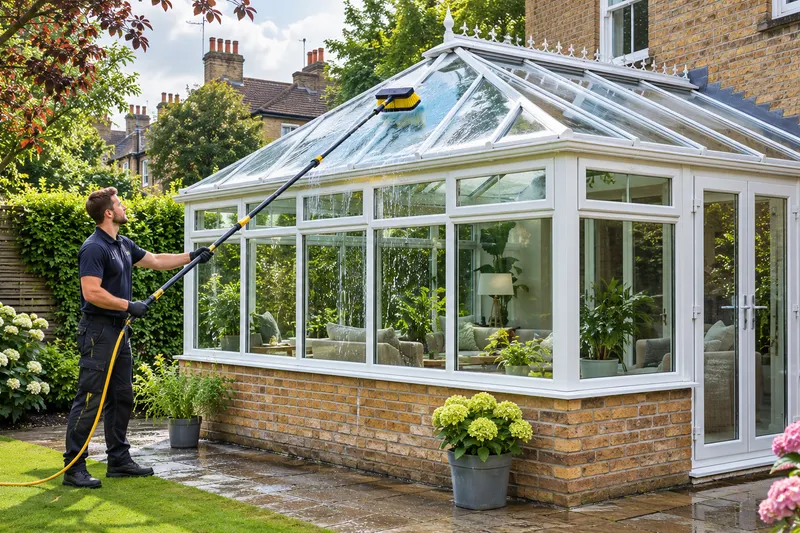
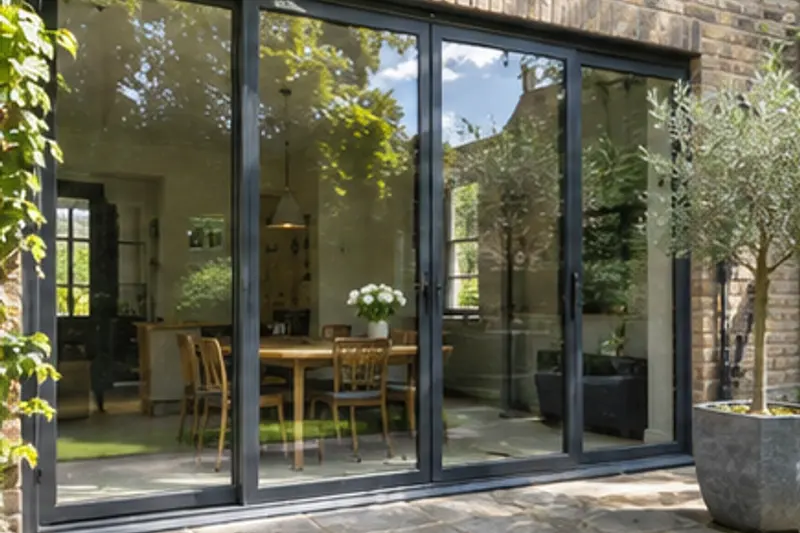
A simple inside appointment can include a separate ground-floor garden door or a conservatory entrance, if the faces and approach suit the visit. Describe the different surfaces rather than leaving the cleaner to infer what is included. A conservatory roof needs its own assessment, including whether the material is suitable and where rinse water would go. We discuss conservatory cleaning separately if a roof or glazed addition is on the list. This helps keep a straightforward window visit useful while we consider anything that needs a different working position.
Send details that help us agree a quotation
Start with the exact address, the property type and the faces you need. A useful enquiry says whether there is a shared gate, a recessed door or an extension below the window. Include ordinary ground-level photographs and point out which panes matter first. If the booking concerns a business, state who can agree access and when the entrance is least busy. If it is for an apartment, mention any building-managed outside face. Building height alone does not tell us what we can safely reach.
Our price guide is a starting point for the discussion. We need the work and access details to confirm what can be included. If an awkward upper pane still needs assessment, we can describe a visit for agreed lower or room-side glass without promising the other face. Tell us if access changes between visits, particularly after renovation work or a new tenancy. We can then revisit which door, gate or standing position is available before deciding what to wash.
For more than one visit, agree which side receives particular attention and what to do if another contractor has occupied the approach. Tell us when a shop changes its display or a tenant removes furniture, because the newly cleared panes may be easier to include.