Set the frequency by what each face picks up
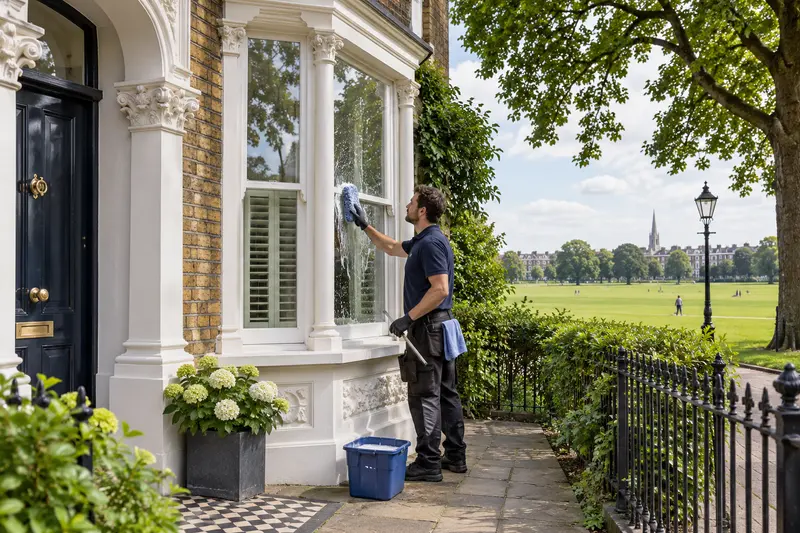
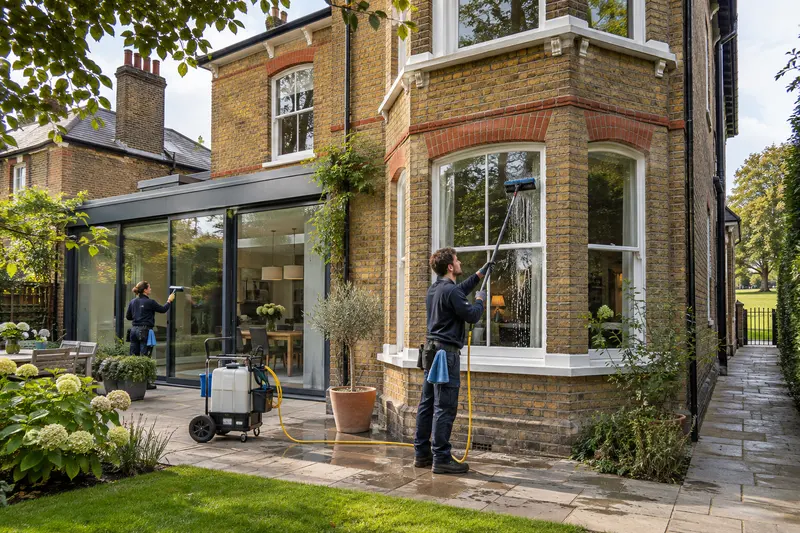
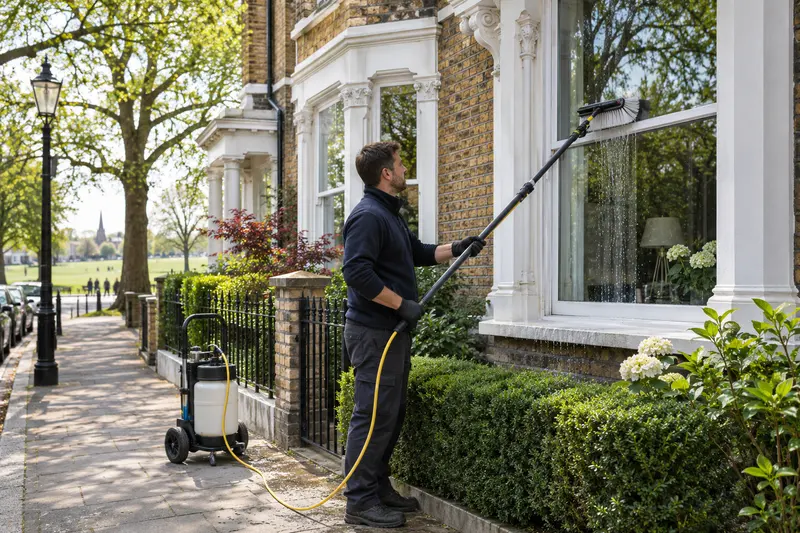
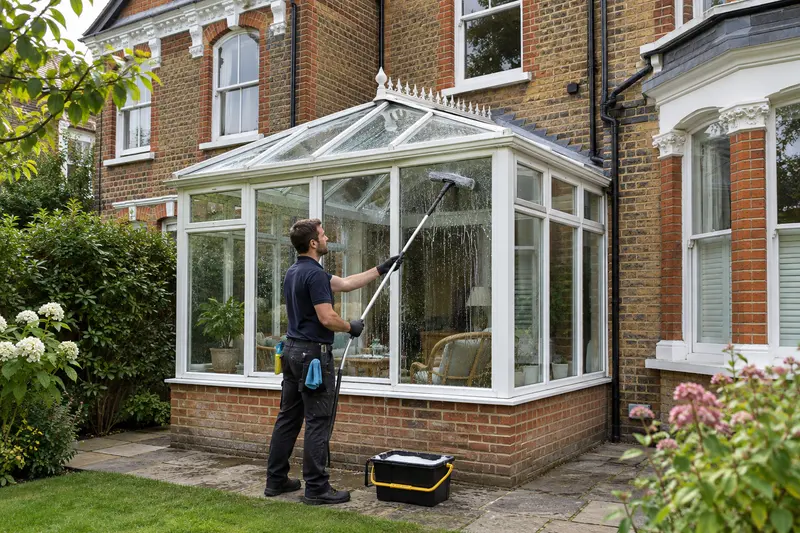
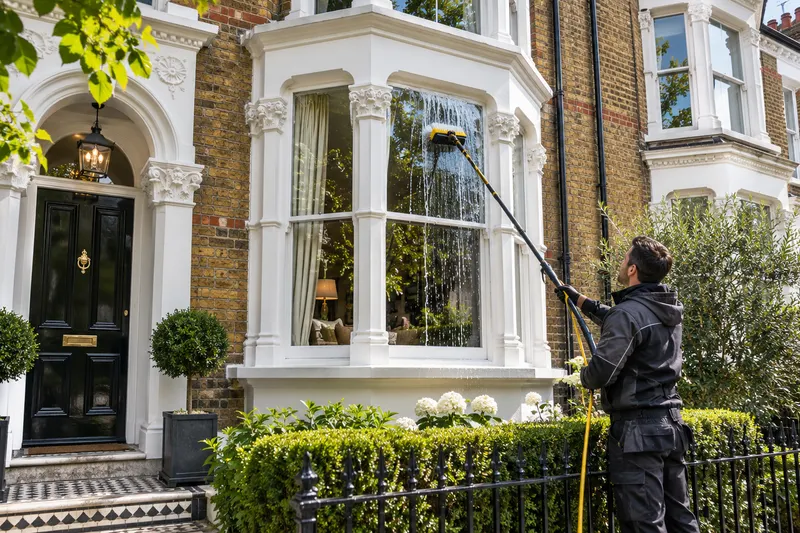
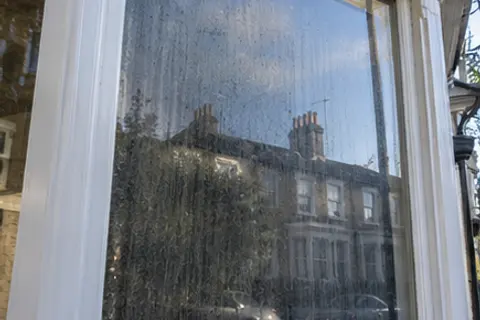
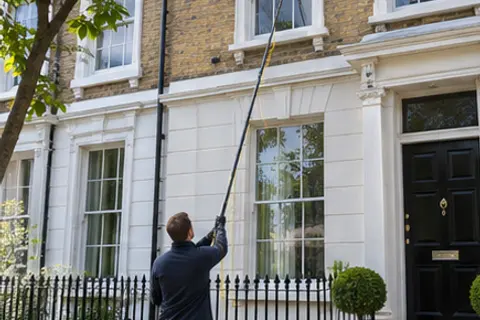
An outward-looking face and a sheltered rear door can pick up dirt at different rates. The front may show spots after exposed weather, while the glass beside a garden entrance may collect handprints and marks near the lower edge. Mention what you notice and in what light. We can discuss an interval limited to the faces you see most often. That might mean exterior glass on a repeat visit, with two inside panes or a specific door included only when requested. An agreed interval should identify the panes as well as how often we call.
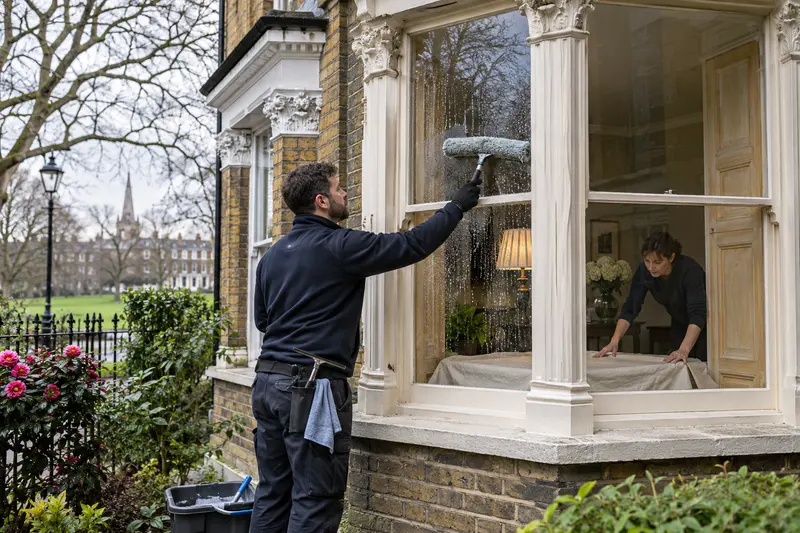
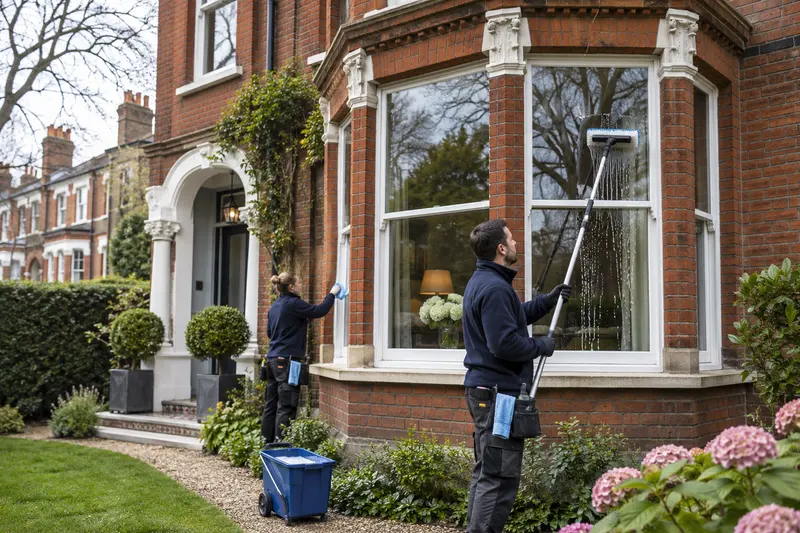
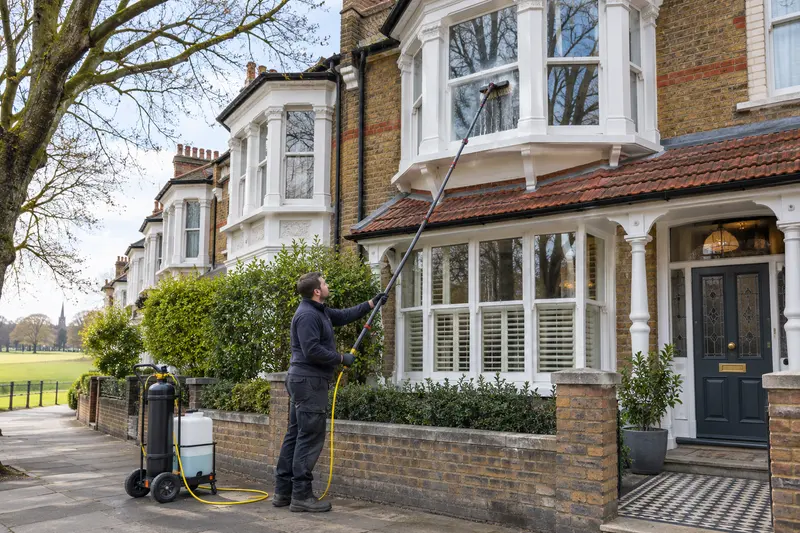
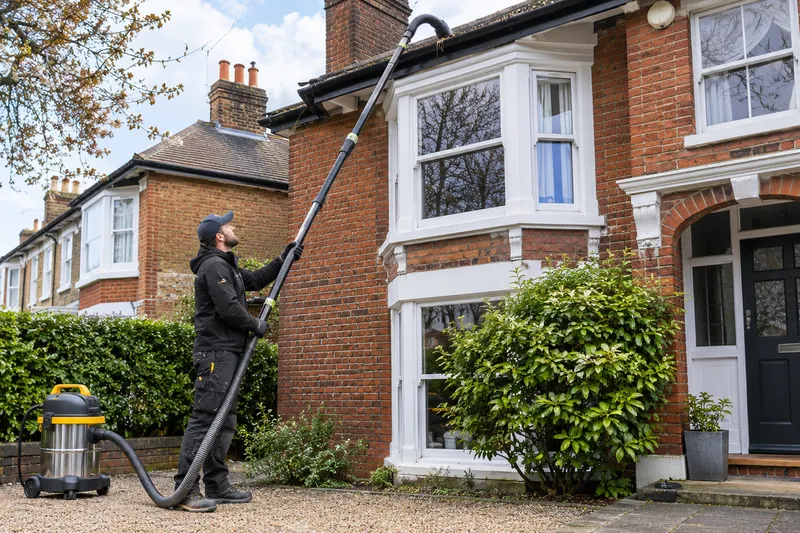
Where a bay is reached from different positions, we note which ones were used and what faces were included. This helps if a vehicle, planting or renovation work changes the route before the next visit. We check for new obstructions on the day rather than assuming the same positions are available. If a front face is straightforward but a rear one still needs assessment, we can discuss the agreed part and record the other separately. This keeps the visit focused on the glass the occupier wants instead of making every appointment depend on the least accessible pane.
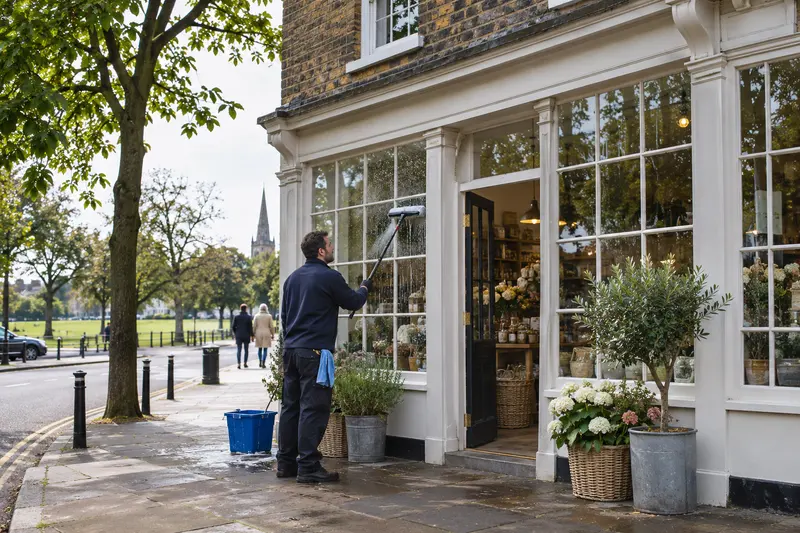
Agree the working time for village shop glass
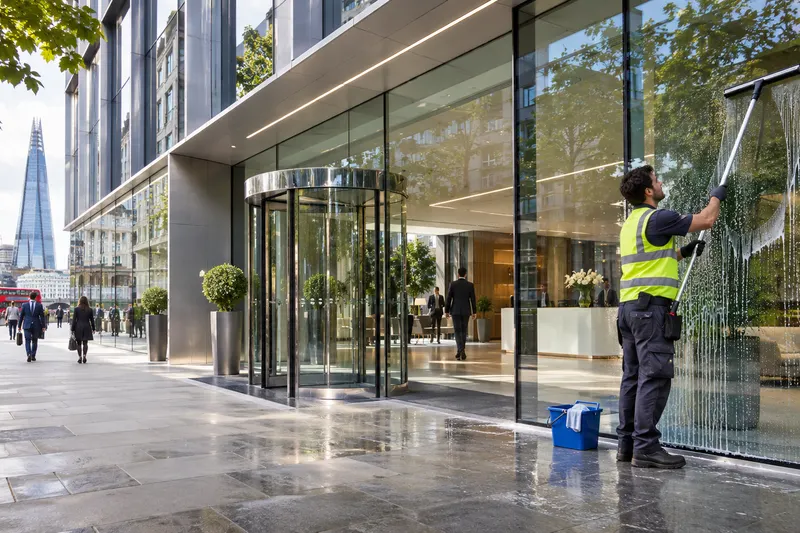
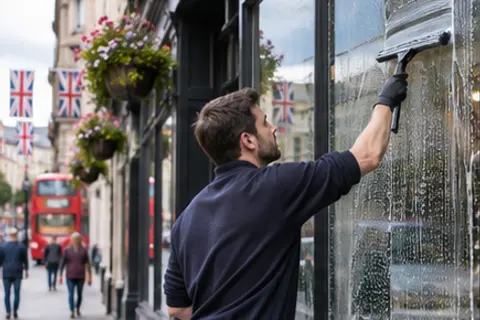
The village includes historic shop buildings from a range of periods. A shop door may be set back from the display glass and the same threshold can serve customers, staff and deliveries. Give us the opening times and tell us how people approach. We look at the door swing and available standing space. A fixed side pane and the glass above the entrance may each need a separate decision. Where hand work suits the reachable face, we can control the water at the edge and work an agreed section while keeping the route usable.
If we are asked to wash the inside of a display, tell us who can move stock and when there is room behind the glass. A finish on the frame can matter where the cleaner must work close to it. We agree the surfaces and use tools suited to the space. Shop front cleaning can be arranged for a door and selected panes, with higher or less frequently used glass assessed separately. At the end we check the accessible margins and explain any marks that appear to lie on the opposite face or need separate attention.
Explain what needs washing before comparing a price
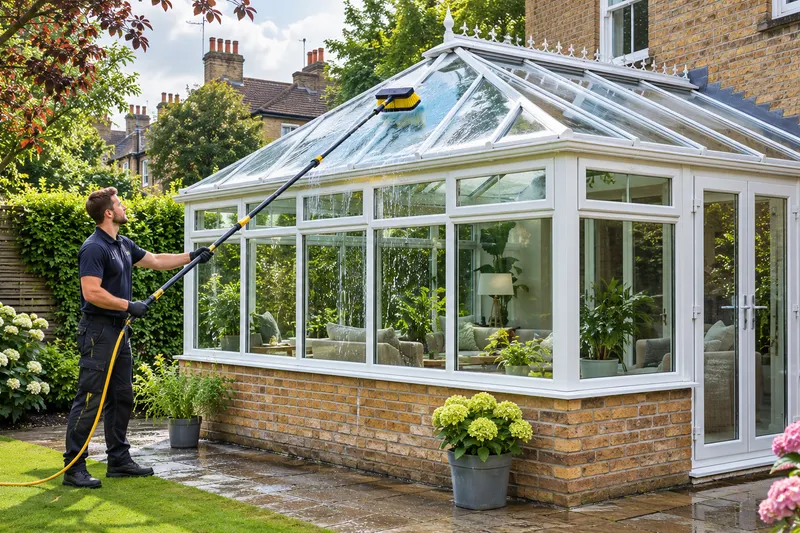
Give the exact address and identify the front, back or room you mean. A useful photograph shows the pane, the approach below and any boundary or projection that limits the working angle. Tell us whether the glass is wanted inside, outside or on both faces. If the work includes a bay, door or roof, list the separate surfaces. If you have an access arrangement with another occupier, state who will be available. Our price guide is a starting point and the quote depends on the work we can agree safely.
If some panes are a priority, list them first. We can often discuss those while arranging another assessment for a difficult part of the property. At a business, identify the contact and the time when there is enough room to work at the entrance. For an inside visit, tell us about furniture or a sill finish that needs protection. Such details help the person receiving the enquiry plan a useful first visit and explain what can be included before setting the time. This also helps distinguish the agreed visit from any routine maintenance being carried out elsewhere in the building.