Check the divisions on the sash before washing
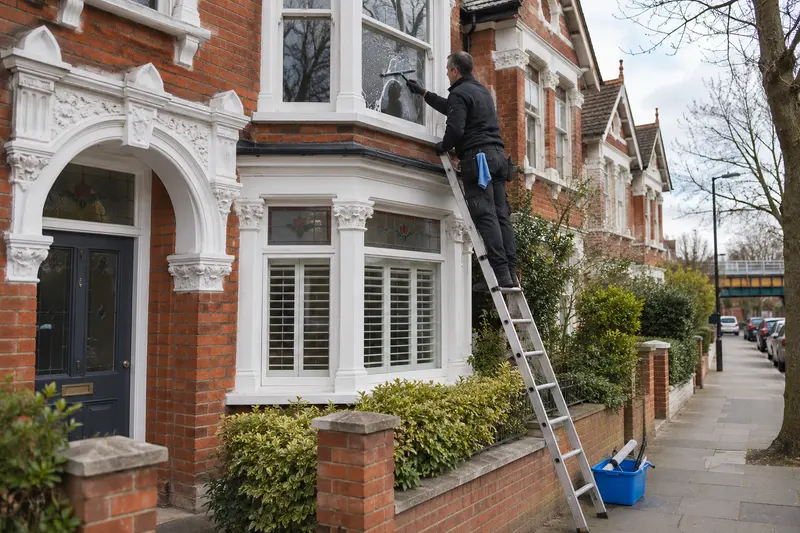
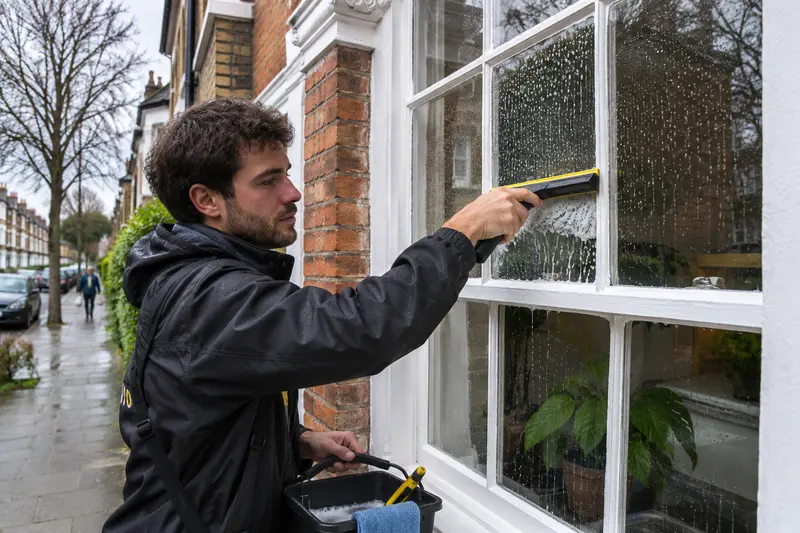
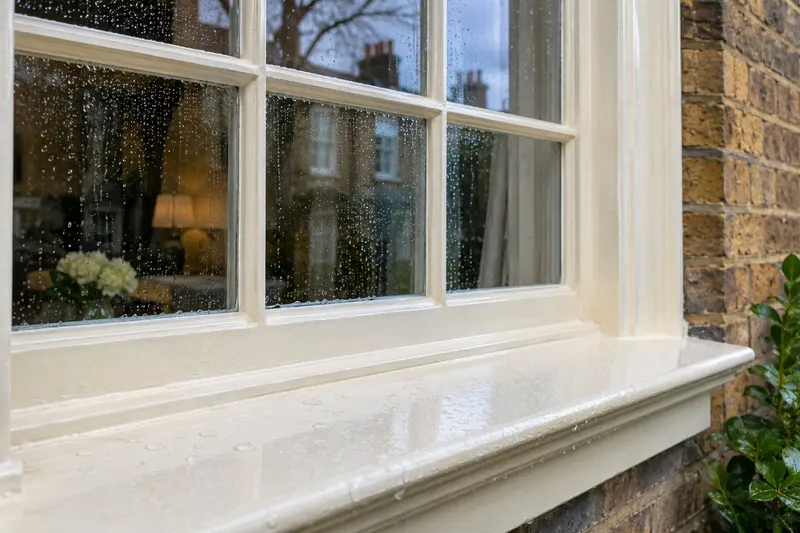
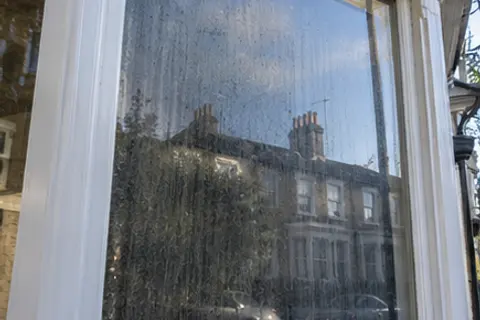
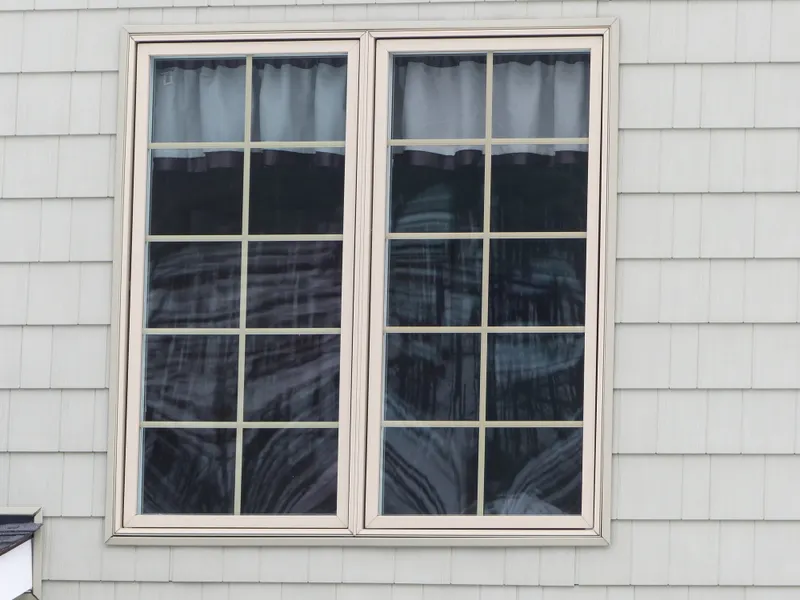
A sash with small upper panes has more edges where dust settles than a pane of the same size without divisions. We check the frame and bars before washing, particularly where old and replacement panes meet. If paint is lifting or putty is loose, we discuss how close the brush can come to the vulnerable detail. Sound and accessible edges can be washed ahead of the glass. Working from the top down reduces the amount of dirty water running across a pane we have already rinsed.
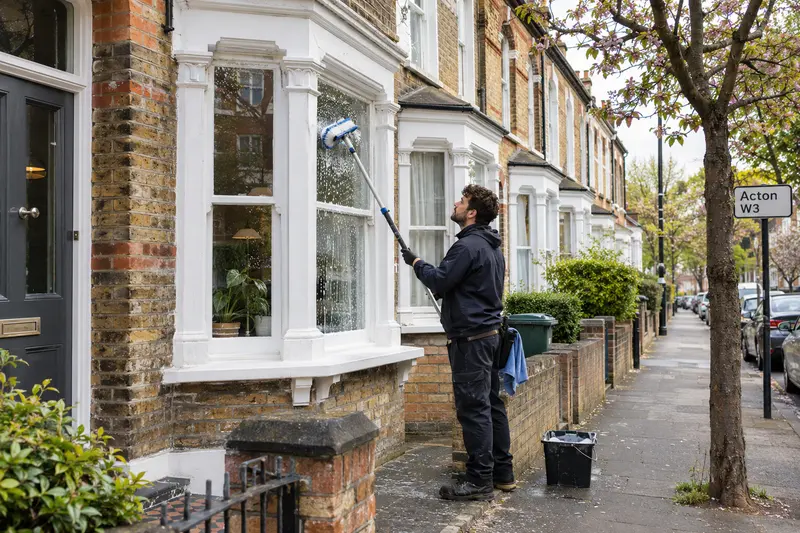
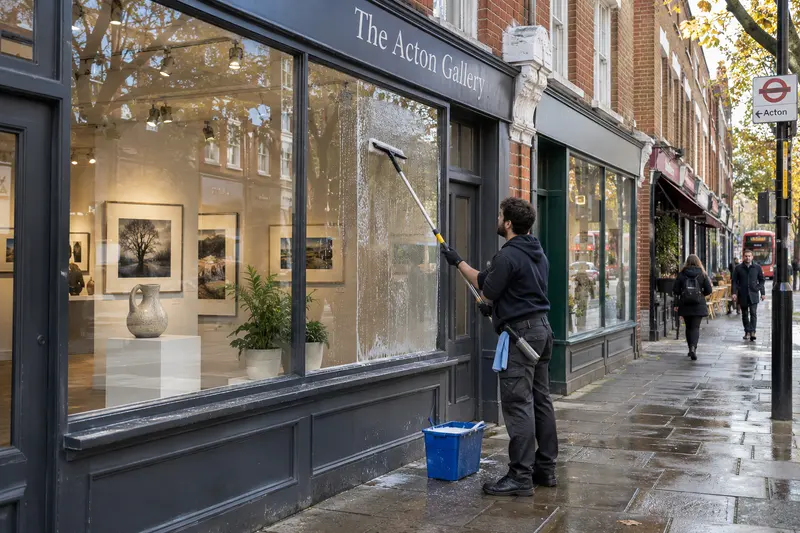
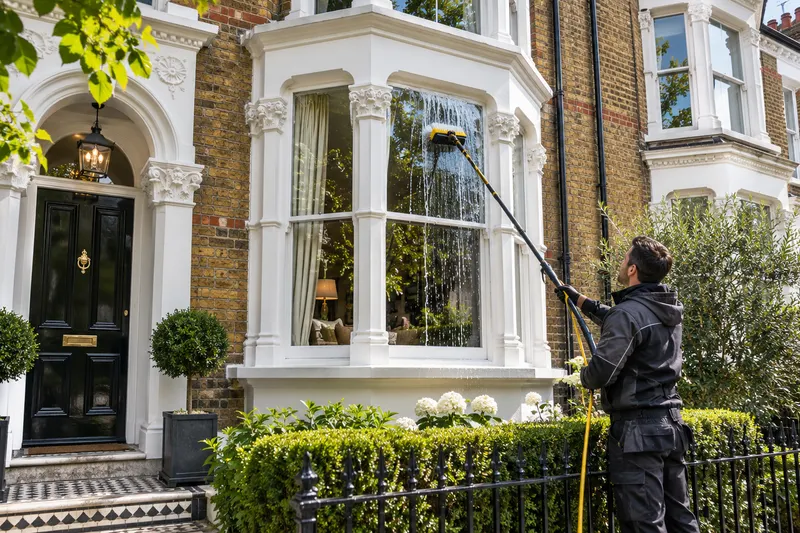
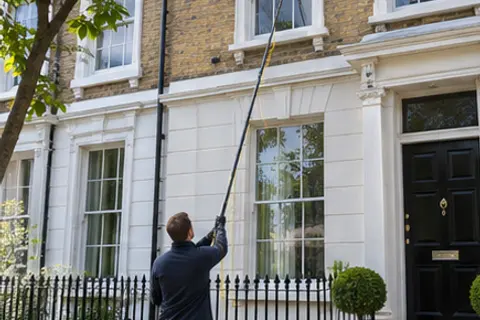
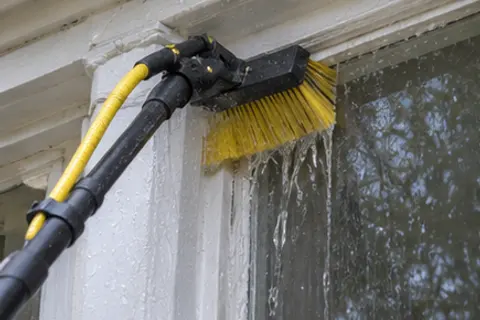
Where the angle and finish suit it, a water-fed pole delivers purified water through a soft brush. We choose a position that lets the brush reach across the full width and find the lower corners. The final rinse takes loosened material down and away. A deposit that remains should be looked at in relation to the surface, especially if the pane has an unusual finish or has been installed recently. At a low, sheltered sash hand tools may make it easier to control the water and inspect the edges closely.
Treat the sill and curtains as part of the working area
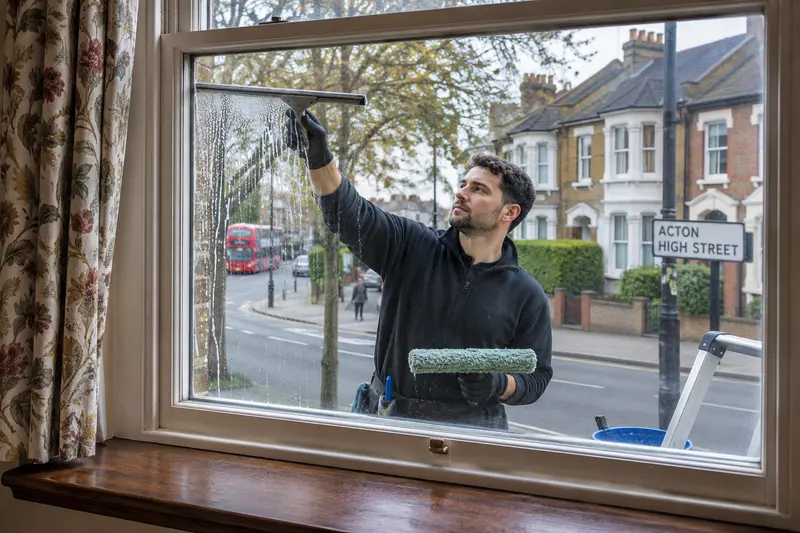
Inside a house, tell us how the room is used and which items should stay close to the window. A broad sill or curtain can reduce how far we can move a washer and blade. If the sill is painted or waxed, tell us whether there are specific care instructions. For interior window cleaning, we discuss where to lay protection, which items can be moved and how much working room the tool needs. A tiled surface and a timber window seat need different handling around their edges.
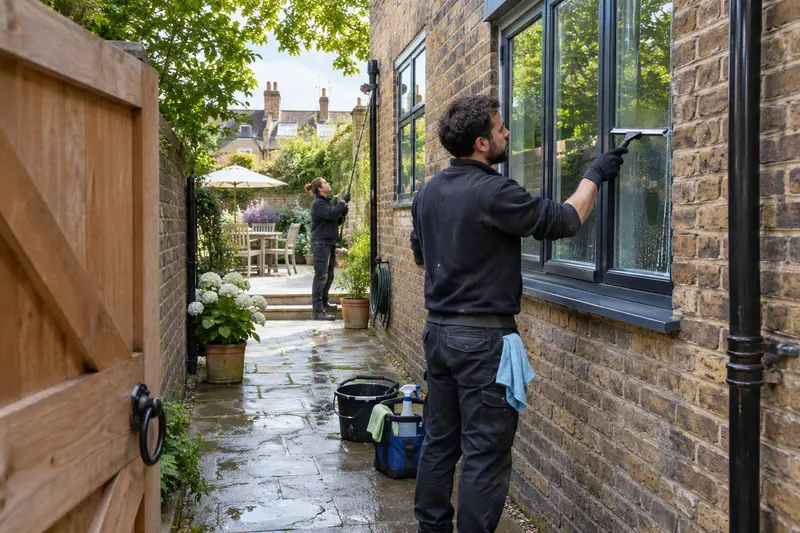
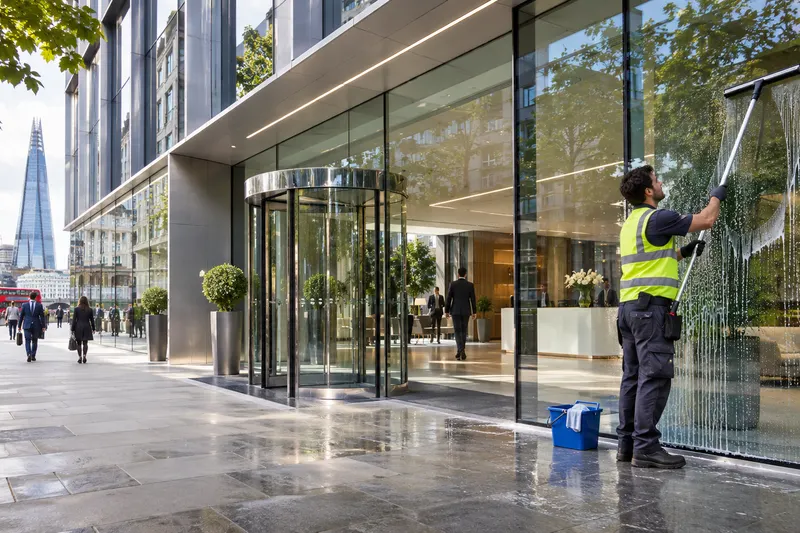
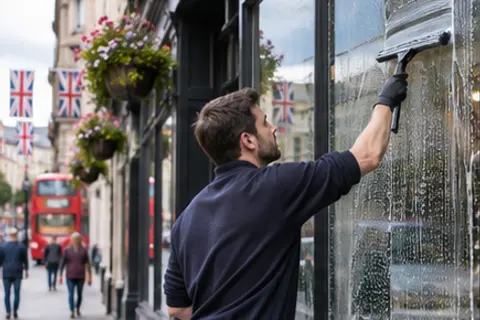
On suitable panes, a washer loosens dirt and a blade draws the water towards an accessible edge. A clean cloth catches moisture in the corners. A narrow pane beside a deep reveal may need a shorter tool rather than the one we use for the full-width pane. We finish by checking the sill and floor around the window. If you request an exterior face from inside, we assess the actual movement of the fitting and check whether it can be handled from the room in its normal use.
Separate the upper windows from the extension roof
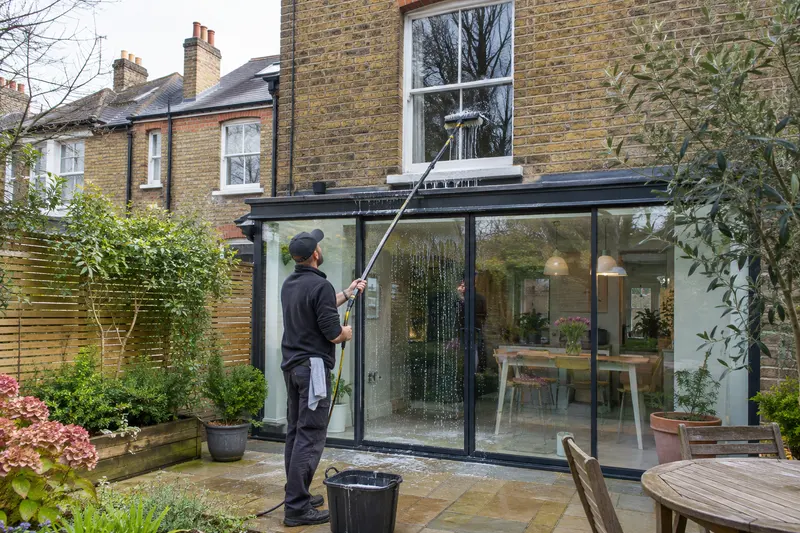
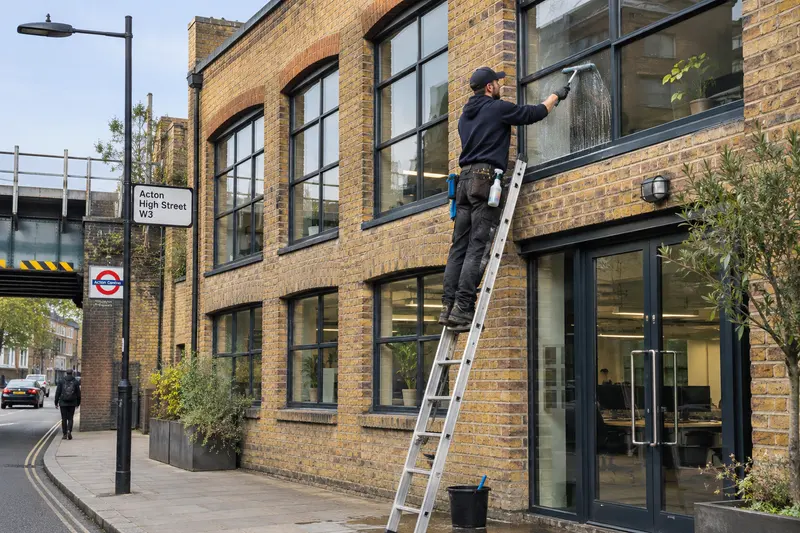
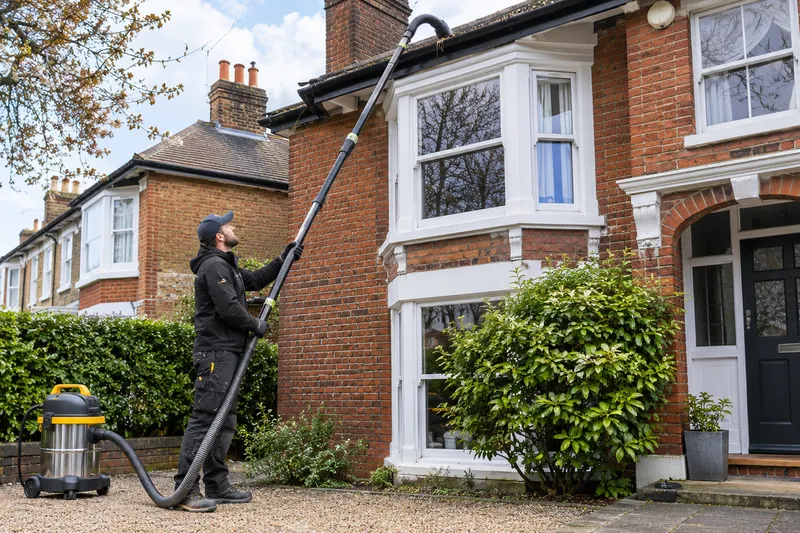
An upper sash above an addition may need reach beyond the line that works for its lower glass. For high-reach window cleaning, show the window and roof together and include where the garden opens out. A stand-back distance dictates how squarely the brush meets the pane. An angle that touches the middle can miss the bottom corners. We check which part of the ground is usable without relying on the roof to support the equipment.
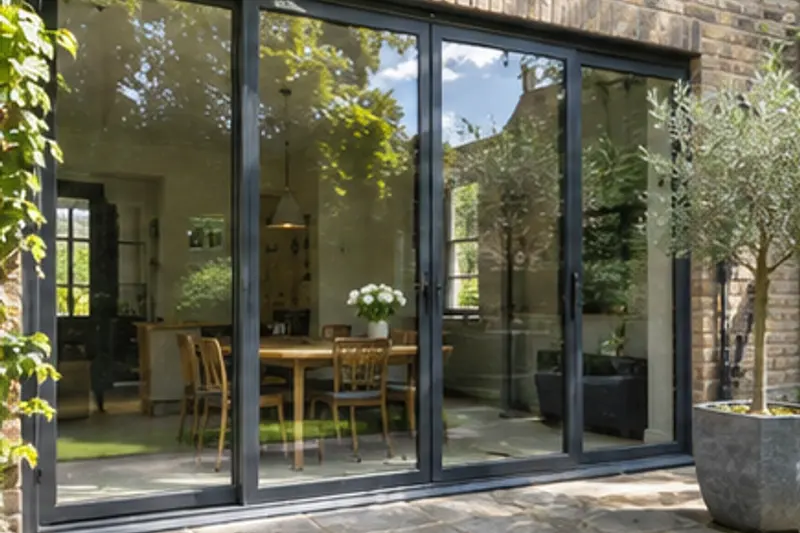
If conservatory roof cleaning is also planned, tell us which panels are included and whether neighbouring glass will be affected by run-off. We look at accessible frame lines and confirm the wash sequence. Where the working position allows it, the roof goes first, giving loosened material time to run off before the lower faces are washed. For gutter cleaning, mention a gutter that repeatedly drips onto the addition. We discuss the affected run and how it relates to the glass before deciding when to do each job.