Begin with the bay, not the window count
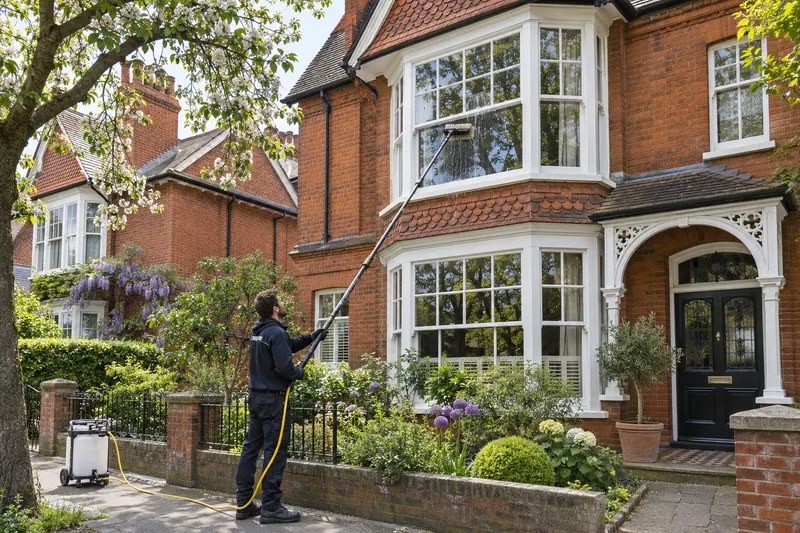
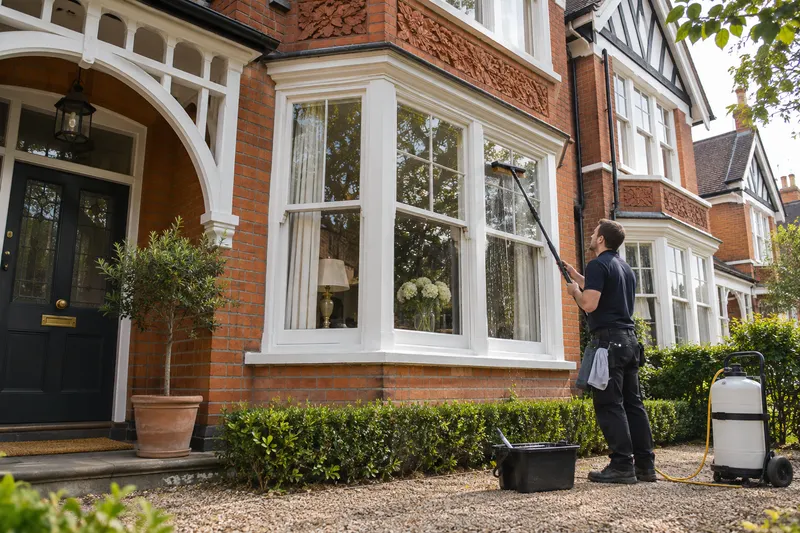
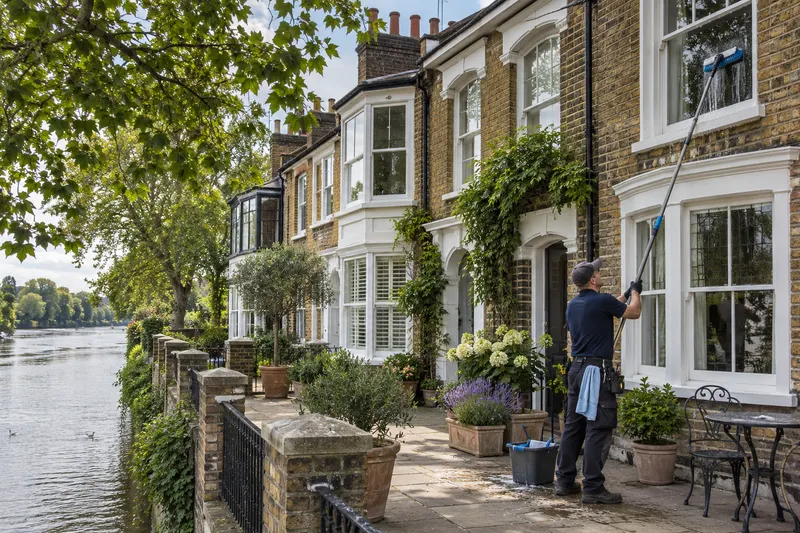
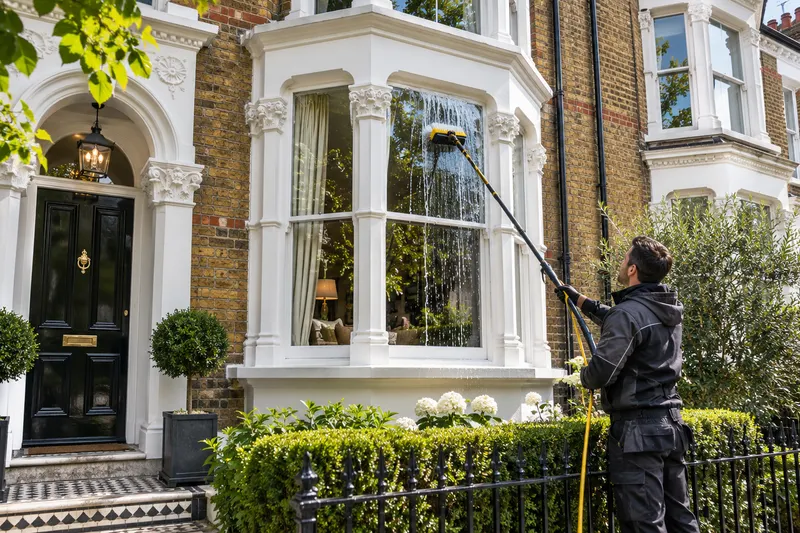
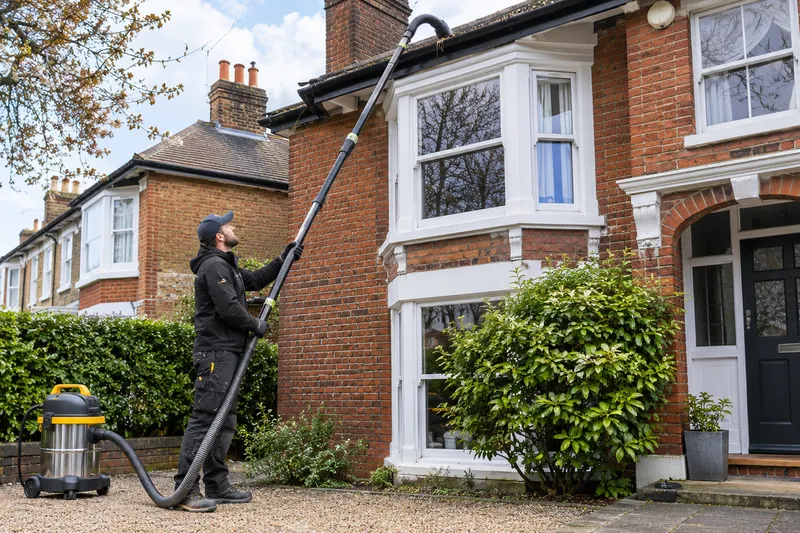
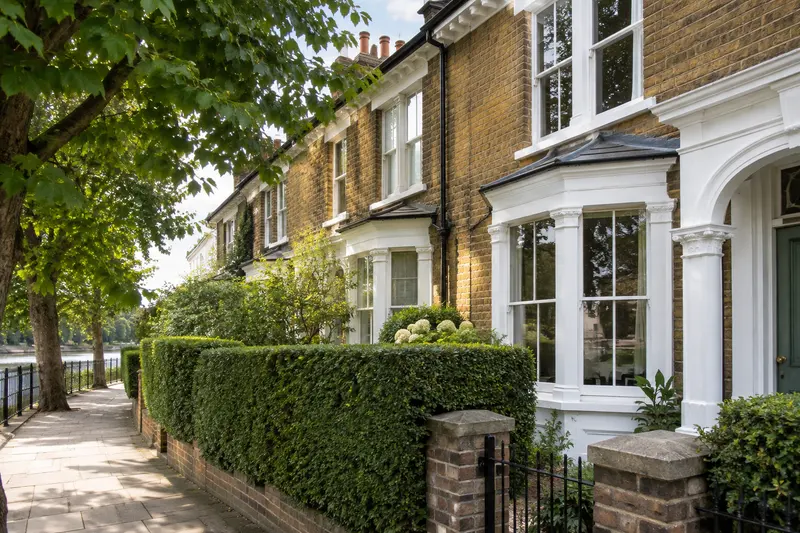
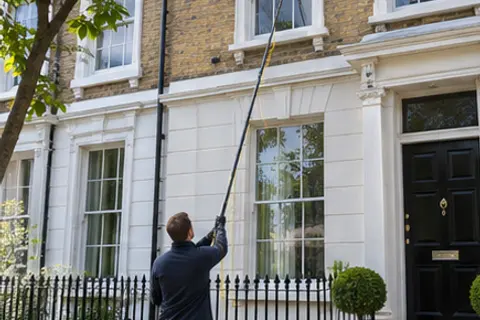
From the pavement a bay can look like one broad opening. Up close, the side cheeks turn away from the centre pane and each face meets a different glazing bar, rail or sill. A brush that sits comfortably on the middle pane can catch the outer edge if the operator keeps the same position for a side panel. We first find somewhere to stand that allows the tool to travel the full height of each face. Where the planting or railings restrict that movement, we look for a second position rather than stretching across the bay.
On the traditional brick and timber houses associated with Bedford Park, a bay may sit under a projecting upper storey or beside a narrow frontage. A photograph taken at an angle from ground level often shows both side cheeks and how far the glass projects. Tell us if you want the upper panes as well, whether any work is indoors, and whether the painted frame should be included. We assess those choices separately. A short lower window with delicate joins can take a different wash from sound modern glass on the same elevation.
Keep the weight off old timber and its joints
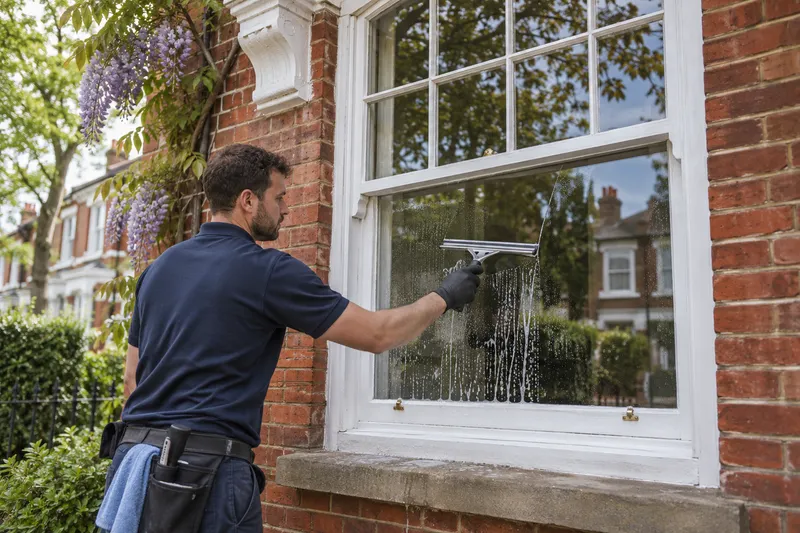
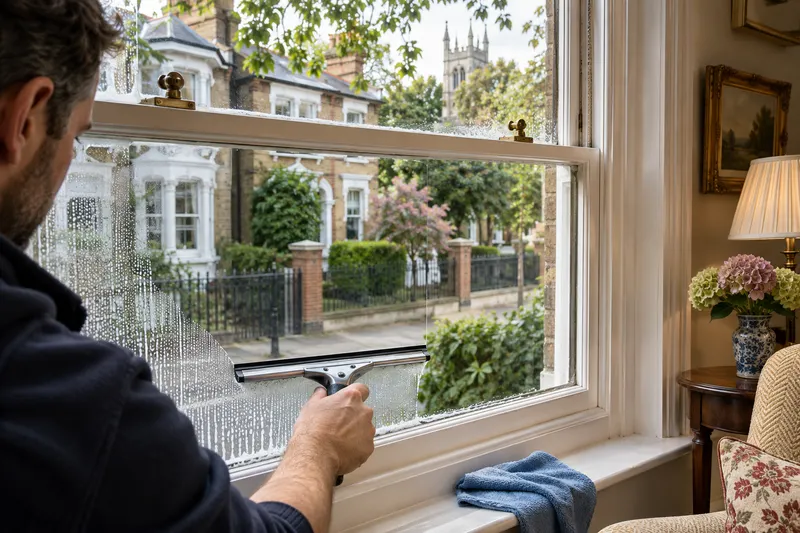
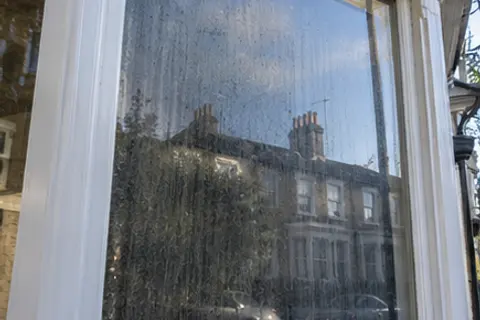
A sash with a plain lower pane and smaller top lights needs care at the join between the two parts. We look at the painted edges, putty and glazing bars before beginning. Sound finishes can usually be washed where we can reach them properly. Loose paint, cracked putty or a frame that moves unusually should be pointed out before we put a tool against it. We may wash only the sound glass if the timber needs repair, and we agree any limitation with you before working.
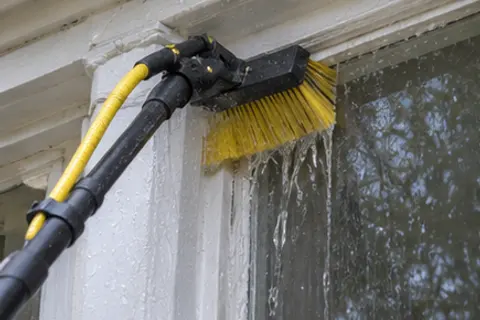
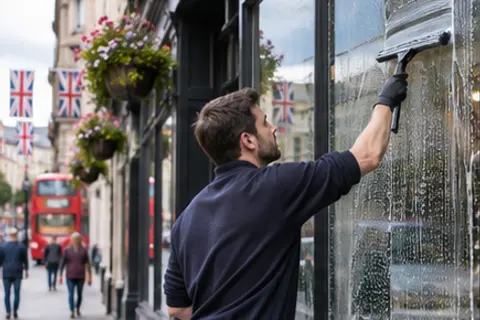
For an outside face with clear reach, a soft brush and purified water allow us to rinse around the bars without asking the occupier to open the window. Indoors we use a hand washer or cloth where the available room permits it, and draw the water away with a squeegee where the blade can travel without dragging into the timber. We protect the nearby sill and bring the collected water away from furnishings. Where a sash is stiff, or shutters and fittings restrict access, we only work from a position that leaves the window hardware as it is.
Set the wash order before rinsing extension glass
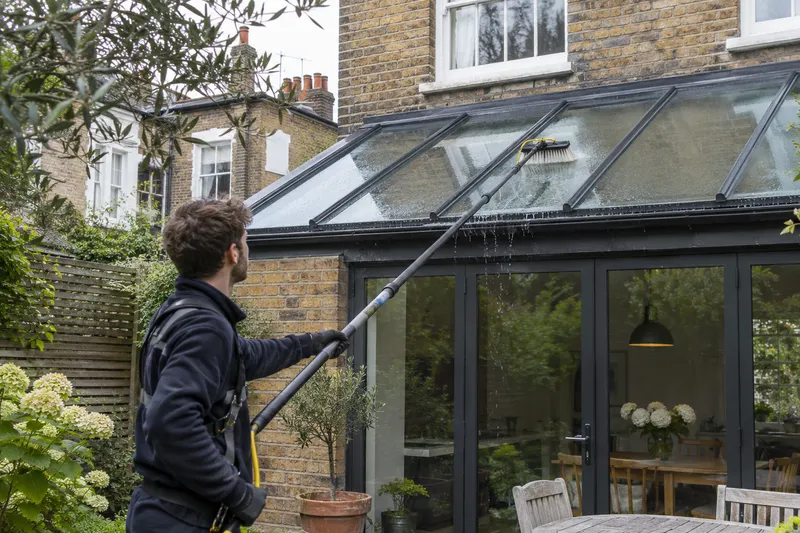
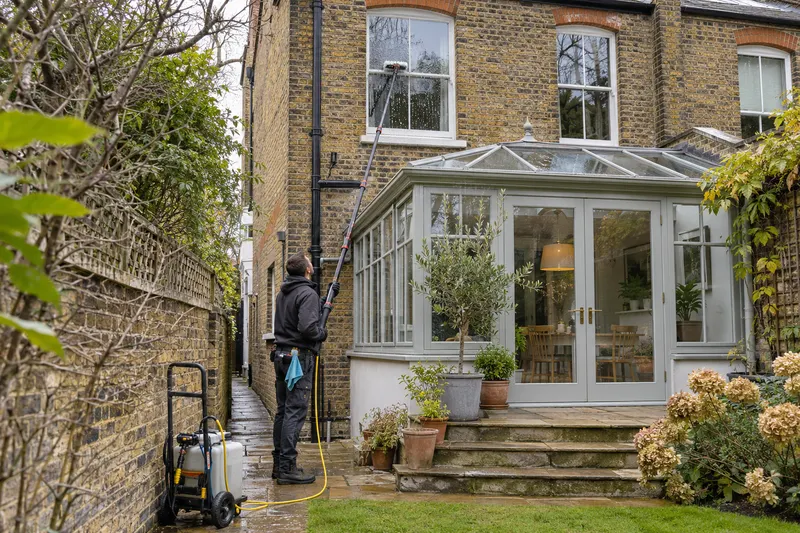
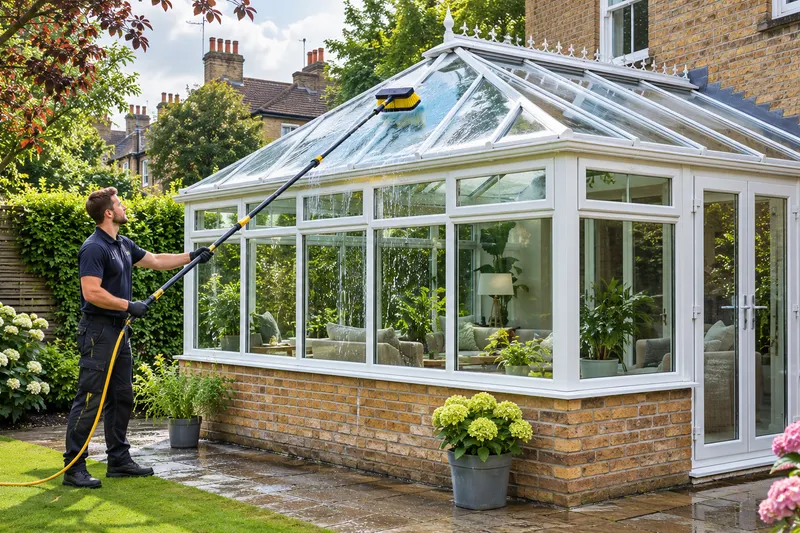
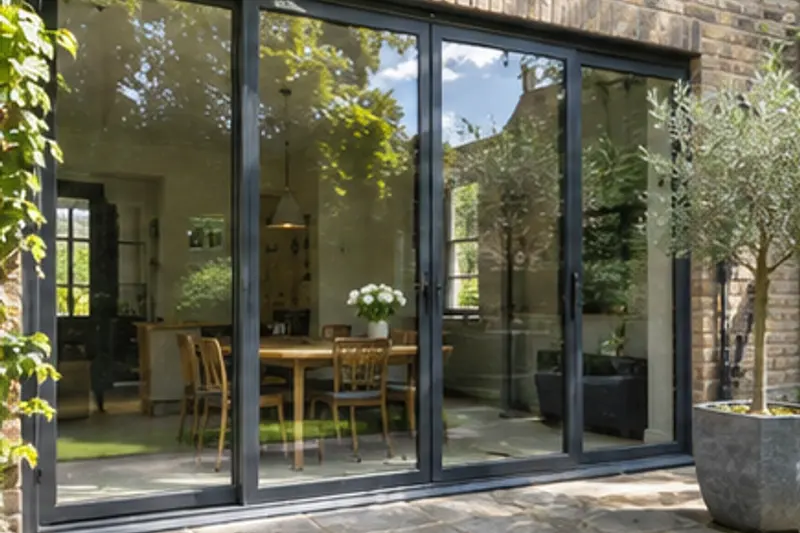
A rear extension changes more than the view from the kitchen. The roof can sit directly below the original upper windows, and there may only be useful working space at one end. From the lawn an upstairs pane can be easy to see yet too far behind the roof edge for the brush to sit properly. We assess the upper outside faces from a realistic position instead of assuming that reaching the centre is enough. An image from the far side of the garden showing the roof depth is useful for that comparison.
If you also want the roof of a conservatory considered, say so separately. We check the panel material, reachable joins and where rinse water will leave the lower edge. Roof cleaning is not implied by washing the doors or windows beside it. When both are included and the roof can be reached safely, the planned sequence keeps dirty water from falling onto glass that has already been checked. We report any remaining marks that appear to sit between panes or would need another assessment, rather than treating every patch as loose dirt.