Make the shop entrance work during the visit
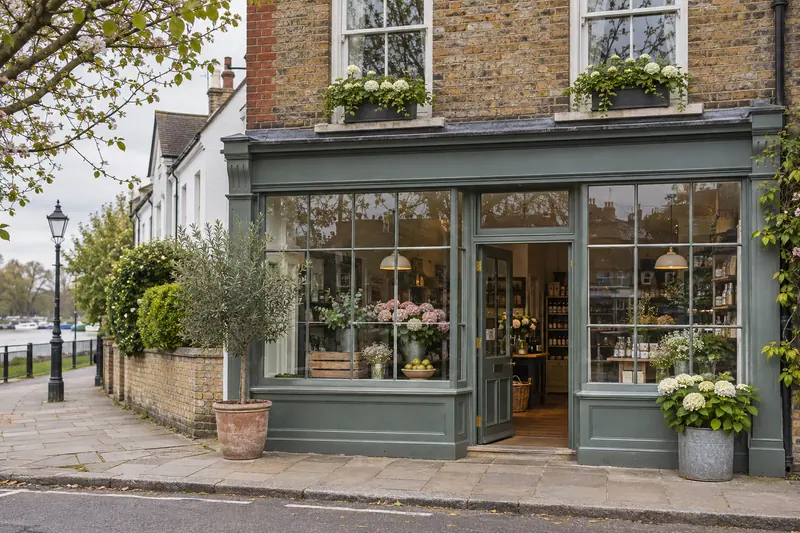
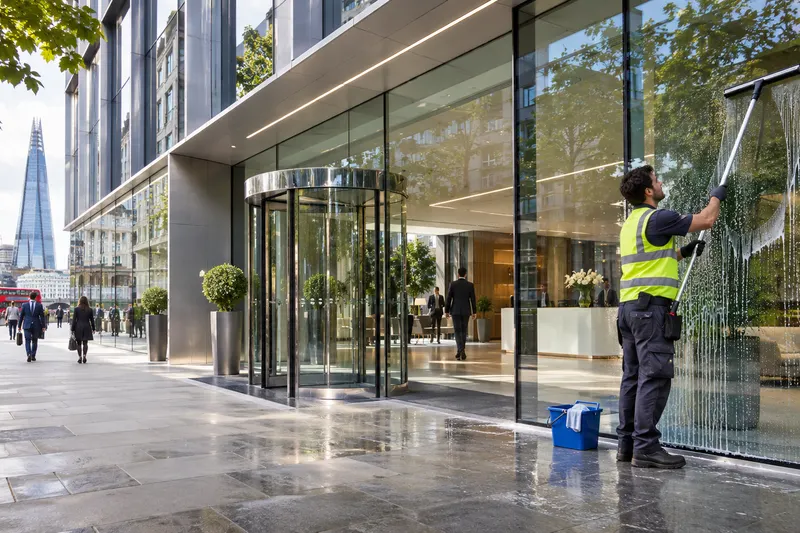
A shopfront on a village parade can have a large display pane, a narrow return into the recessed entrance and a transom over the door. The council’s appraisal describes examples with recessed side entrances and original detailing along Church Road. For a real job, the useful questions are when the door will be in use, what stands outside it and which side of the glass carries any film or lettering. Even if the display pane can be covered in one visit, the entrance and top light may need a distinct position or tool. Tell us when deliveries or the busiest part of opening usually fall.
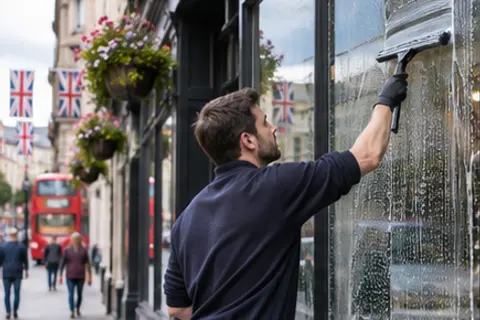
We plan shopfront window cleaning around the normal way customers enter. Where an inward clean is included, we ask how close displays sit to the glass and whether you can clear a working strip first. We agree who can move stock, and protect the surfaces beneath the glass where needed. Where the outer face meets the pavement, we choose a controllable method if there is suitable room to work. Before leaving, we look around the door edge and lower corners and check that water has been collected from the threshold and any spot where people are about to walk.
Work along the top edge before finishing the lower panes
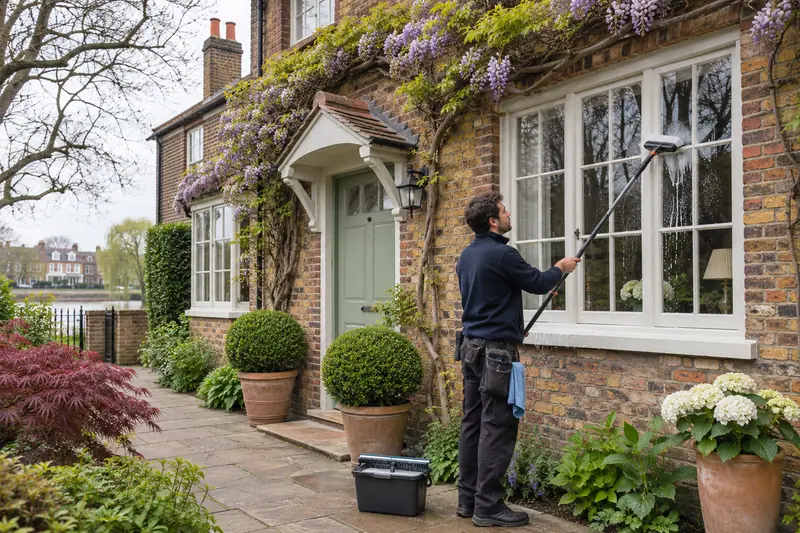
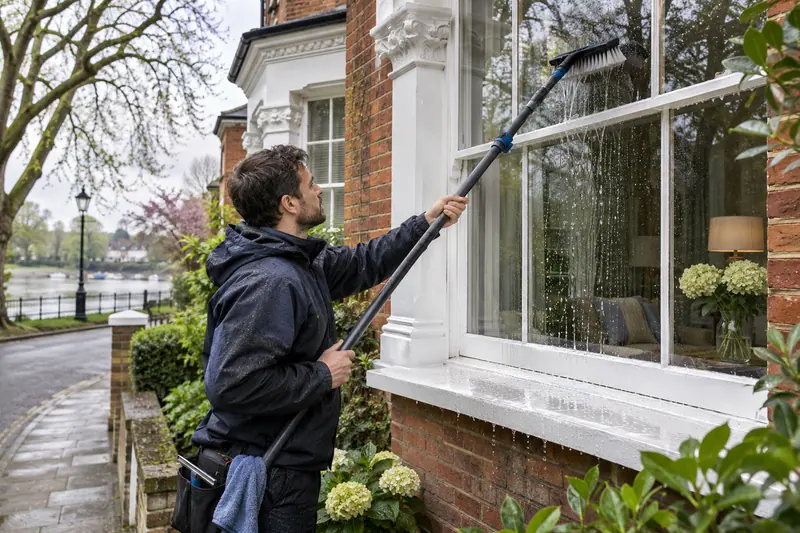
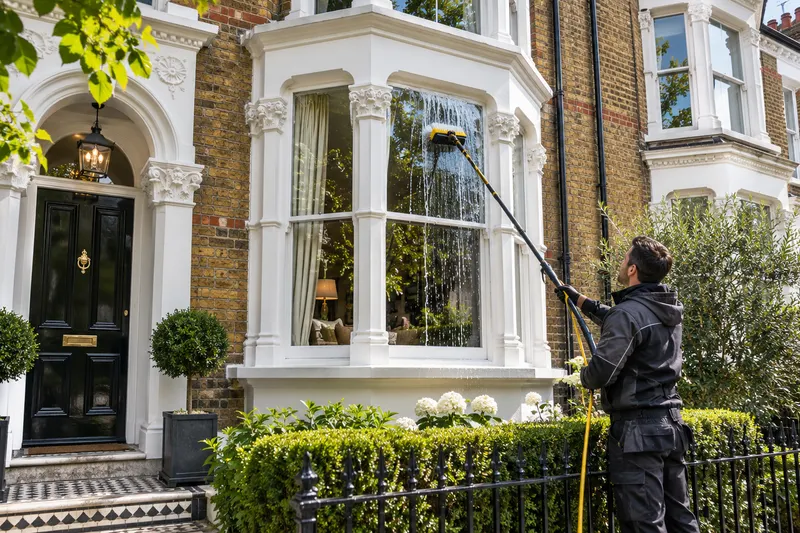
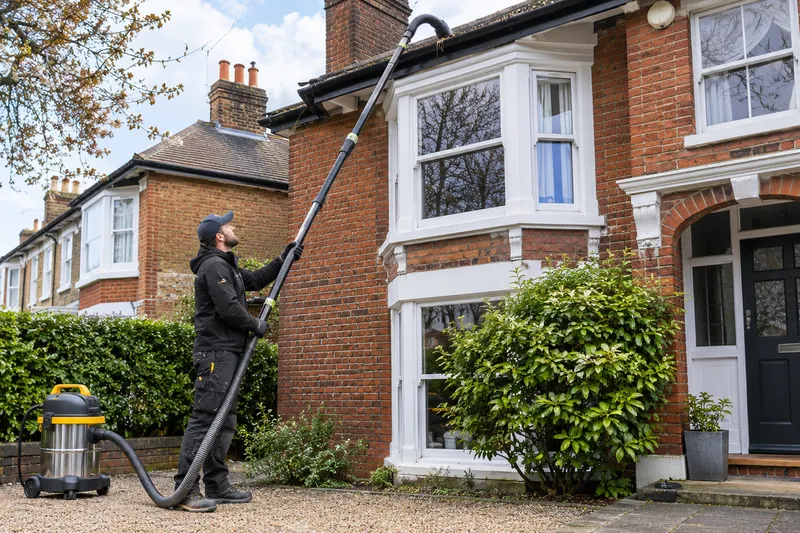
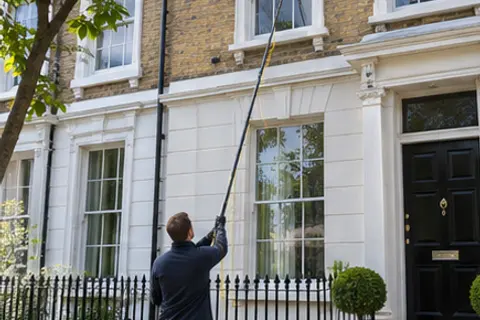
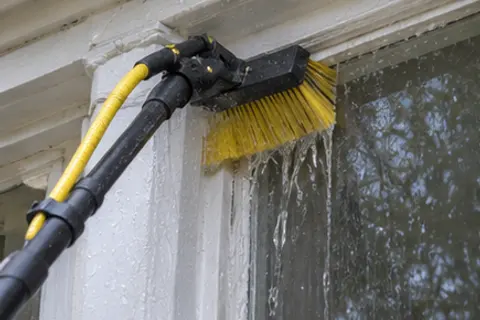
For an agreed outside wash, we choose a position that lets the brush reach the upper edge and move along both sides of the pane. Dirt can sit on a horizontal glazing bar, a shallow lower rail or close to the seal. If suitable frames are included, we work on the reachable edges first so material can drain away before the final pass on the glass. A low window behind a planting bed may need a different angle on one side. We stop and reposition if an edge cannot be reached with control, and describe anything the agreed route prevents us from getting to.
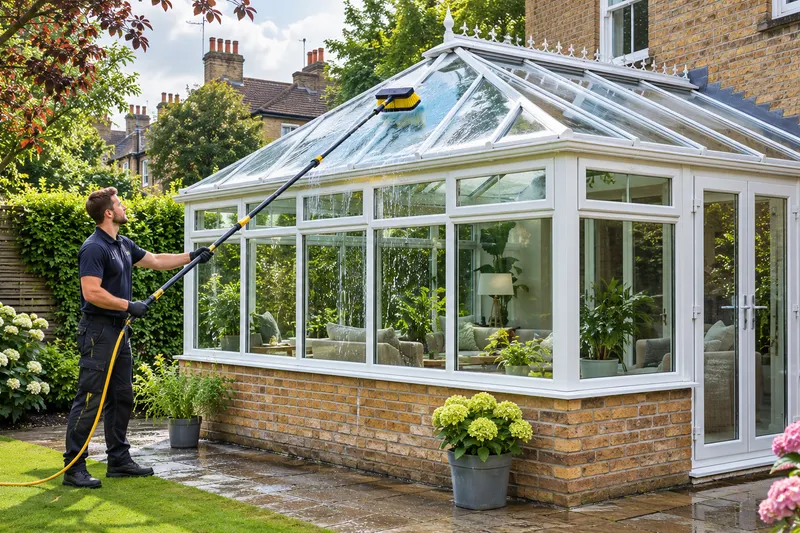
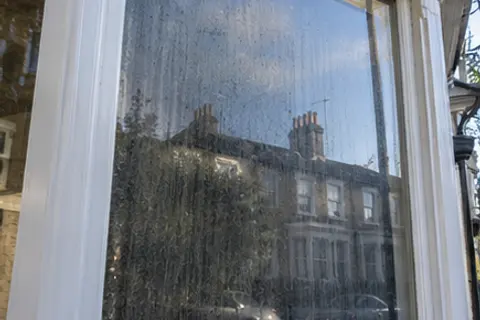
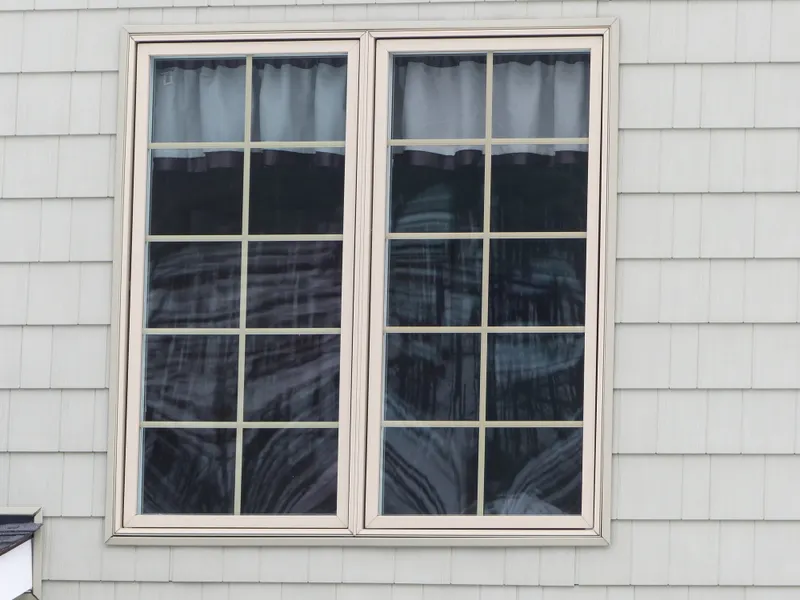
The first wash loosens everyday dust, pollen and surface film. The separate rinse carries that loosened material off the glass. Using purified water reduces the minerals that can be left when the rinse dries. We look at lower corners and joints once there has been a chance for water to run away. Adhesive or a pale deposit under a leak may need to be identified separately. Before discussing more treatment, we establish what we can see, what the glass is made of if known and whether advice is needed from the installer. An older surface mark is worth mentioning when asking for a quote.
Set a repeat visit around what happens between cleans
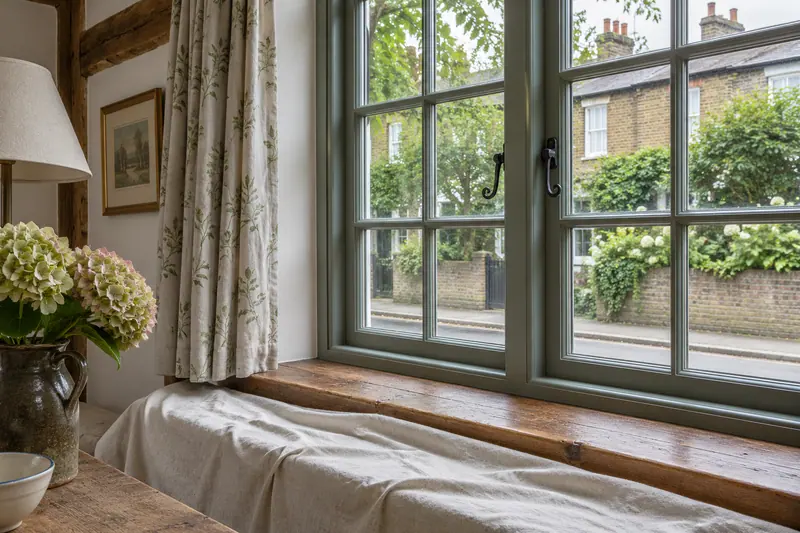
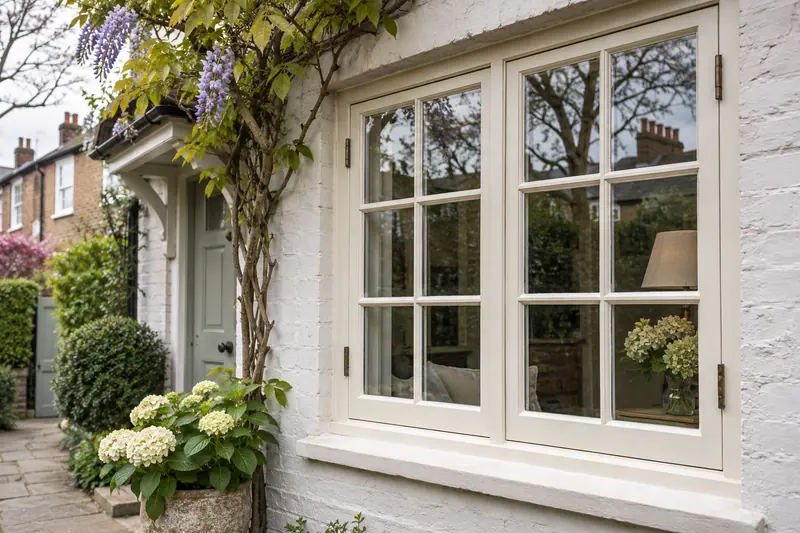
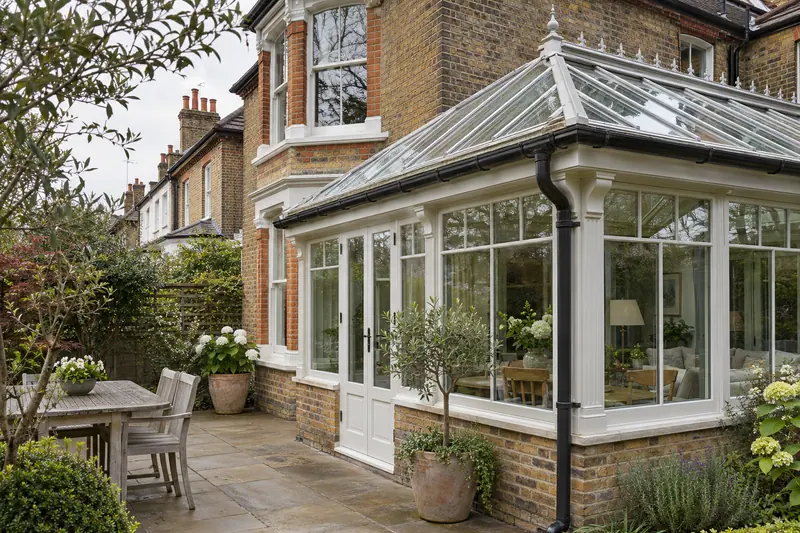
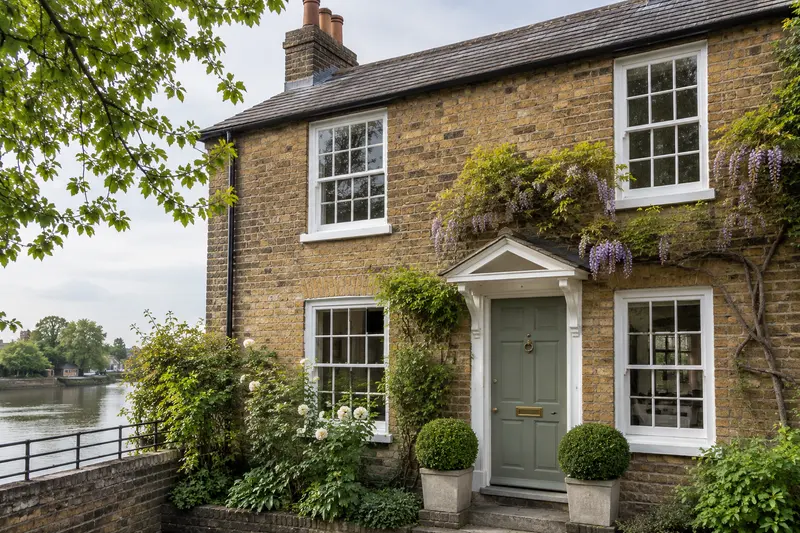
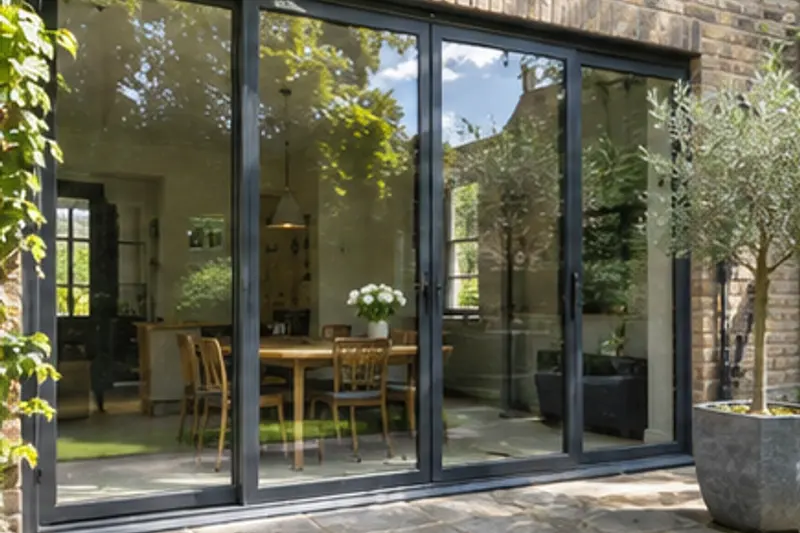
One-off visits can be useful after a spell of pollen, before a shop changes its display or when someone moves into a house and needs to see which surfaces are affected. If you want a repeat arrangement, tell us where dirt first becomes noticeable and which glass you look through most often. A garden-facing casement under a mature tree may collect small particles around its bottom rail; a street-facing door may need more attention around the handle. Many households care most about one group of panes and book the inside work less often. We agree the detail with you, including the sides of each pane.
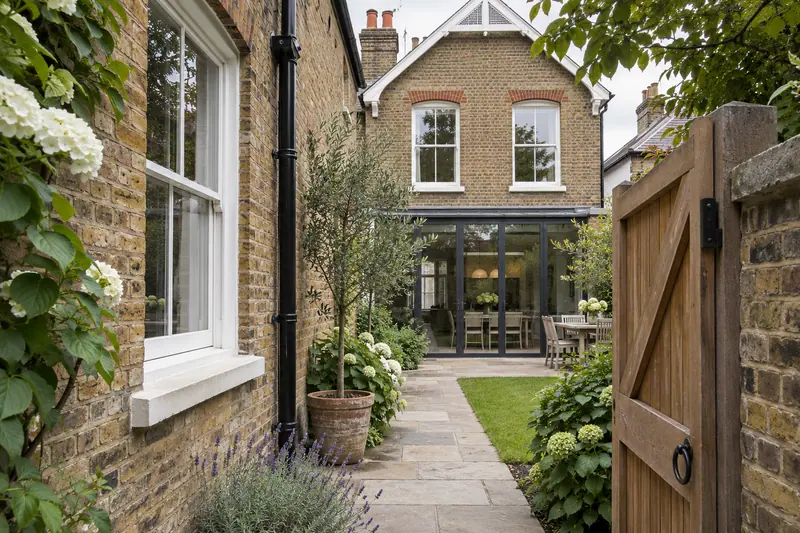
At the end of the visit, we check the reachable areas and describe any faces that had to be left. If side access depended on a keyholder or the garden layout limited where we could stand, we record what helped so the next arrangement can be made on that basis. Mention when the route changes, such as a new planter or temporary work to the house. The window cleaning prices page gives a starting point for understanding how access, the amount of glass and extras affect a quote. To discuss Barnes specifically, send a photograph of the full approach alongside the postcode and put the most important windows first.