Skip to content
Shiny’sWINDOW CLEANING020 3746 6557Book online

Window Cleaning Hampstead

We provide window cleaning in Hampstead for bay windows, painted timber sashes and shopfronts. Tell us which panes matter and whether the ground changes level around the building.

  • Angled bay panes assessed individually
  • Separate reach checks for the front and lower garden
  • Hand cleaning around deep sills and fitted shutters
  • Street-level visits arranged around the entrance
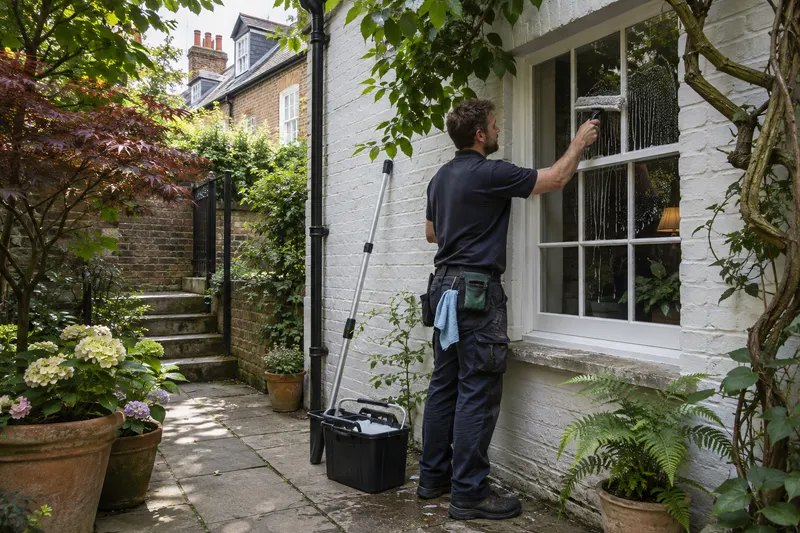
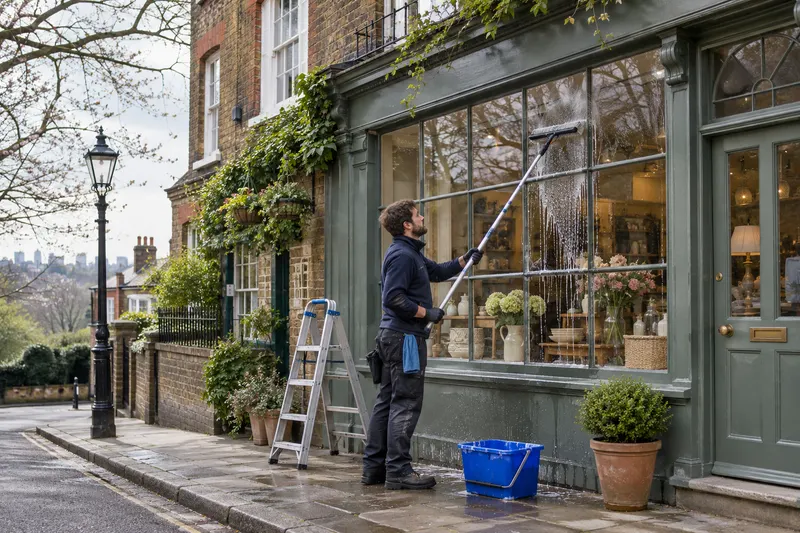
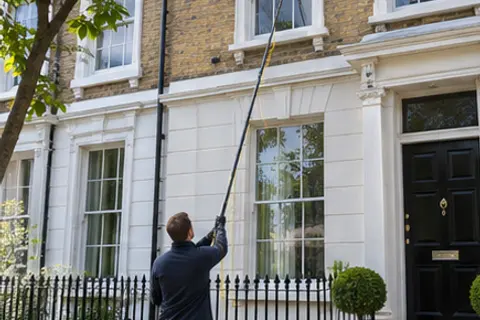
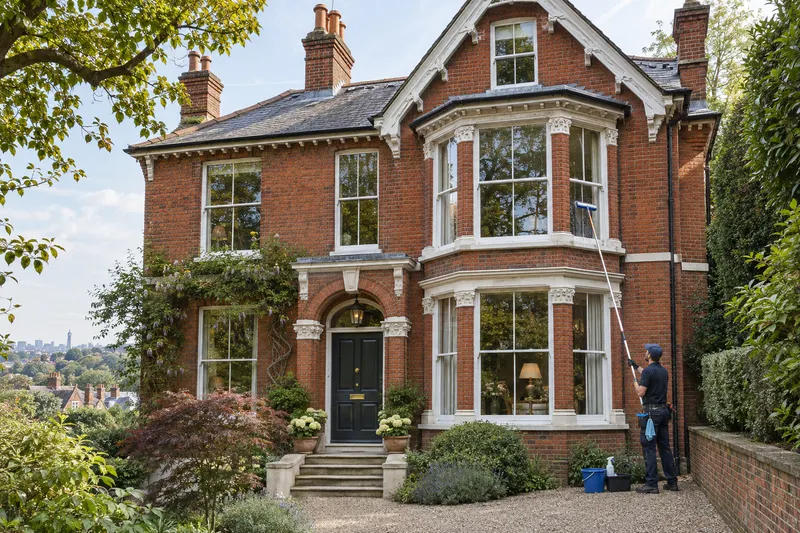
Window cleaner at a brick hillside villa with sash windows

Can the upper rear windows be cleaned from a lower Hampstead garden?

We assess reach from the ground we can actually use. A lower garden may change the height and brush angle, even if the front of the house looks straightforward. Send a wide view showing the rear wall, steps and planting, and we can discuss which faces to include.

Can you wash the inside of a sash when the outside is hard to reach?

Yes, if we can agree access to the room and space around the glass. Tell us about shutters, deep sills or a sash that sticks. We check the inside face separately, choose a suitable hand tool and explain whether the exterior needs a different visit.

How we reach hillside windows

Shaded rear panes beside a lower garden courtyard

A short frontage can hide several working heights

Camden’s Hampstead conservation area statement treats the shape of the hill as central to the character of the neighbourhood. For window cleaning it also changes the terms of a seemingly simple enquiry. A house can have an entrance on one level, a narrow path that falls away beside it and a lower garden looking back at a much taller rear wall. Counting storeys from the entrance does not tell us how far a brush must reach from the garden. Give us the side of the house you mean and show where someone can actually stand.

Balconies, planting and retaining walls can hide the lower edge of a window in a close photograph. A wider view of the elevation helps us see the relationship between the glass and the available ground. We check whether a suitable head can sit squarely against the pane while we move across it. Reaching the centre with the tip of a pole is not in itself enough to clean the corners. We may be able to agree the front and discuss one awkward rear opening separately, without making the whole visit depend on that window.

From the pavement to a lower garden

A narrow return may look clear until the gate swings across it or steps make the turn too tight for equipment. In compact streets and lanes we also want to know whether the passage is shared. Tell us where residents normally enter and whether a delivery or school run changes how the route is used. We agree the route before carrying equipment through. The place where a hose can lie during the wash is not necessarily the place where it should cross a path used throughout the visit.

Some lower gardens can only be reached through a hallway. Let us know about timber, rugs, unusual thresholds and steps where wet equipment is best kept outside. We can discuss where to get the tools ready and whether a hand method suits a handful of reachable panes. If the route changes through a neighbour’s gate or a building-managed courtyard, it must be agreed in advance. We ask for a useful ground-level photograph and a description of any restrictions. There is no need to go onto a roof or lean out for the sake of an enquiry.

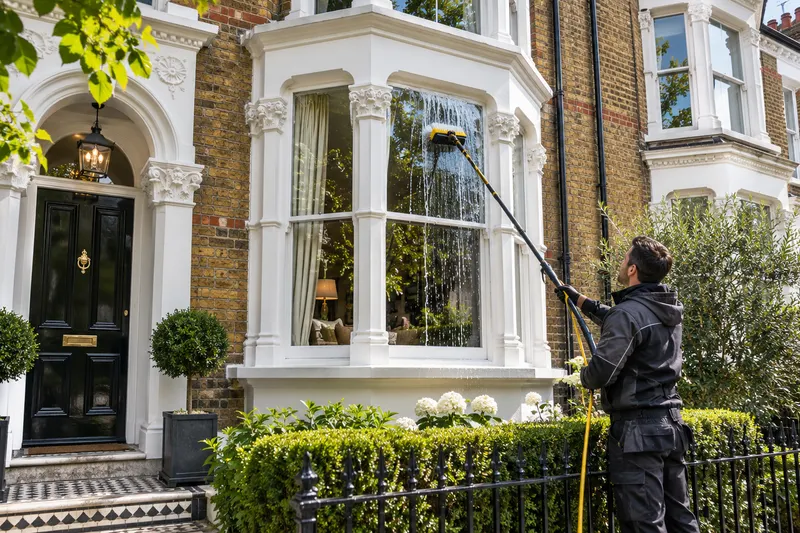
A bay is a group of panes pointing in different directions

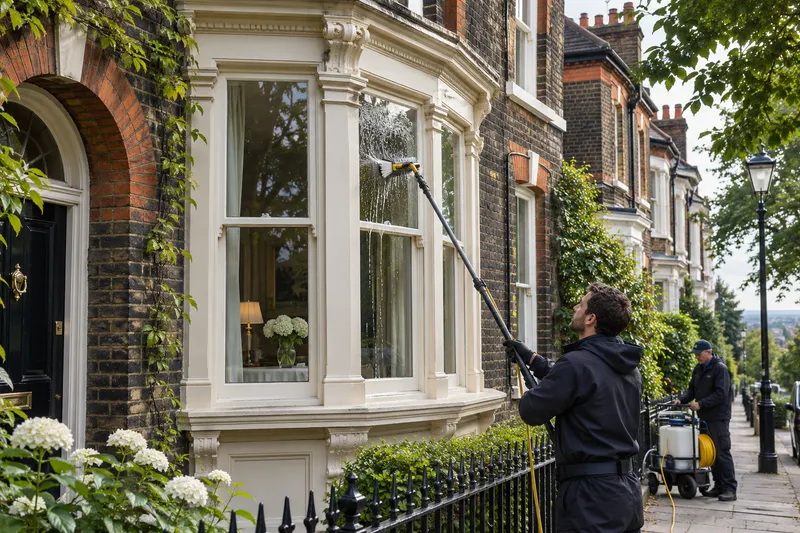
A canted bay can look like just one item on the list. Its central pane and the angled side panes each need their own working position. From straight ahead, the nearest rail or garden bed may prevent us getting an even angle against the returns. From farther to one side, a narrow pane can sit behind a boundary or projecting sill. We assess the whole bay before deciding how much glass can be included and whether the same method suits each face.

The bay roof can be part of a separate access problem for the window straight above it. A lightweight pole works only where there is stable ground and room to control it along the full face of the glass. We do not use the bay roof as a working surface. A photograph taken at an angle from ground level often shows both the projection and the window above better than a tightly cropped view. When the upper-floor glass requires its own assessment, tell us if you would still like an appointment for the agreed lower panes.

Camden’s Hampstead Conservation Area appraisal

Assess the route and the pane separately

OpeningWhat we look atUseful detail
Upper pane above a bayRoof projection and brush angleWide view along the frontage
Lower garden windowSteps, gate and standing surfaceView back up from the garden
Shared side returnPermission and clear pedestrian routeWho can open the gate

Protect the surfaces next to the glass

FeatureBefore washingAt handover
Painted sash barCheck for weak paint or puttyExplain any edges left untouched
Deep inside sillConfirm finish and room for hand toolsCollect moisture from the lower edges
Glazed entranceAgree customer route and threshold protectionCheck the run-off and reachable faces

Explore a Hampstead elevation

Read the fronts of a canted bay

Angled cream-painted panes of a canted bay
Centre face

Check the standing area in front of the bay and include each main pane in the enquiry.

Angled panes

The side faces need separate angles. A photograph taken diagonally shows how far the bay projects.

Upper face

Confirm a position from which the brush can meet the glass squarely above the bay roof.

Compare the vulnerable parts of a sash

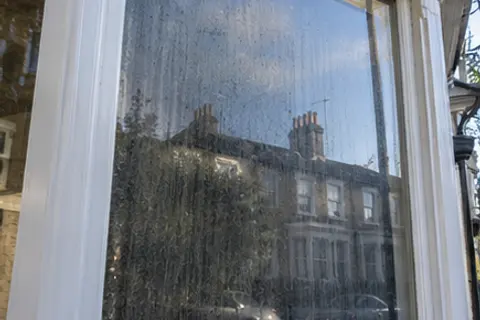
Painted sash glazing bars and reflective timber window glass
Paint and putty

Report any failing finish so we can agree the stronger edges and the reachable glass separately.

Protected sill

We keep wash water under control near timber and painted finishes when working indoors.

Outer glass edge

We look for loose residue along the edges once the rinse can drain away.

Choose the approach to a lower garden

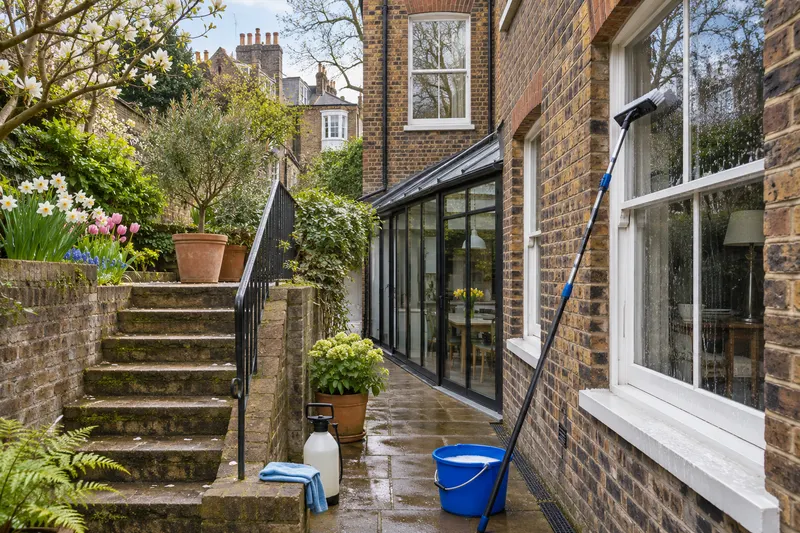
Steep brick garden steps and narrow side return
Stepped side passage

Show the run of steps and mention narrow turns or gates before arranging entry.

Shared courtyard

Confirm permission and how neighbours use the route before we plan a suitable working position.

Room-side faces

Give the room, any shutters and the floor finish if only the inside needs cleaning.

Plan a doorway wash in order

Divided display glass and door of a village shopfront
Agree the entrance

Confirm opening times and the area needed for customers to enter.

Work the reachable glass

Use close-control hand tools where they suit the pane and the space available.

Check the edge and threshold

Look for remaining debris and check how water drains from the glass.

Care around older frames and sills

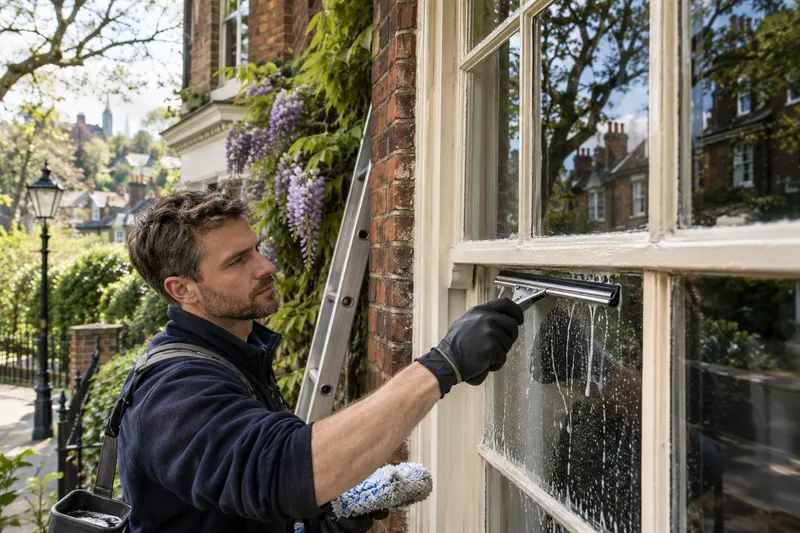
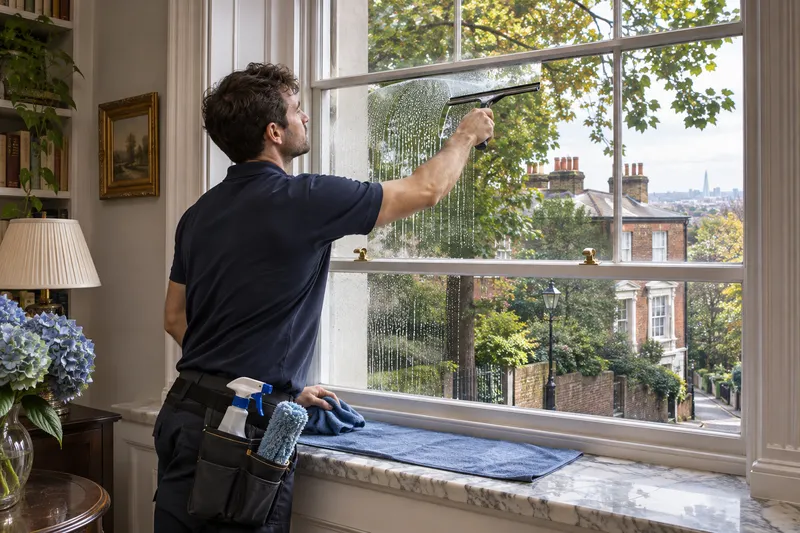
Hand squeegee at a tall sash over a protected sill

Decide which edges of painted timber to include

Camden records a wide mix of building ages and styles within the conservation area. A row of timber sash windows can sit on the same elevation as a later casement or a glazed door. We check the finish immediately around the pane, particularly where older paint has split or putty is loose. Dirt and water can collect against a narrow bar or below a meeting rail. Where the frame is sound and agreed for washing, those edges affect the order in which the surrounding glass is cleaned.

A visibly worn frame is not an invitation to scrub it until it looks newer. We discuss whether to concentrate on the glass and leave the weaker areas untouched. Older panes can also have slight distortion that changes what you see from the room. A hard deposit, a scratch and a reflection can look similar when the sun is low. We make an assessment from an available position and explain anything that remains visible after a normal clean. If work is planned with a decorator or joiner, tell us which windows have fresh paint or other finishes that need time before they can be handled.

Give the inside visit room to work

Inside a period house, a shutter leaf may leave enough room for the window to open but not enough for a cleaner to use a squeegee across the whole pane. Large plants, books and ornaments can limit access to the sill. Let us know what can safely be moved before we arrive and which fittings must stay in place. We protect the immediate area and choose the tools according to how much room is available. A deep or freshly painted sill may call for closer control around the lower edge.

For interior glazing, we try to agree the rooms and the glass faces first. On a suitable pane, a hand washer and squeegee let us manage moisture and finish the reachable edges. On a narrow face, smaller tools and a cloth can give better control. Tell us if a sash sticks or a restrictor limits its normal movement. There is no need to move the window into an unfamiliar position. We confirm what can be reached from inside and treat difficult exterior faces as a separate enquiry.

Google Business Profile

A look at Shiny’s before booking in Hampstead

The slope of a garden can affect which upper windows we can reach. If you’re gathering quotes for a Hampstead property, these Google reviews can help you decide whether to speak to us. Reviews and ratings are from Shiny’s London-wide Google profile.

4.9/548 Google reviews

Aishwarya Ravi

★★★★★

Evdo and Seven did an amazing job. Evdo even went the extra mile and cleaned the glass panes of my front door.

Suzanne

★★★★★

This was the best window craning service I’ve ever experienced. Extremely professional, took pride in their work and left the place sparkling. Highly recommend.

Emily Sturge

★★★★★

Felipe is an incredibly efficient professional cleaner I cannot recommend him highly enough Thank you 🙏

Annie Moodliar

★★★★★

Windows were cleaned to a good standard. The cleaner turned up and did the job whilst I was not in the property so appreciated that. The process was easy to book from start to finish.

Richard Stubbins

★★★★☆

Read full review
I needed the external windows cleaned at the start of a new tenancy. It was easy to book and a call from the window cleaner before she started helped identify all the windows in a 1 & 2nd floor flat. The tenants are very pleased with the result. The only downside is trying to get a VAT invoice from the company (Top Window Cleaners or Fantastic Services Group). Why can’t you send the invoice as soon as you take payment??

Carole Ciny

★★★★★

Great service. They really went the extra mile. Really pleased with the service. Highly recommend. Would use them again

Helene

★★★★★

Great window clean from Yanis who was polite, punctual and thorough

Annabel Hitchen

★★★★★

Yanis did a good job cleaning our ground floor fiat windows. I would definitely use them again.

Sylvia Stock

★★★★★

Edmond was excellent. Even removed some high cob webs from the conservatory for me. He is friendly chap and I am amazed at the state of my windows now. Will be rebooking at regular intervals.

Rania T.H

★★★★★

Excellent job done by Felipe in cleaning my 4 bed house windows. He was very polite, and he did a fantastic job. Really recommend !

Céline Harris

★★★★★

Read full review
Felipe was excellent, he carried out the work very satisfactorily so I would recommend him BUT not the organisation of the job which was sooo painful, required a lot of energy and time from my part, many mistakes were made during the booking process, I had a lot of your customer services agents “harassing me by phoning multiple times in one single days over many days until the job was finally completed. And I really didn’t like being threatened to pay extra constantly for rebooking the service !! Can someone please phone me urgently to sort this out because I’m now ready to cancel my membership

Burcu Dogan

★★★★★

Claudiu does fantastic job I am glad to work with you I will definitely continue working with you in the future thank you

Choose a window cleaning service in Hampstead

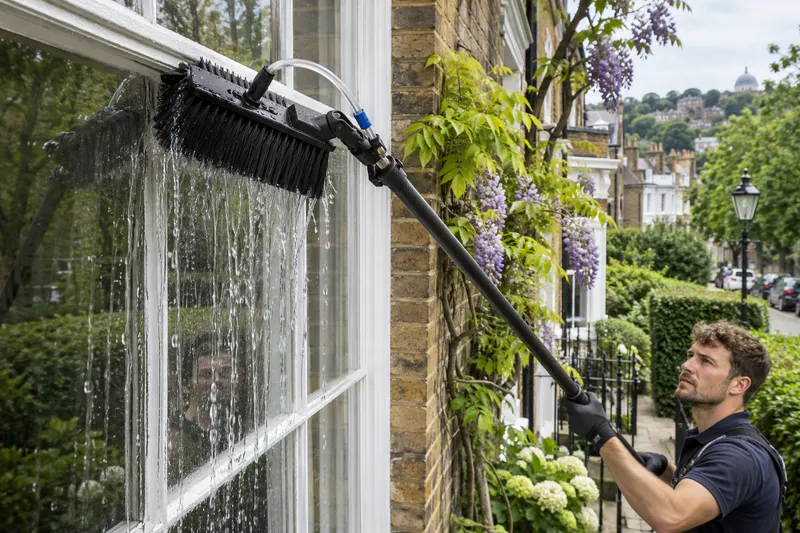
Professional washing upper windows on a London home

Residential

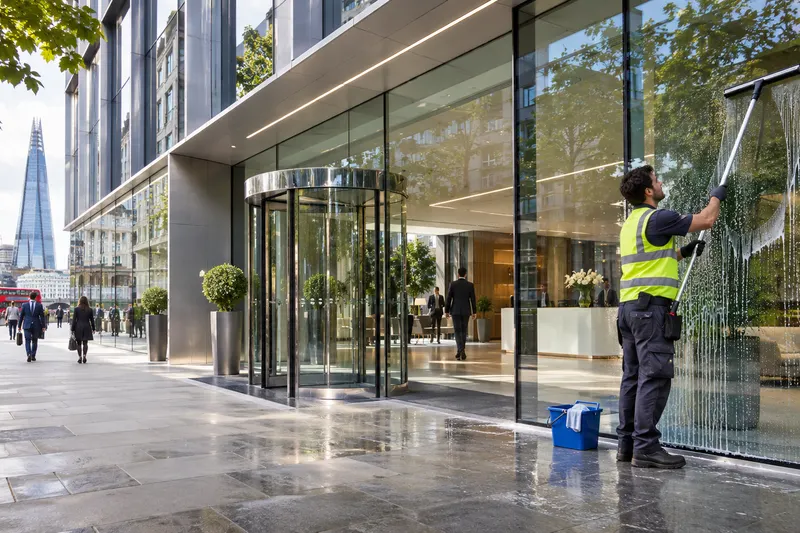
Cleaner working on the glazed entrance of a London office

Commercial

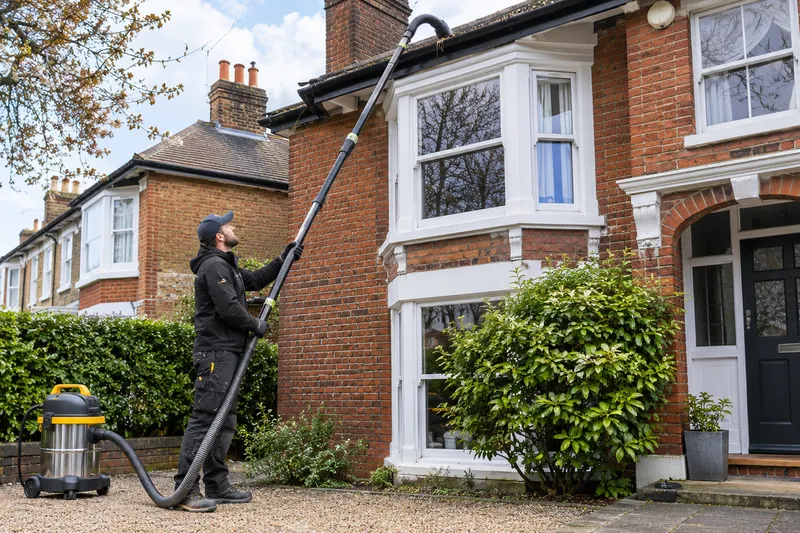
Operative using a gutter vacuum pole beside a brick London home

Exterior Property

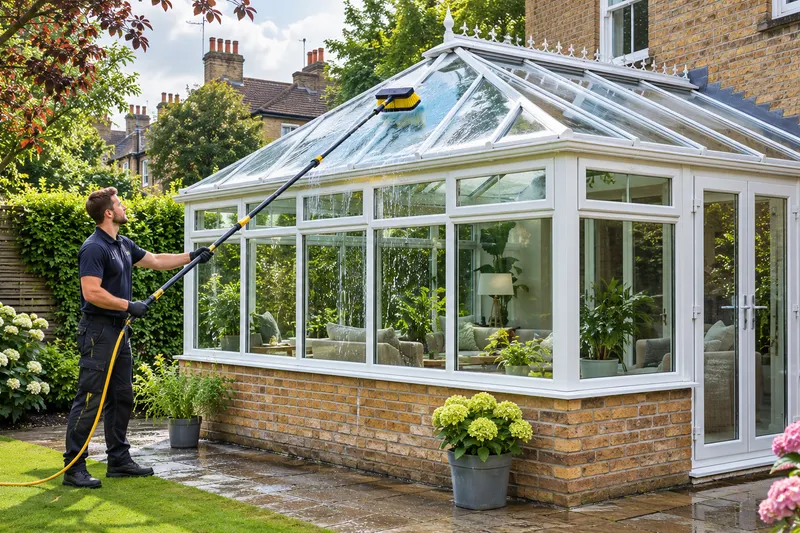
Cleaner washing the pitched glass conservatory roof from the garden

Specialist Glass

Plan the visit from the entrance out

Soft brush rinsing the edge of exterior glass

Set the wash order by what sits below each pane

A bay roof, a lower terrace and an outside stair can each receive water from a window being cleaned above them. On suitable outer panes we use soft brushing and purified water, then check whether the rinse will travel away from the glass and the occupied route below. Where both the upper area and lower panes are included, we plan their order so that water carrying dirt does not cross a face we have just finished. In a shared setting we also need to know where people enter and whether the approach has to stay usable.

Tell us about anything directly below a window that needs to be protected, such as a timber door, a planter close to the wall or an openable rooflight. A visible leak or a damaged joint can call for a separate discussion before water is used. When we finish we look along the lower edge and the reachable corners. We check from a normal viewing position if one is available. If a patch remains on the other face or within a sealed unit, we explain what we can tell rather than repeatedly washing the accessible side.

Treat a village shop as an occupied entrance

Camden’s appraisal describes the compact pattern of streets and lanes around Hampstead High Street. On a business visit, the important question is where the public walks past the glass and how the shop is entered. Identify the door, fixed panes and any upper fanlight that you want included. Give the usual delivery times and tell us who can arrange access to glass on the inside. A display window with stock in front of it may have a clear exterior but require a separate arrangement for the room side.

Where a shopfront can be reached from a suitable position, hand tools can give close control around the threshold and nearby fittings. We plan the work to fit the space available and discuss a quieter time if the entrance is busy. Inside, we check where moisture can be collected without affecting items in the display. For repeat work, agree whether every appointment includes the door, fixed display glass and the interior faces. A fanlight or any elevated glass can have a separate decision and a different interval.

Book the parts of the property you need to see through

Some customers most notice the view through the kitchen or the windows next to the garden steps. Front glass can collect dirt at a different rate from windows sheltered by a wall or trees. We ask what matters now and what could wait for a later appointment. A practical enquiry might cover the outside of the bay and the room side of two sashes, with access to the high rear pane still to be assessed. That is more useful than describing every pane as either part of a complete clean or excluded entirely.

Share the postcode, floors and which windows face each side. Include useful photos and make clear whether we need permission to pass through a shared gate. If frames and sills are requested, describe their condition. We will discuss the relevant price guide and confirm the work against the access we can agree. For a repeat appointment, tell us when planting, scaffolding or alterations have changed the working space. The approach that suited the previous visit may need to change even though the number of windows is the same.

For more than one visit, it helps to keep a brief note of the panes agreed and the working position used. Changes to garden walls or to how the property is occupied can affect the appointment more than the season itself. We ask about those changes when planning repeat work, especially where one route serves several households.

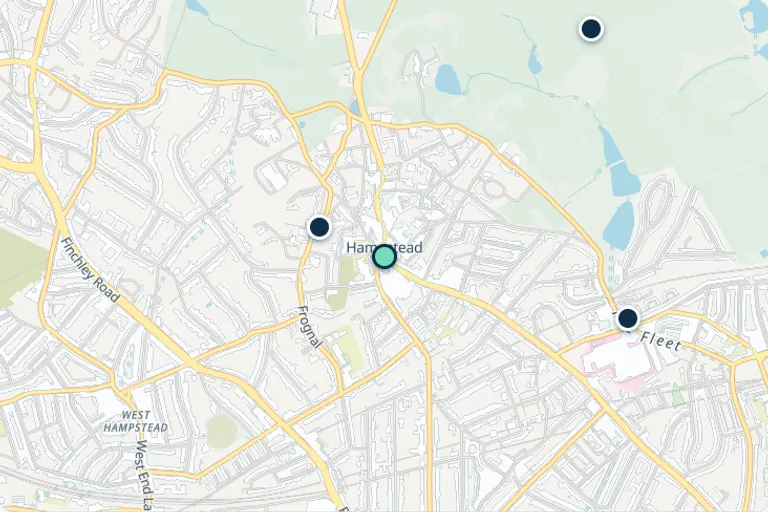
Window cleaning on the streets around Hampstead Heath

Choose a neighbourhood from Frognal to South End Green.

Street map of Hampstead and surrounding neighbourhoods
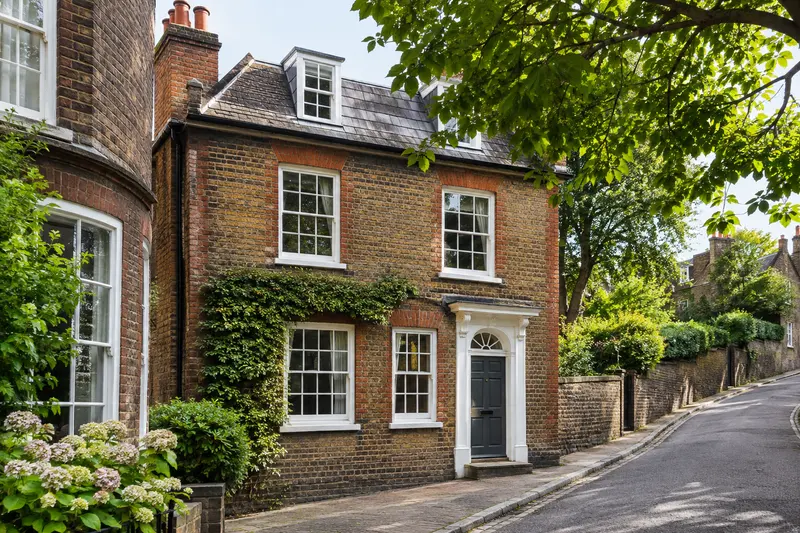
Historic brick village house on rising lane near Hampstead Heath

Questions about window cleaning in Hampstead

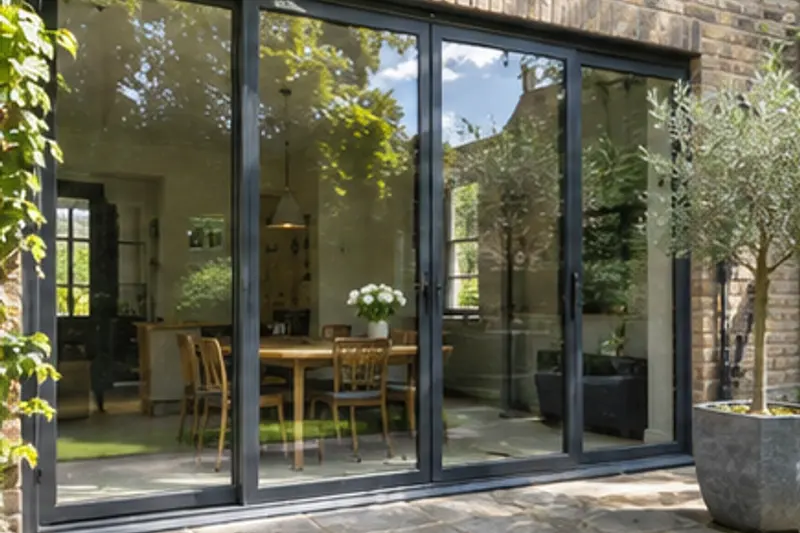
Tall glazed patio doors reflecting a garden
Do I list the side panes of a bay separately?

Yes. A photo from an angle helps us see them and shows where a sill, bed or boundary might restrict the approach.
Can equipment be carried down steep garden steps?

Describe the steps and tell us whether the surface and width change along the way. We assess the route and agree how to keep it clear before working.

What if paint is flaking along a sash bar?

Point it out before the wash. We can discuss cleaning the reachable glass without brushing areas of weak paint or putty.

Can we book just the glass by the main shop door?

Yes. Specify the door faces and any panels alongside it, along with the hours when there is space to work safely around the threshold.

Should I move shutters or ornaments before an inside visit?

Move items only where it is safe to do so and tell us which shutters or fittings must stay in their normal position. We’ll agree what can be reached.

Show us how we can reach your glass

Send the postcode and the faces you need cleaned. A wider view of the frontage, steps or lower garden can help with an access assessment.