Treat the river-facing elevation on its own
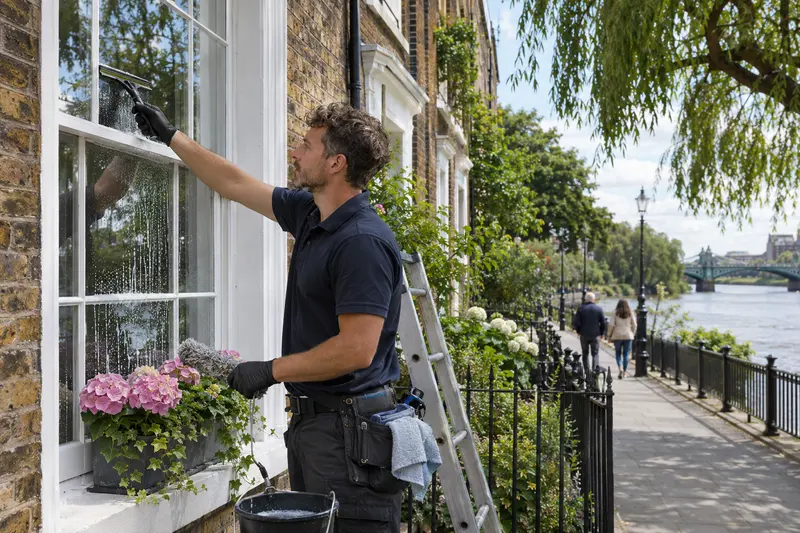
Give us a wide view of the glass, the surface directly below it and the path you expect us to take. On a property near the Thames, a garden step, wall or raised terrace can separate the building from the lower path. The fact that the full elevation is visible across an open space tells us very little about where we can stand. For exterior window cleaning, we first establish the normal approach and then see whether it gives us a controllable angle to each pane.
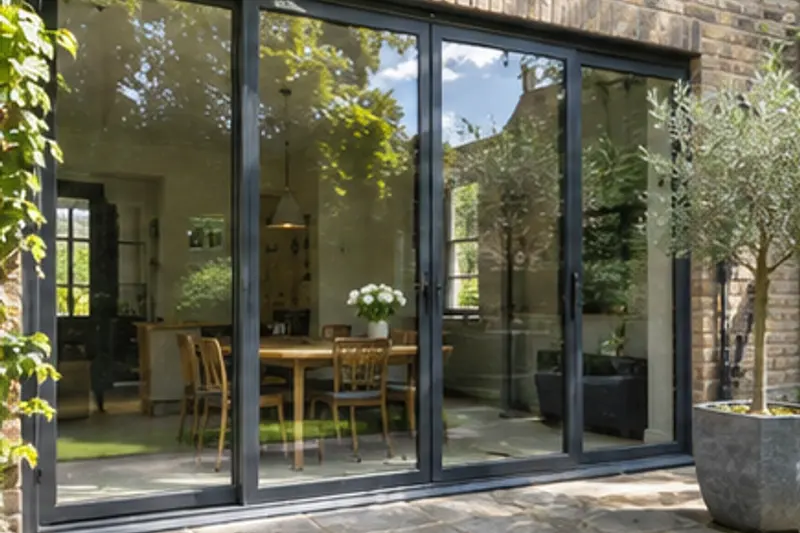
Tell us whether the outdoor route belongs to the property or is used by neighbours or people passing through. We need to look at the width where the route narrows, where equipment could be held clear of the way and whether a second person controls a locked gate. We also check how water will run from the higher windows before starting near an entrance below. If you have movable planters or seating close to the glass, tell us where they can be put during the visit. A clear photograph from the doorway often gives us a better view than a close-up of the pane.
Decide which side of a terrace can be approached
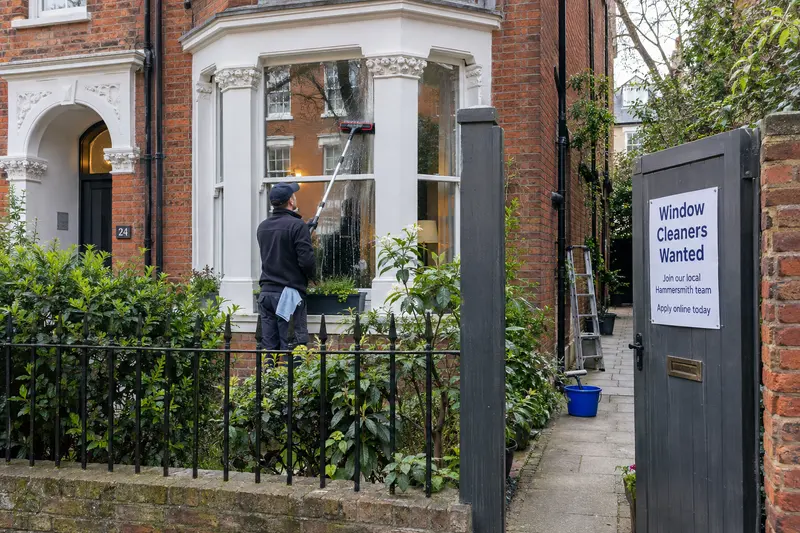
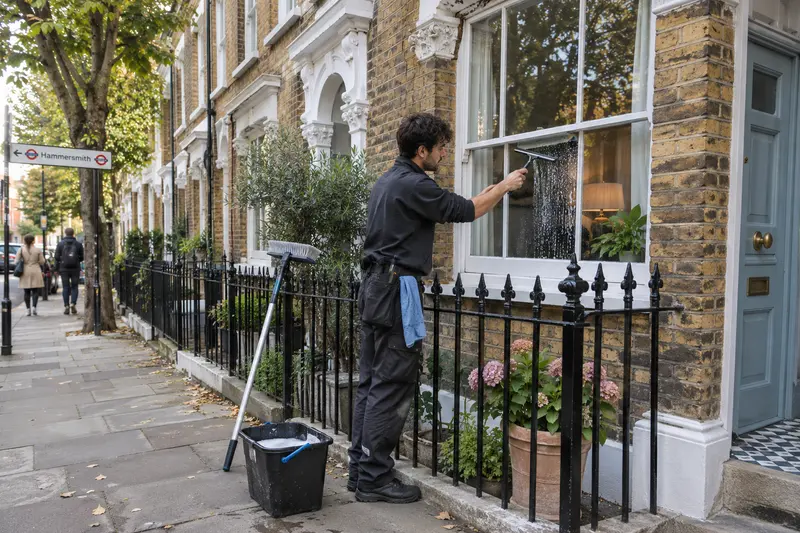
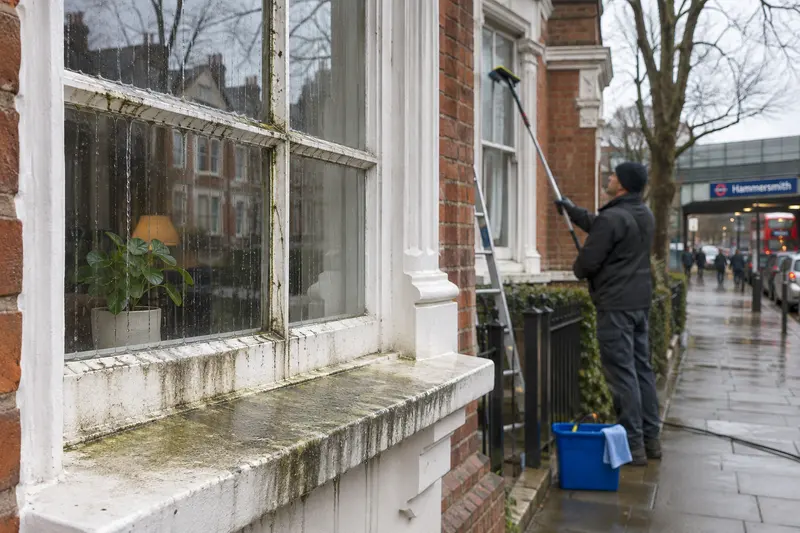
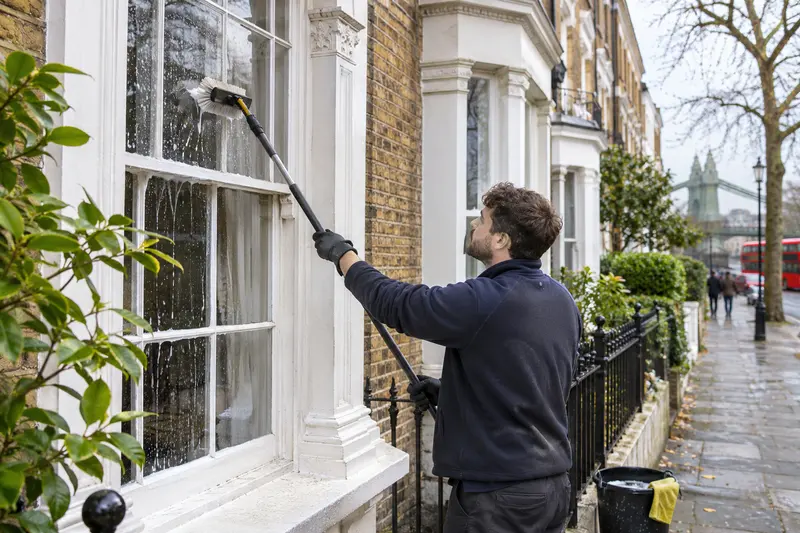
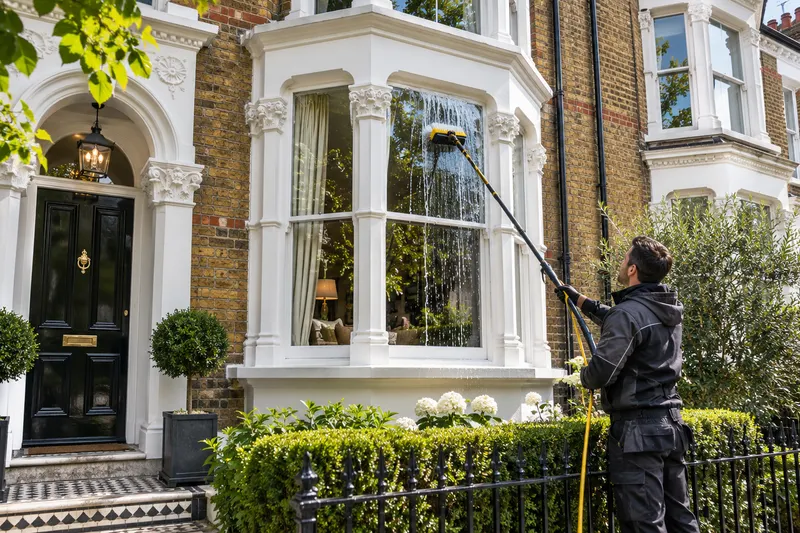
Hammersmith and Fulham’s Town Hall conservation area profile distinguishes the King Street retail frontage from quieter residential terraces around Bridge Avenue and Angel Walk. A large display bay and a painted domestic sash ask different things of the operator. Even within a terrace, the front might offer a clean view of the whole frame while the rear is broken up by an addition, a return and a stair. Explain which sides of your building you want to include when you enquire about residential window cleaning.
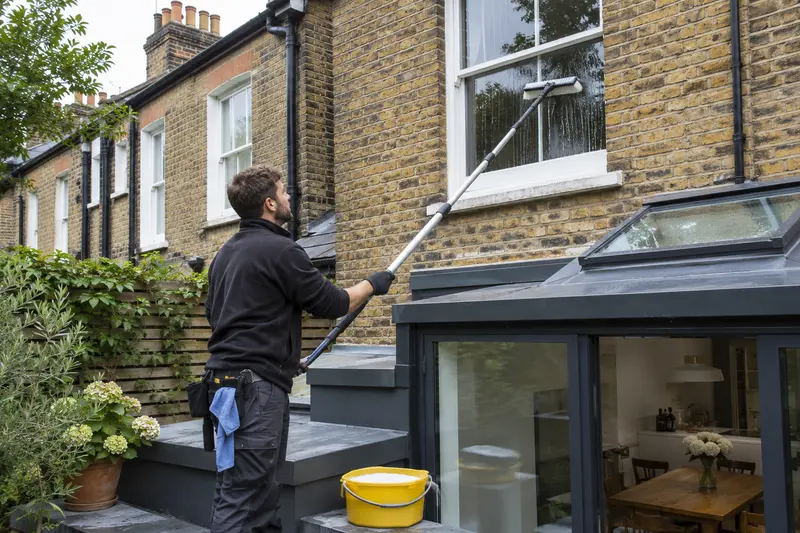
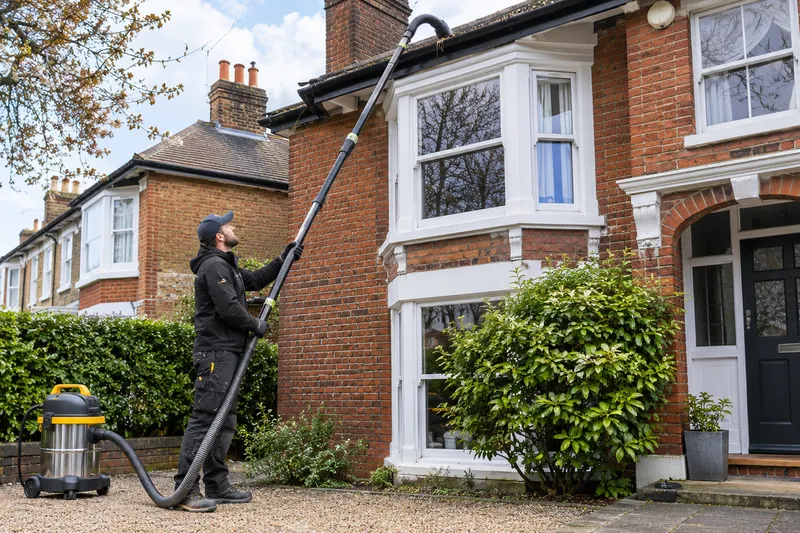
If a rear return can be reached only through the kitchen, we discuss where equipment can pass and how any threshold will be protected. If there is a separate side gate, we want to know whether it opens to a short passage or a route all the way to the back. A photograph with the gate in view helps us judge the usable width. We check the angle to upper glass from the garden independently. A working position that is fine for a ground-floor door can leave a pole too close to the wall to control it at an upper edge.
Add upper office panes only after a reach check
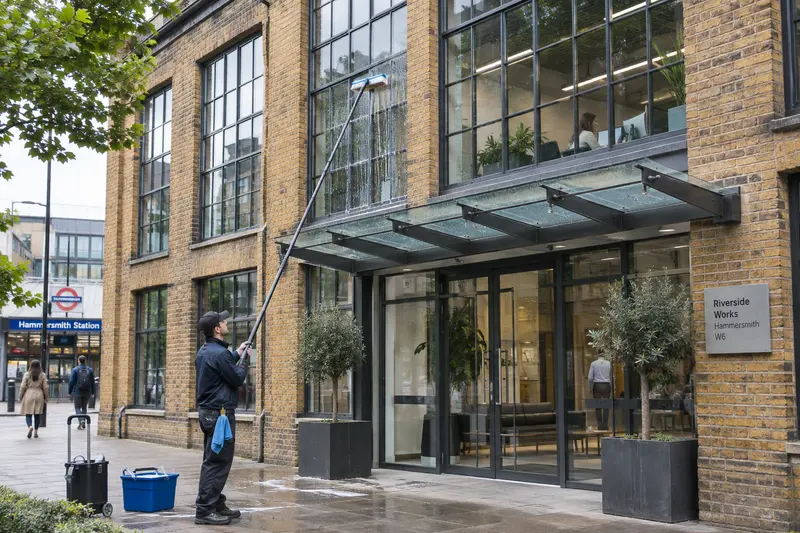
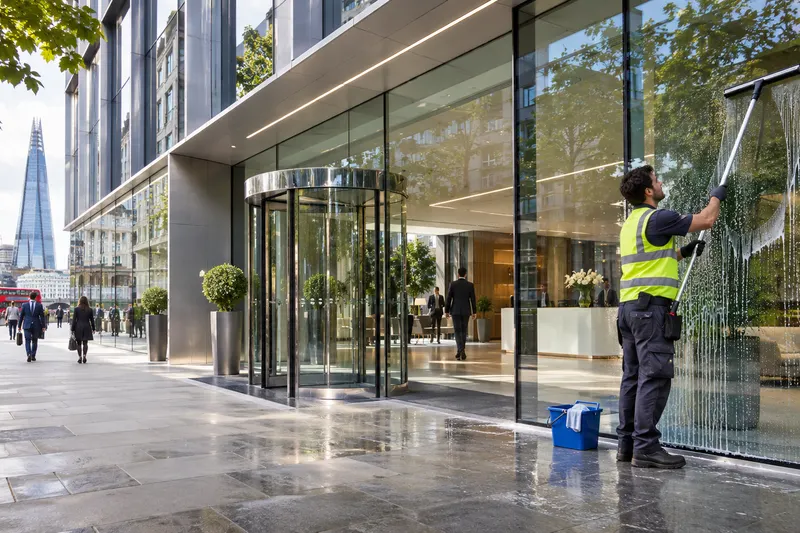
From an office entrance it can be hard to tell whether the panes above form part of the reception, another floor or a room with its own access. Start with a floor list. Where a canopy or deep architectural band crosses the front, show it in the same picture as the window and the place an operator would stand. A low projection can hide the lower edge of the opening even when it seems a long way below it. The comparison we make for high-reach window cleaning is about the straight usable approach to the pane.
The person who looks after the building may know about a terrace, stair or courtyard that gives access from another side. We check the permission and the position the same way we would check a ground route. Tell us if the approach depends on a timed gate or a door that cannot be held open. If the pane is fixed, mention it. An opening that can be handled from a room still needs its fittings checked and space to work. Agreeing the successful positions in advance helps us plan the time at each part of the building.
Hammersmith & Fulham Council’s conservation area profile decision