Decide which side of the house gives the usable approach
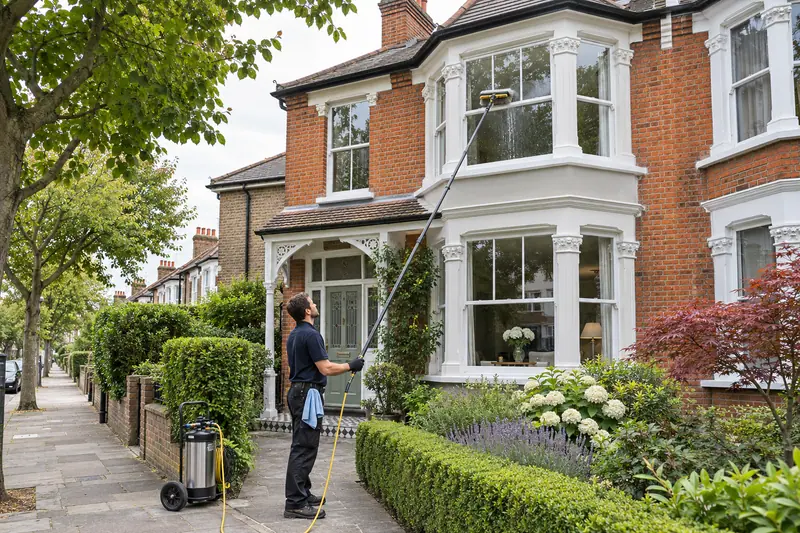
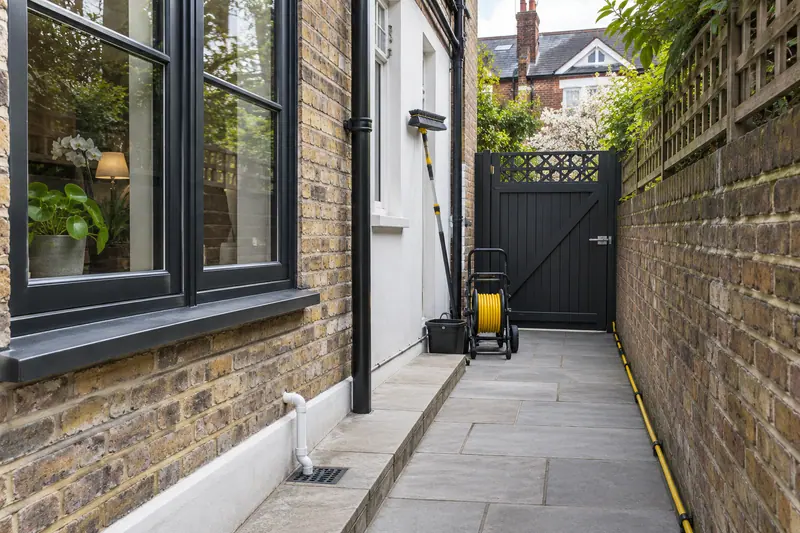
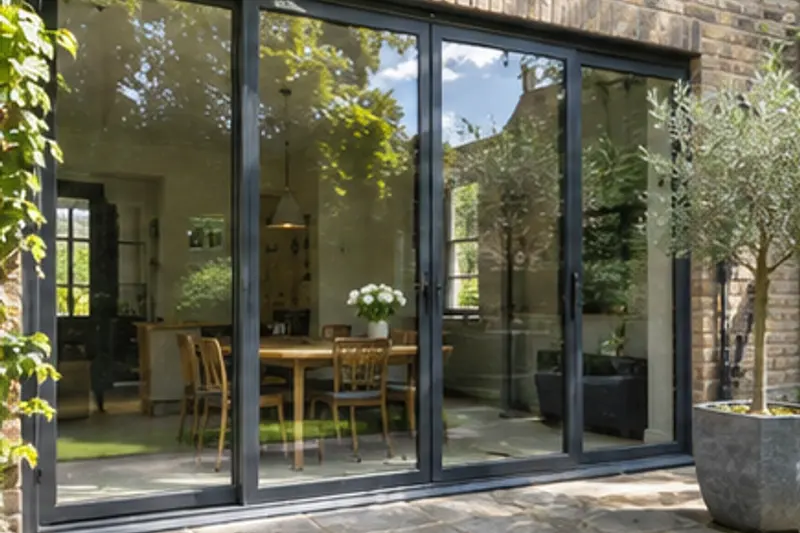
For a Wimbledon enquiry, send a clear photo of the elevation you want washed and the ground immediately in front of it. One photo of the whole rear wall can show a porch roof, a raised patio or a garden step that is outside the frame of a close-up. Mention whether we would come through a side gate, a shared passage or the house. When a route is shared, confirm who can open it and whether other people will need to pass during the visit. A narrow turn at the far end of a passage can matter as much as the width of the gate.
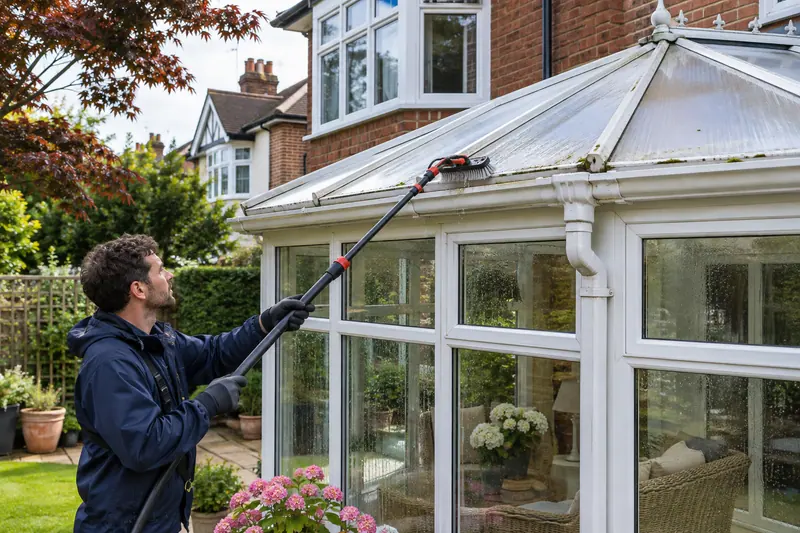
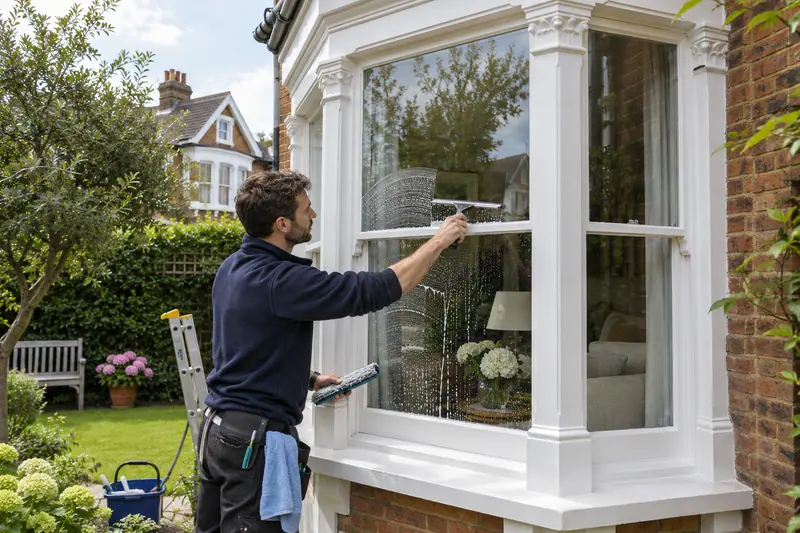
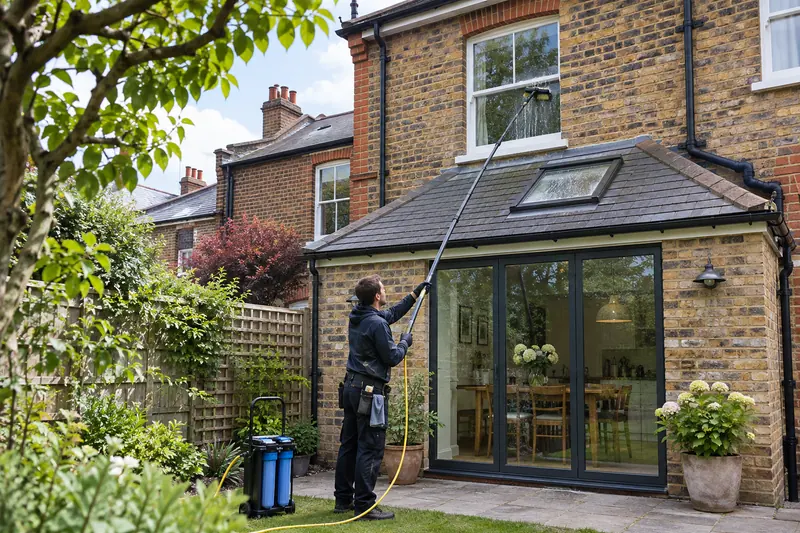
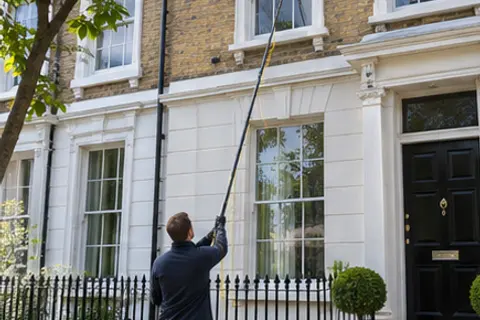
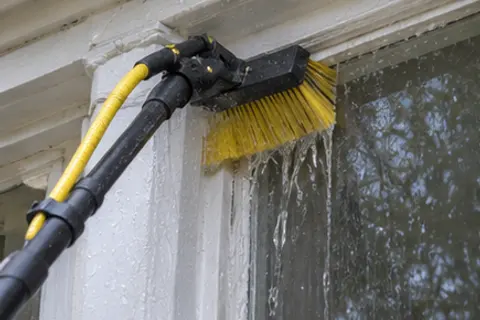
A window above a pitched rear extension is a different proposition from a window at the same floor level on the front. We look at the depth of the roof and the angle from the ground we can use. The poles need to stay controllable while they are extended, and a brush that reaches the bottom of a pane is not automatically suitable for the top corners. We assess upper-floor glass separately. If the route is simply too restricted, we explain which parts can be included from a suitable position.
Keep the hallway, garden path and the cleaner’s route usable
A side return can contain more than a gate and a straight path. Take account of drainpipes, cycles, steps and the door swing. From the front, point out where people usually come and go, and tell us if a neighbour or delivery driver needs the same space. We check the route before laying out any equipment and agree where it can be set down. A hose through a frequently used doorway creates a different problem from setting a small bucket at a clear section of a patio. A workable plan matters more than reaching a nominal number of panes.
In a house where the passage turns behind the kitchen, we may be able to carry hand equipment to the back without a safe route for a long pole. If access must run through the property, tell us about fragile flooring, low openings and areas where wet equipment should not be placed. We can discuss whether it is better to start with the exterior, work inside first or split the visit. What we need to know is how the route behaves when it is actually used, including room to move once we reach the garden.
Describe the property well enough to agree a price
Start with the full postcode and which sides of the property you need cleaned. A useful note for a rear enquiry tells us the floor, the ground level and whether the first visible part of the garden is the place we can stand. Include a wide photo if a verandah, pitched extension or roof and gutter meet below the windows. For a business, add the premises contact, useful working hours and whether you want the internal glass as well. If a smaller number of panes matter more, identify those first so we can discuss the likely factors behind the price with the right job in mind.
We distinguish the parts we can assess from the parts that need a closer look. Once the intended faces are clear, we can discuss a visit covering a complete elevation or an agreed set of rooms. Mention marks from building work, suspect glazing or a finish you want protected before we price the clean. It is easier to settle the work at this point than to assume that everything visible from the front or the garden belongs to one task.
Merton Council’s Wimbledon Hill Road character appraisal