Separate the shopfront from the building above
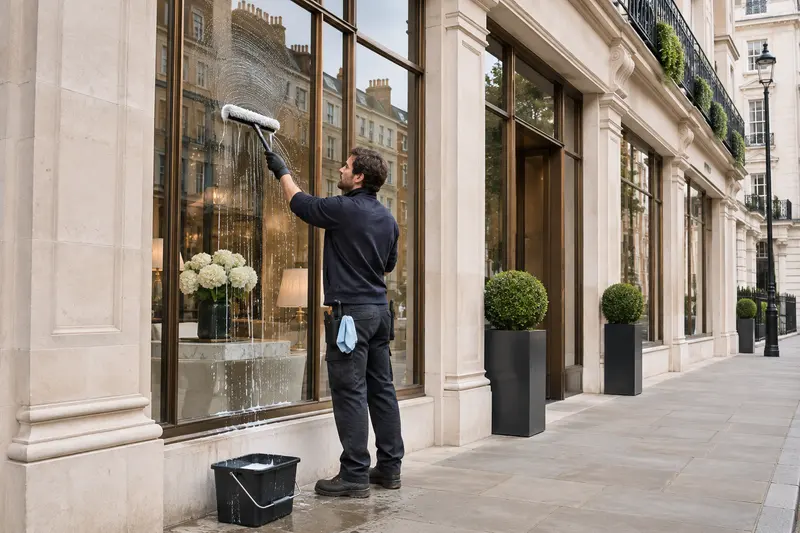
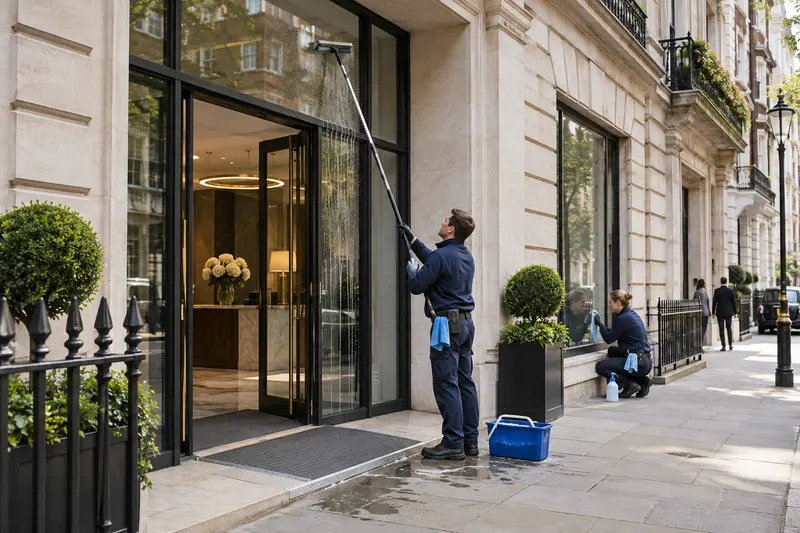
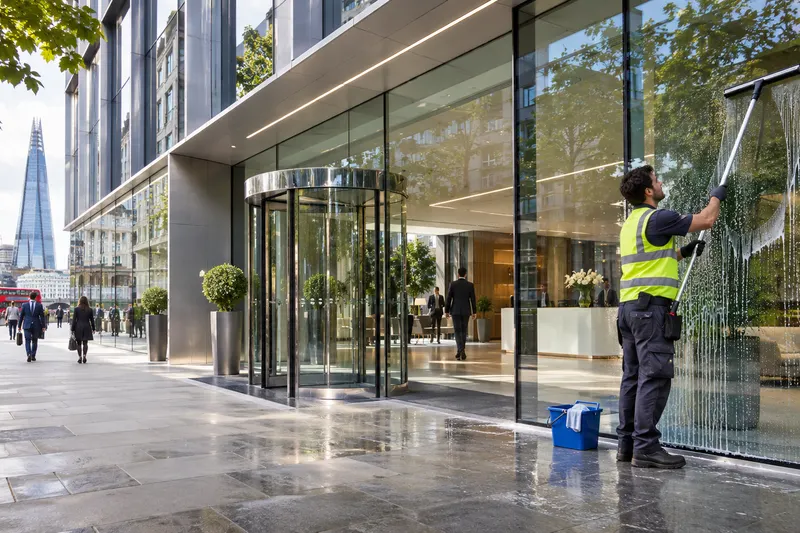
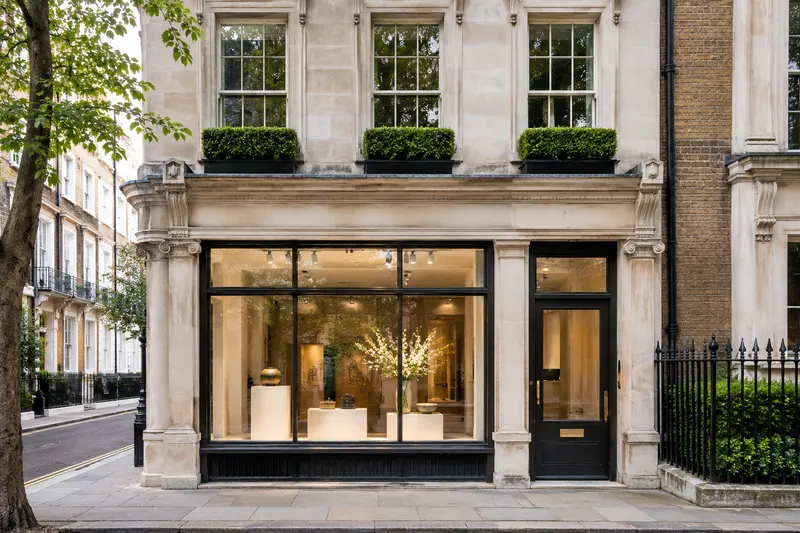
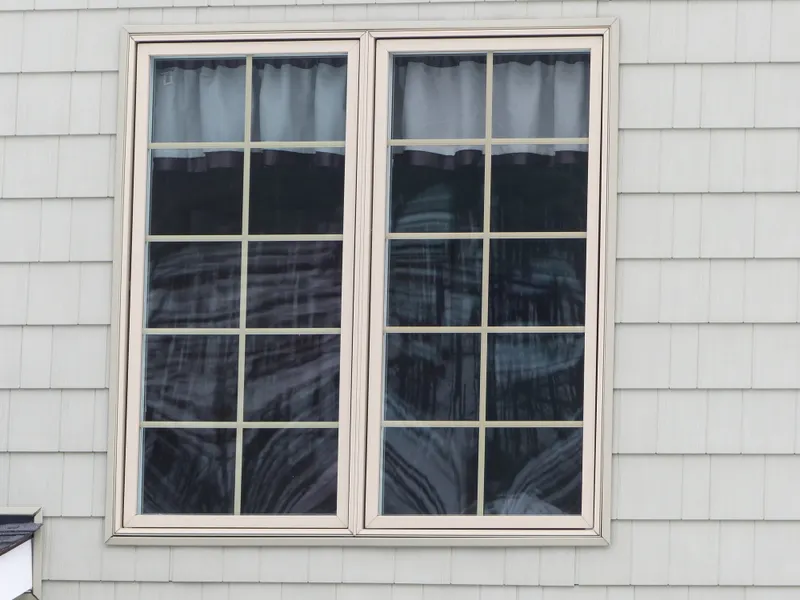
A Mayfair shop can occupy a stone frontage whose glass continues over the door and into upper floors that another occupier controls. Stand back and describe the display faces, the opening leaf, the fixed side panes and any upper light you can see. A photograph of the full bay helps us see where one part ends and the next begins. From there we can agree whether you want the outside display washed, the inside added or the entrance dealt with on both faces. A repeat visit can be planned around the parts that tend to need attention most often.
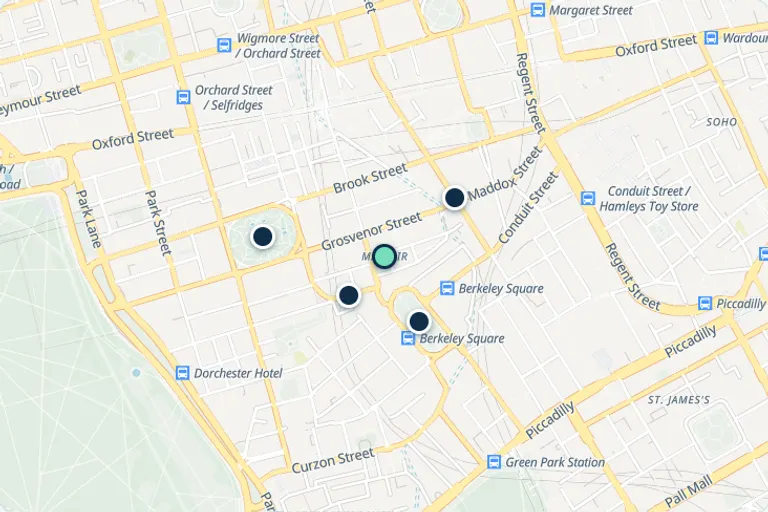
Westminster’s Mayfair conservation area directory documents the district’s historic townscape, including the setting of Berkeley and Grosvenor Squares. In practice one enquiry can cover a modern shopfront at ground level and an older upper sash elsewhere in the building. For shopfront cleaning we identify who can agree the glass on the frontage and arrange a way to work alongside the premises. Explain whether your shop sits behind a recess or alongside another occupier’s door. Those positions can look similar in photographs though they work very differently when people arrive.
Plan the standing position on a busy pavement
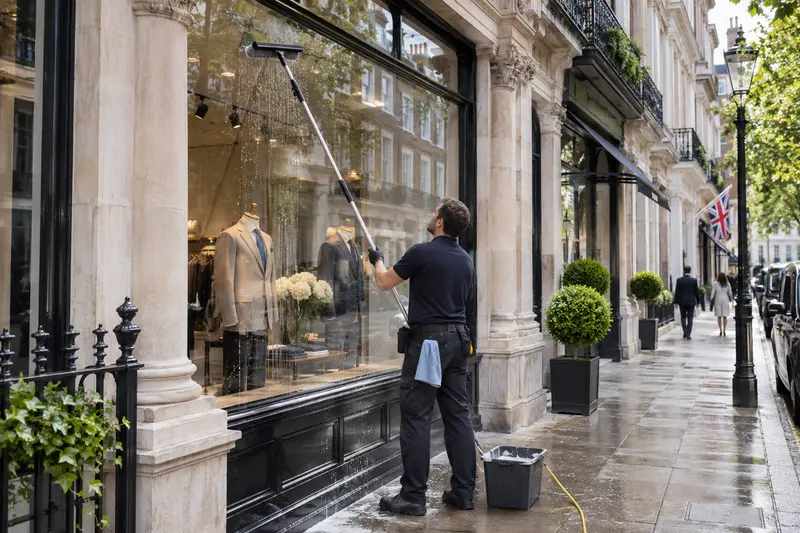
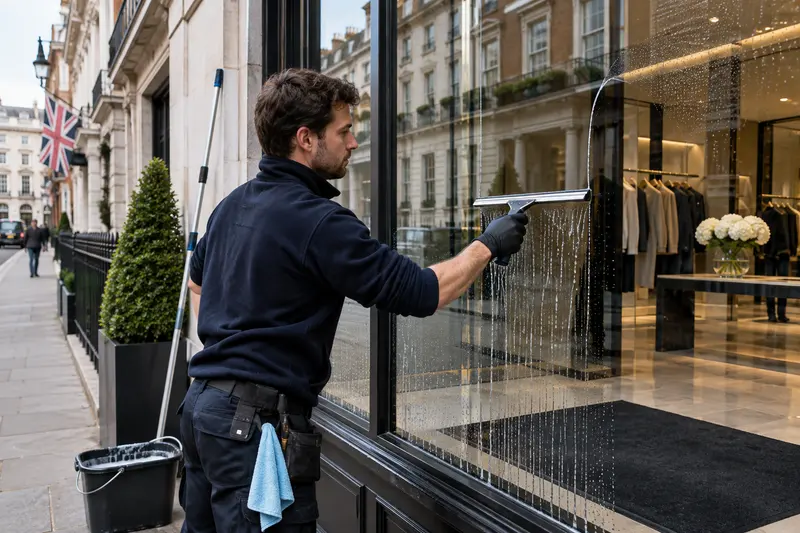
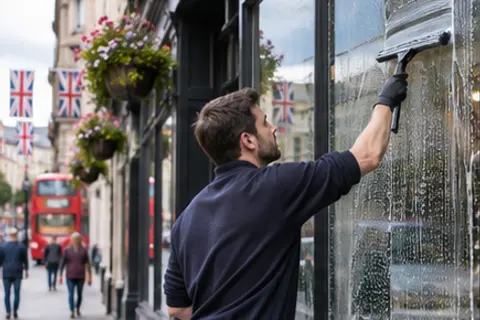
A projecting stone column, a recessed door or a boxed display can each cut off part of the window from an otherwise clear pavement. To wash a tall display pane by hand there must be room for the tool and a controlled route for the wash water. We also need a place to set it down without crowding the door. Tell us when staff first use the entrance, when goods are usually brought in and whether another door is available by agreement. A timeslot suited to the display may be unsuitable for the adjoining entrance.
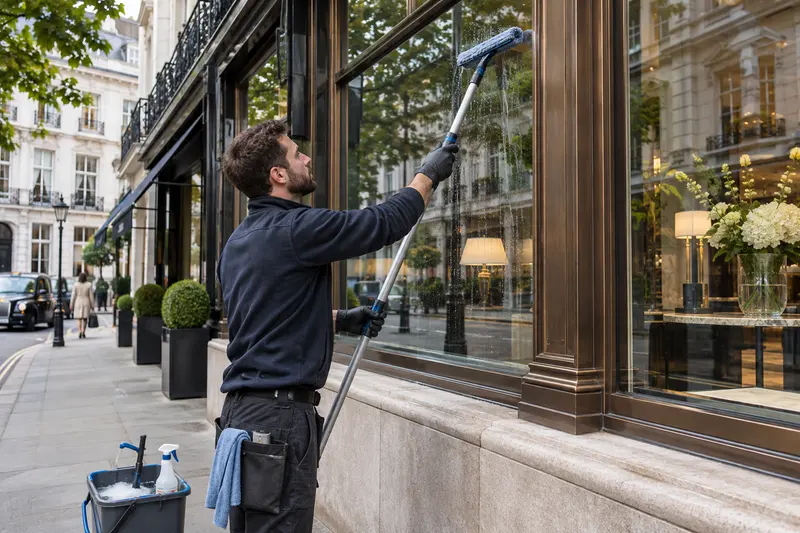
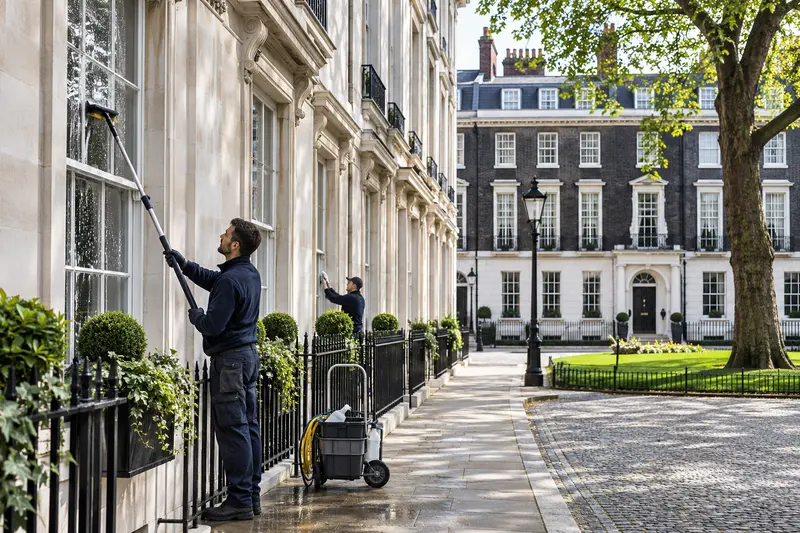
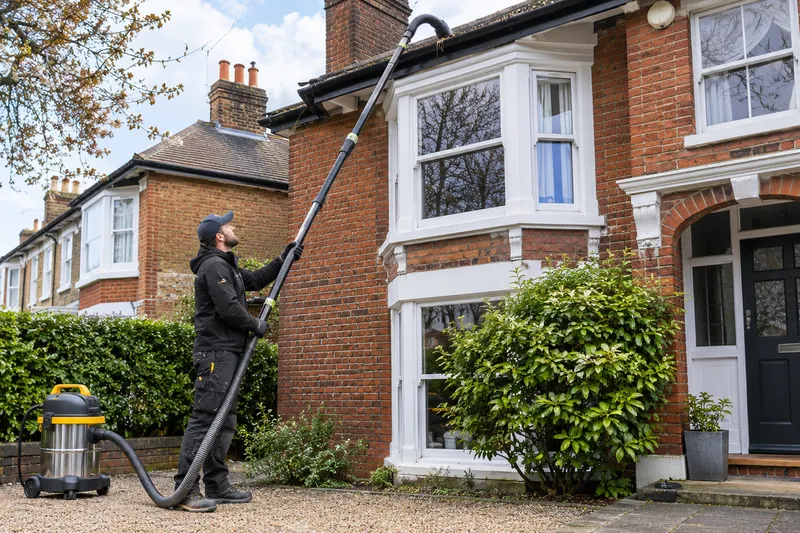
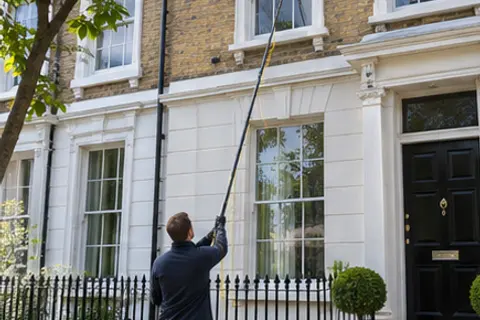
Where an upper pane is included in exterior window cleaning, we also assess whether there is a position from which the brush can meet the glass squarely. The pavement might be busy at the only workable angle. An awning or canopy can obscure the upper edge even when you can see the pane perfectly from inside. In that case we consider different access with the building contact and confirm the panes that can be included. If the reach and pedestrian route cannot be reconciled, that part of the visit needs to be discussed separately.
List the rooms behind the square-facing windows
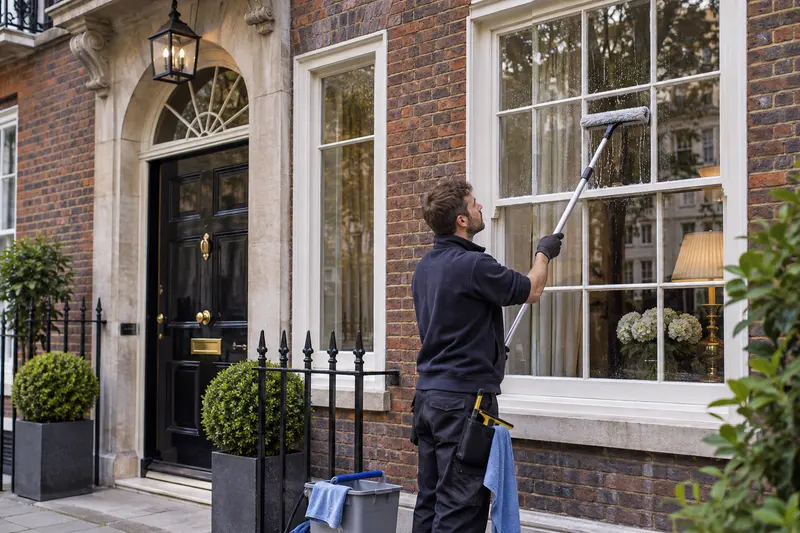
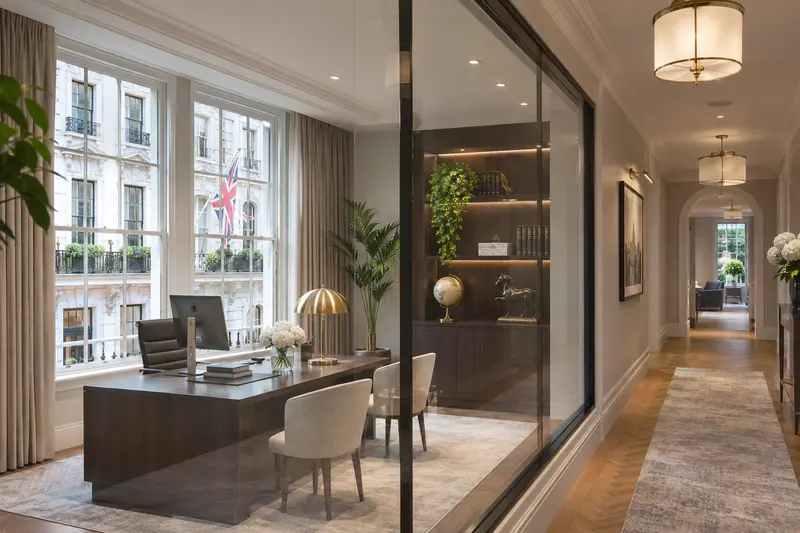
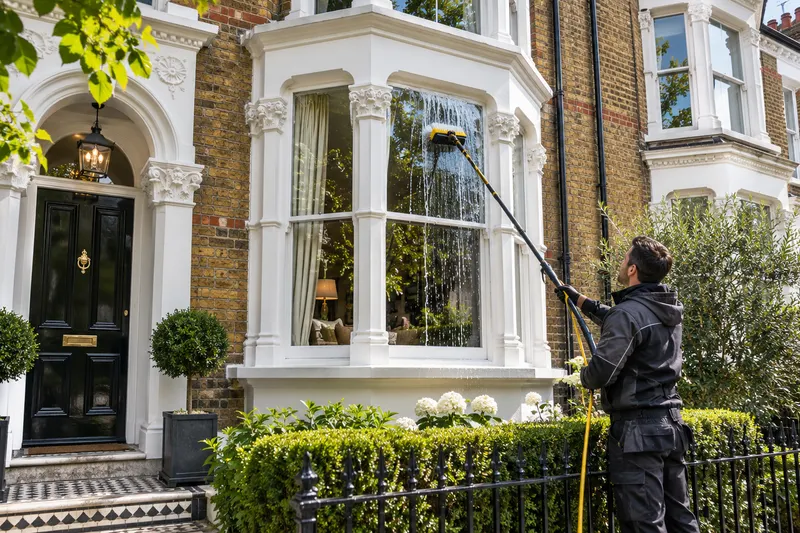
For a home or office looking onto a square, make a room-by-room list with floor numbers and identify the windows that sit above projections, planting or basement steps. The list matters because neighbouring rooms can have similar sash windows with very different access inside. A private meeting room can have a desk below the opening, whereas a reception window might be reachable with a clear sill but opened only by the building team. We use the list to agree which side to work on for each opening.
For office window cleaning identify any restricted room and the person who can admit us, and tell us whether the entrance faces are covered by a separate arrangement. The back of the building may belong to a different route with keys held at reception. For a residential property, discuss internal window cleaning where the view from the room gives the best clue about a mark or a pane that needs extra attention. In both cases tell us whether any window is fixed or fitted with a restrictor. We check the opening arrangement before relying on it.
Westminster Mayfair conservation area directory