Read the line of the shop from the market lane
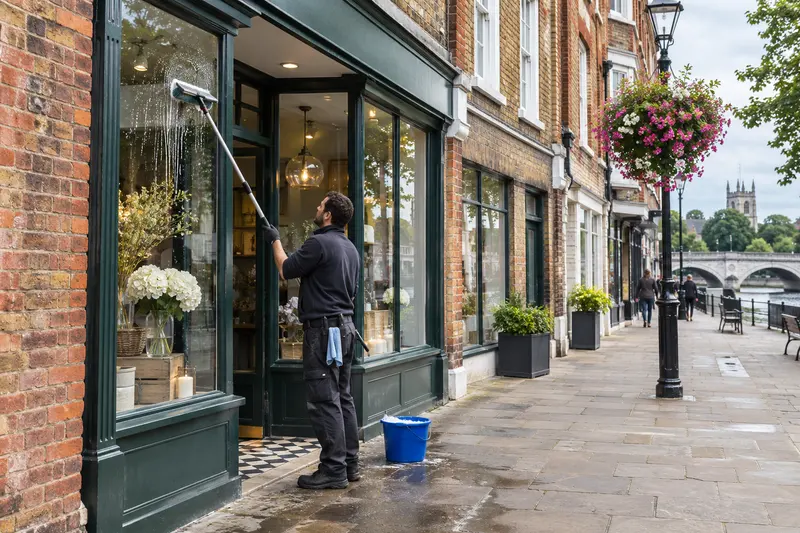
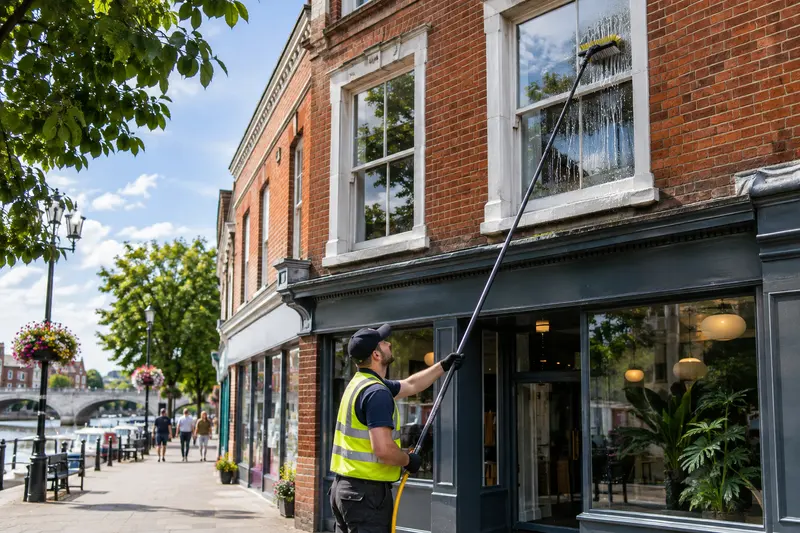
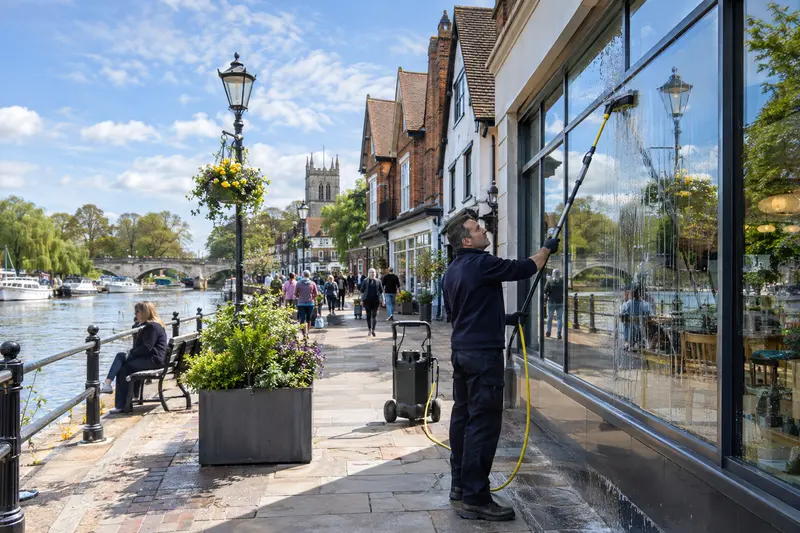
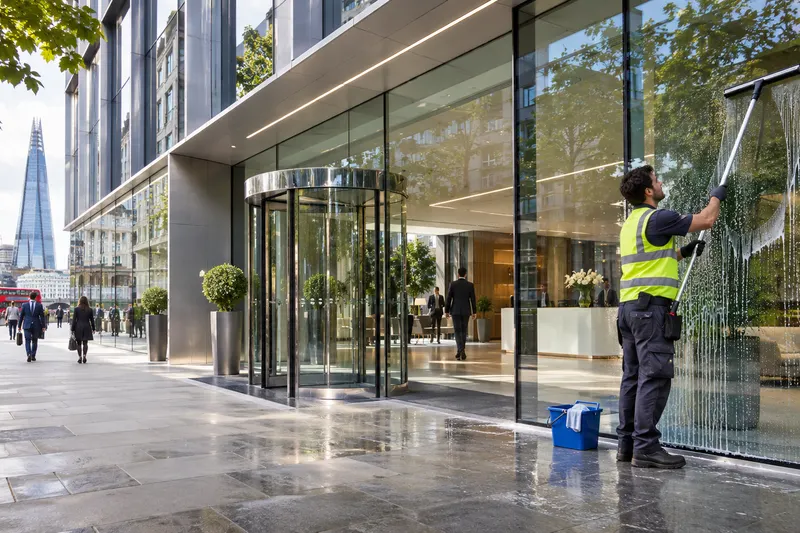
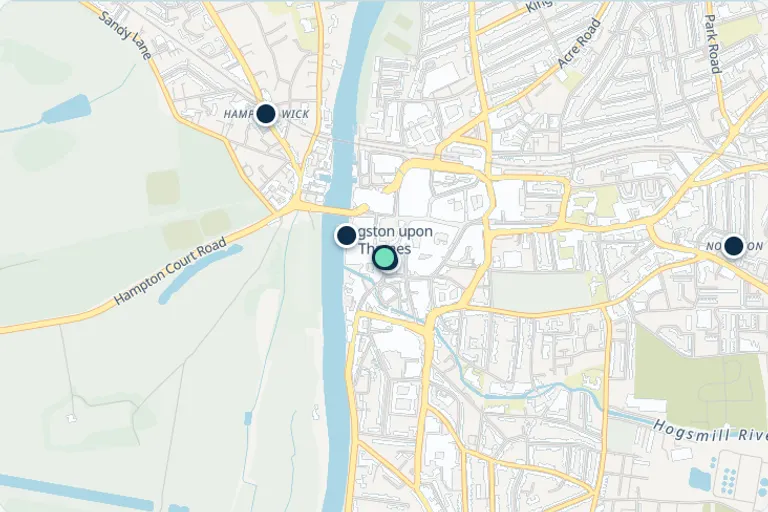
Kingston’s Old Town conservation area appraisal describes a market town where buildings of different periods still follow much of the historic street pattern. The mixture of frontages makes a useful difference to how we plan the wash. An older brick bay may have a recessed entry and two narrow panes while a nearby display has a single tall panel. The pavement at one building can give room to guide a blade along each side. At the next, a structural pier or neighbouring door can take that space away. For shopfront cleaning we look at the whole line of the display before agreeing which faces are reachable.
Tell us when the space immediately outside the shop is used for deliveries or queues. Give the usual entrance, whether there is an accessible route that should remain in use and where any furniture stays. We decide if a hand wash of the display can be done without affecting the door. If the upper portion belongs to another business or a flat, tell us who can agree that glass. It may have a different entrance and have to be done at a different time.
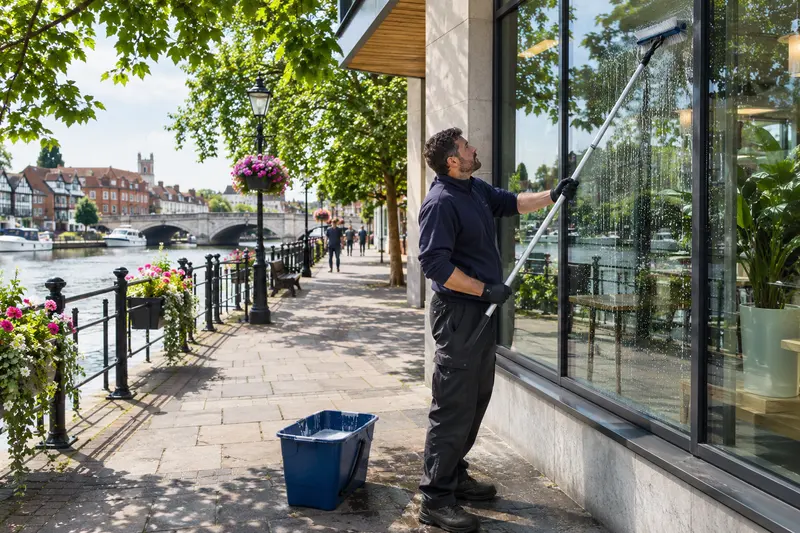
Plan the standing area on a riverside walkway
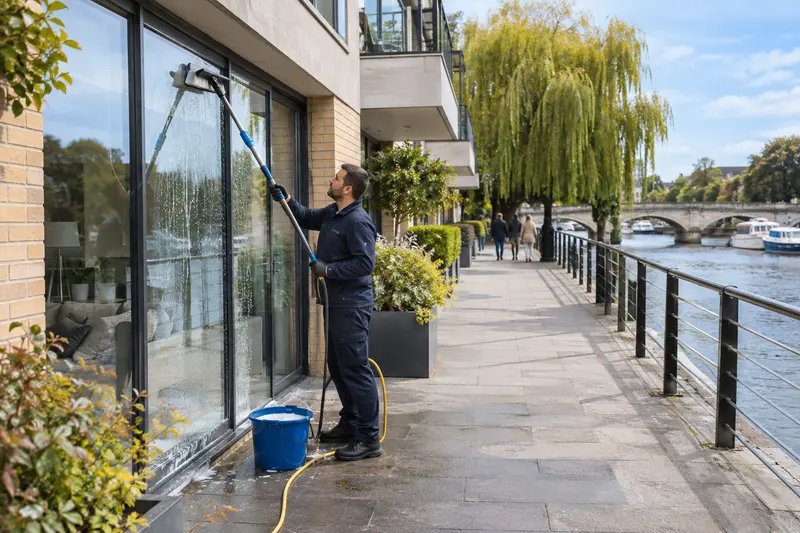
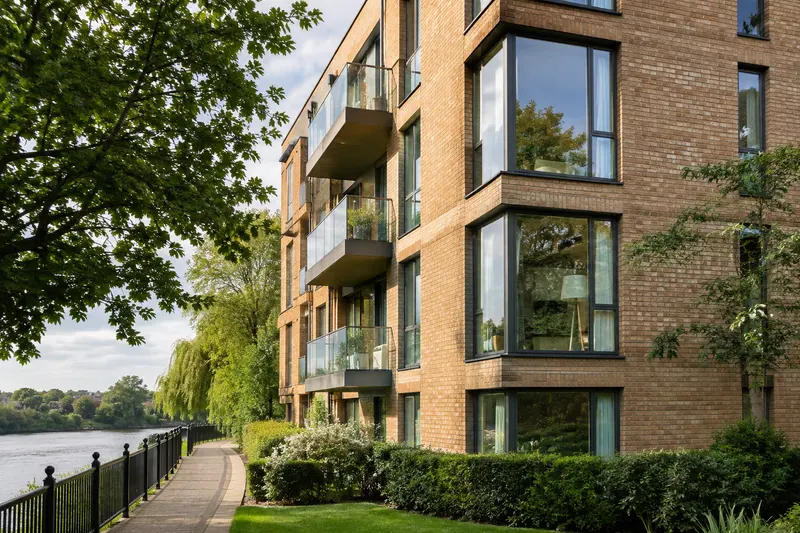
The view of a river-facing window from a nearby path can be much clearer than the approach to it. A low retaining wall may separate the glass from the level used by walkers, or a private gate may be the only way to reach the space beneath it. For exterior window cleaning, we compare where an operator can stand with the route you need other people to use. It helps to see the ground, any railing or step and the full window, with the places where the path narrows marked out in a photograph.
If the glass belongs to a restaurant, office or common room, tell us when the window opens and whether there is a separate outside entrance. Even a low pane can sit behind furniture or a barrier that changes the angle. At an upper window we also need distance to guide a pole across the glass. We agree the opening by floor and face and check how run-off can be controlled so the active walkway remains usable. A garden position can sometimes provide a clearer approach than the public side.
Identify the usable side of the garden extension
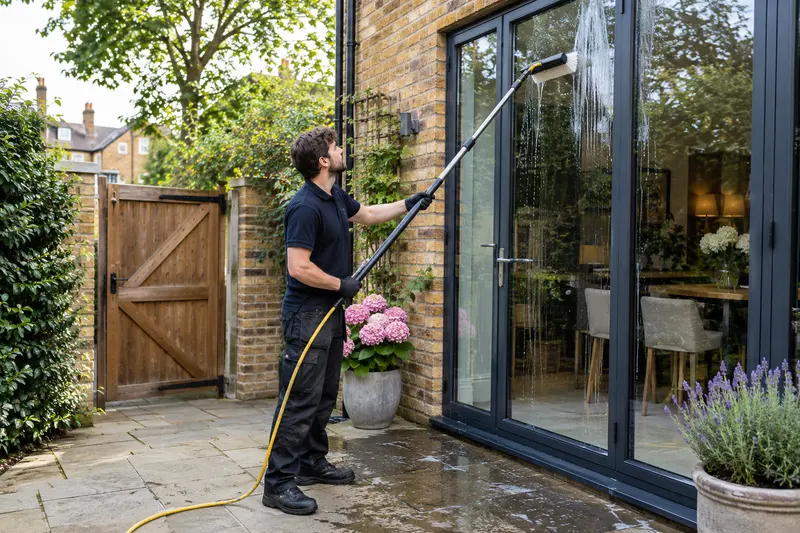
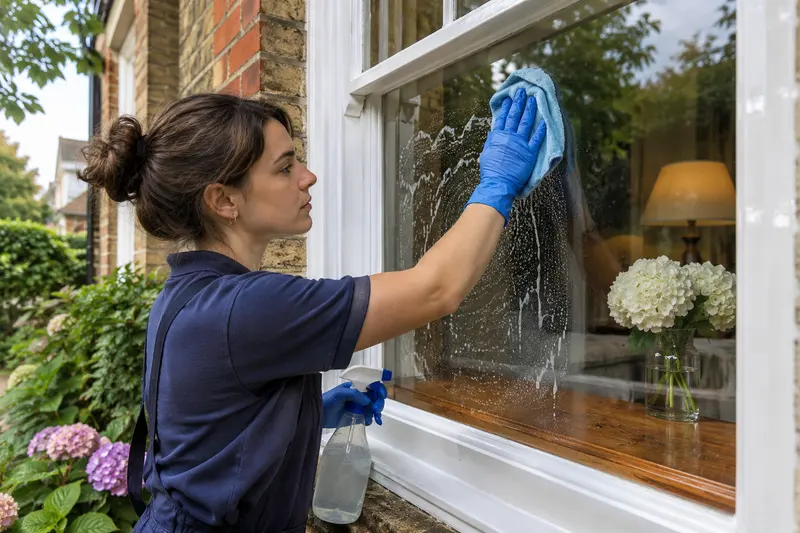
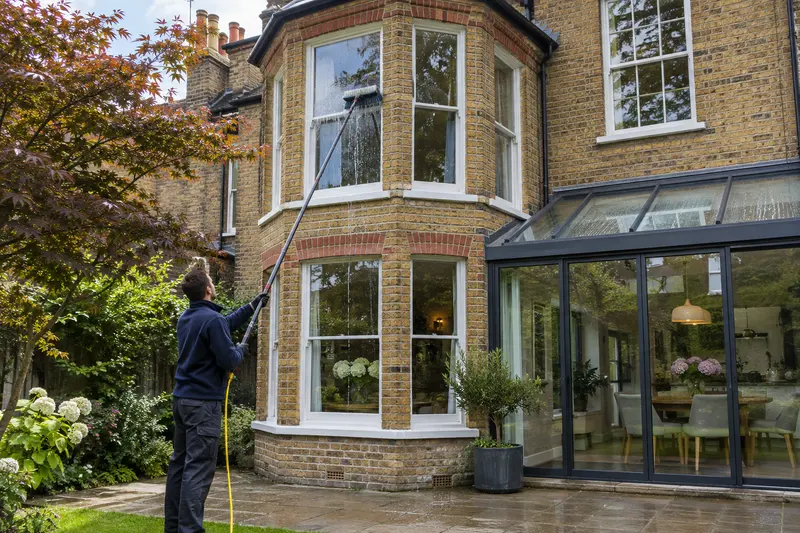
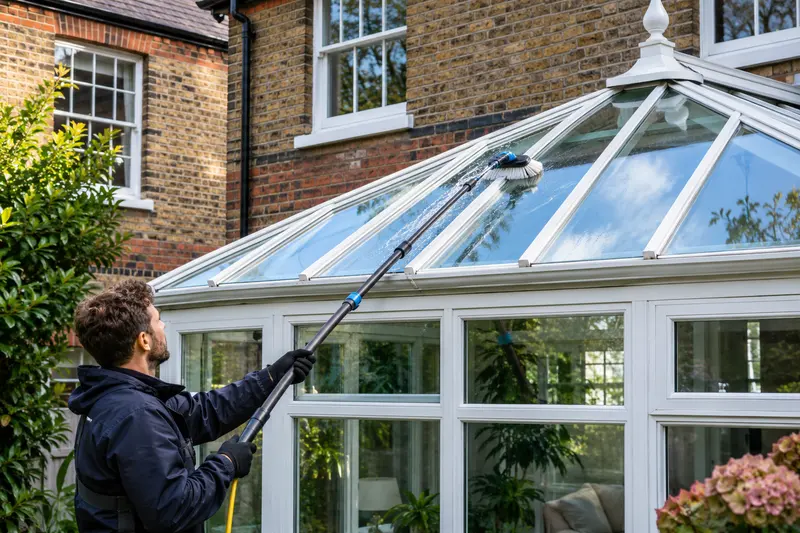
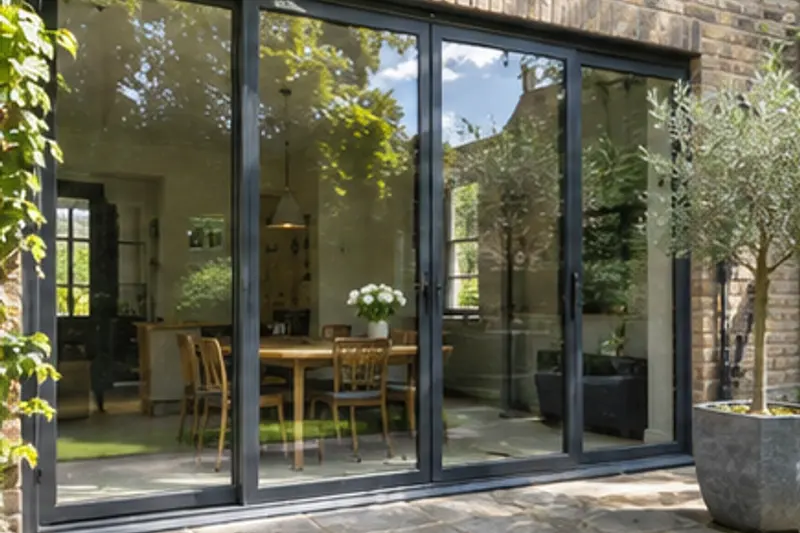
A rear extension changes the shape of the working area at a house. A side gate may lead to a paved corner where there is barely enough room to turn. A path further away could give a good line to the roof but poor access to a door beneath it. When enquiring about residential window cleaning, show the gate, the corner and the ground beside the glass. Then mark the upper panes and any roof beneath them separately so we can discuss each working position.
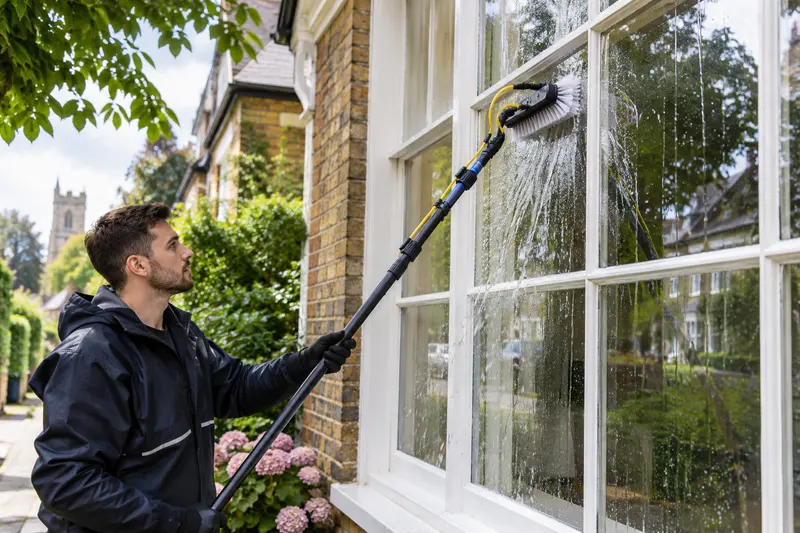
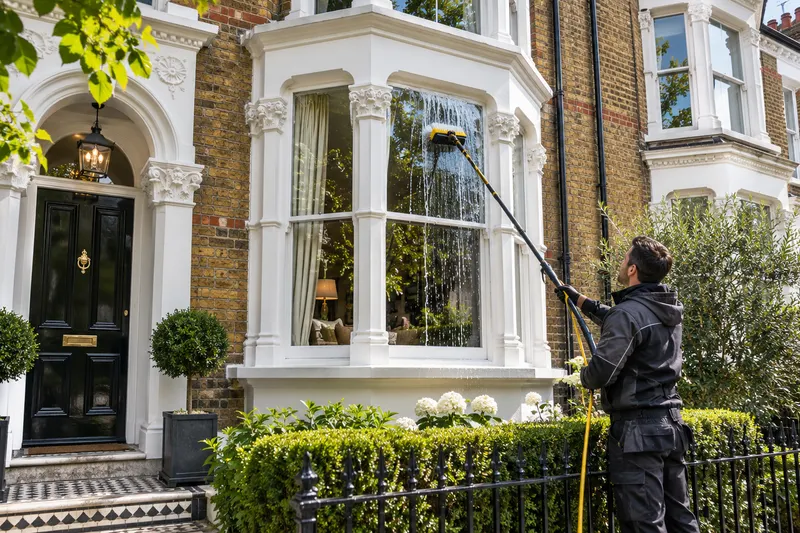
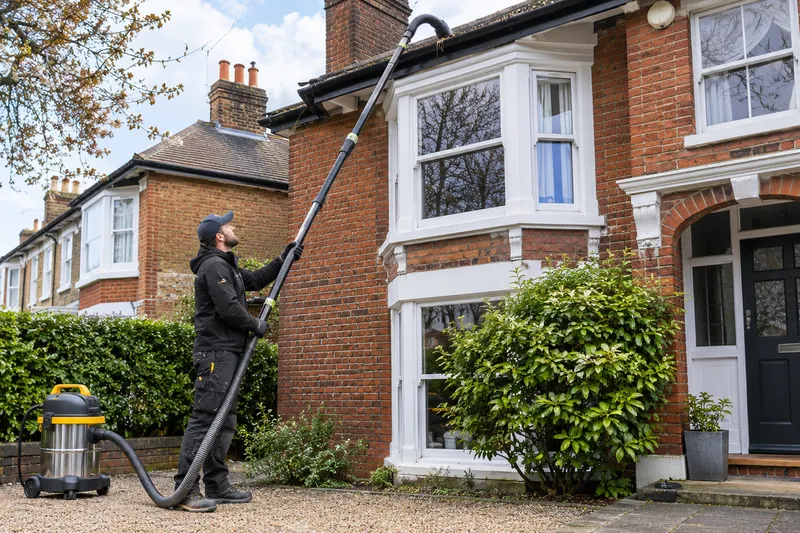
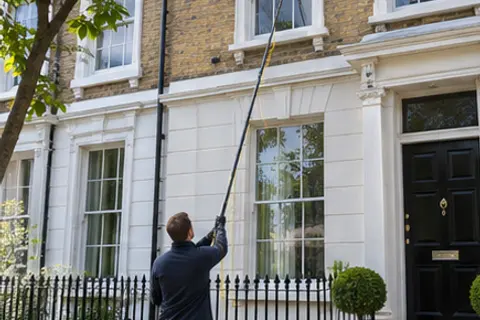
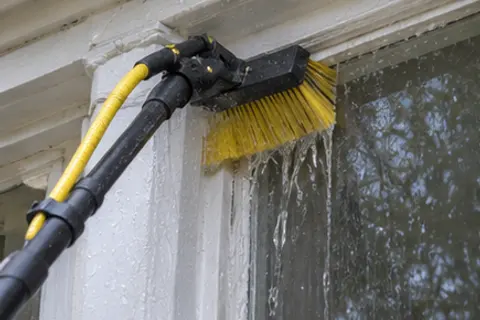
A rear canted bay may need a pass from either side. An outside cloth or squeegee is only useful where the operator can move it across the width, and a narrow side passage can limit the tool further. For high-reach window cleaning, an angle that lets the brush meet the centre does not necessarily give reach to the lower edge. We check the distance from the building and stable ground. If a garden position can only be reached through an occupied room, tell us who can give access and what is in the way.
Royal Borough of Kingston upon Thames Old Town Conservation Area